🔍 New proposal: A vocabulary for opting out from AI training & text/data mining.

Based on interaction with a broad range of stakeholders, this proposal aims to give creators and other rightholders more control over how their works are used for AI training through practical, machine-readable standards.

📄 Full paper & vocabulary: https://openfuture.eu/publication/a-vocabulary-for-opting-out-of-ai-training-and-other-forms-of-tdm/
#ParadoxOfOpen #AITraining

A vocabulary for opting out of AI training and other forms of TDM – Open Future

This proposal presents an opt-out vocabulary for AI training and text mining, based on stakeholder discussions to help creators better control how their works are used.

Open Future

New piece by Mariana Mazzucato argues that there's no "collective intelligence" without the "common good". Probably obvious to most of people here. She makes a good argument for the not-yet convinced.

And "collective intelligence" is indeed becoming an overly-romantic buzzword and narrative.

Same risk, by the way, appllies to narratives about communities and communal governance.

https://www.project-syndicate.org/commentary/collective-intelligence-calls-for-sharing-rewards-from-innovation-for-the-common-good-by-mariana-mazzucato-2024-08

#paradoxofopen #digitalcommons #digitalpublicgoods

Collective Intelligence and the Common Good | by Mariana Mazzucato - Project Syndicate

Mariana Mazzucato worries that a new buzzword is perpetuating a costly myth about how innovation and value creation work.

Project Syndicate
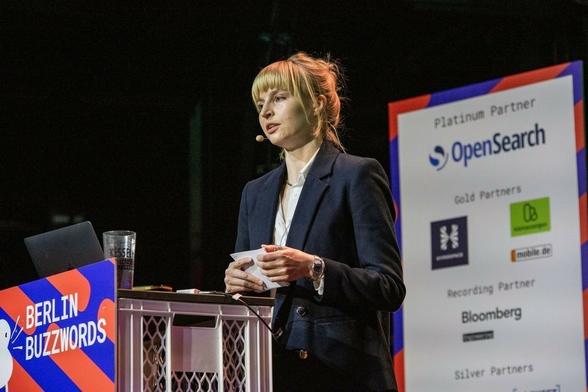
Yesterday, our Director of Research, Zuzanna Warso, opened the @berlinbuzzwords conference by talking about the #ParadoxofOpen and #PublicDigitalInfrastructure built around #DigitalCommons. You can watch the recording of the talk here 📺 https://youtu.be/R1ZCCkcIdFQ?si=3QbyyL84woaYgi3W
Zuzanna Warso - The Paradox of Open: Can Digital Commons Offer a Way Forward?

YouTube
📎 Our new report by https://mastodon.scot/@isitadityasingh examines challenges associated with data-driven interventions to the climate crisis, particularly those involving #OpenData 👉 https://openfuture.eu/publication/open-with-purpose-ethical-issues-and-stewardship-mechanisms-for-open-climate-data/ #ResponsibleData #ParadoxOfOpen
itsadityasingh (@[email protected])

1 Post, 30 Following, 4 Followers · Agriculture, Data Ethics, and the Commons PhD Researcher at the Centre for Technomoral Futures and the Global Academy of Agriculture and Food Systems (University of Edinburgh)

mastodon.scot
It's good to see the issue of #OpenSourceAI making waves in mainstream media 👀 Sarah Kessler mentions our work & quotes @tarkowski while describing "openwashing," in her regular feature for The New York Times 👉 https://www.nytimes.com/2024/05/17/business/what-is-openwashing-ai.html #ParadoxOfOpen #OpenSource
Some A.I. Companies Face a New Accusation: ‘Open Washing’

An accusation against some A.I. companies that they are using the “open source” label too loosely.

The New York Times

The Cuckoo in Bidding: When the Manufacturer Loses to Itself by Peer Heinlein 💯

"OSS manufacturers must be financially compensated for their work to enable further development. When freeloaders enter bidding processes with cutthroat prices without manufacturer involvement, they strip the OSS ecosystem of its foundation. Various initiatives aim to ensure fair and sustainable use."

#FOSSBack #TragedyOfOpen #ParadoxOfOpen

https://www.youtube.com/watch?v=k8YJQLIw2EI&ab_channel=PlainSchwarz

Peer Heinlein – The Cuckoo in Bidding: When the Manufacturer Loses to Itself #FOSSBack

YouTube

I've been reading up on recent #OpenAccess developments, including proposals for new approaches like #DiamondOA.

The discussions are fascinating, and it's increasing clear to me that Open Access ecosystems are facing a case of what we call (at @openfuture ) the #ParadoxofOpen: OA faces the challenge of value extraction, in this case by the largest academic publishers.

It's just as fascinating to see solutions on the table: proposals for alternative publishing models that are more sovereign, civic, community-led. Basically: digital public infrastructures.

This recent news feature from Nature is a good starting point:

https://www.nature.com/articles/d41586-023-03342-6

Open-access reformers launch next bold publishing plan

The group behind Plan S has already accelerated the open-access movement. Now it is proposing a more radical revolution for science publishing.

Early this month, we went to the @creativecommons Global Summit in Mexico City, where we co-hosted a workshop on #AI, Creators, and the Commons and organized sessions on the #ParadoxOfOpen & the future of the open movement. Here are our learnings https://openfuture.eu/event/creative-commons-global-summit-2023/ #DigitalCommons 🧶1/2
Creative Commons Global Summit 2023 – Open Future

The Creative Commons Global Summit in Mexico City is taking place this week between 3 and 6 of October. The event, whose theme is AI & the Commons, is attended by both Alek and Paul. 

Open Future

Jorge Gemetto from @articaonline wrote a good piece on #generativeAI, #freeknowledge and cultural rights.

(It's in Spanish, and worth translating if you don’t speak the language).

Jorge argues that the emerging tensions around AI and intellectual property are a tension between two business sectors: the technology and the publishing firms. And it largely ignores the interests and rights of creatives, other professionals (benefitting from free knowledge / free culture) and users.

He acknowledges what I call the #ParadoxofOpen: that corporations benefit disproportionately from the commons (and the case of generative AI training is one more example of that) - but argues that this is not a reason for a ‘reactionary’ approach that constraints the commons.

And finally there’s a smart take on the right to cultural expression and how that plays out with regard to access to generative AI systems.

https://www.articaonline.com/2023/05/inteligencia-artificial-generativa-y-derechos-culturales-parte-1-alguien-quiere-pensar-en-las-personas-usuarias/

Inteligencia artificial generativa y derechos culturales (parte 1): ¿alguien quiere pensar en las personas usuarias?

A partir de la disponibilidad de herramientas como DALL-E, Stable Diffusion o Midjourney para la generación de imágenes, y ChatGPT, Bard, Open Assistant o los cientos de bots conversacionales basados en LLaMA, millones de personas comenzaron a experimentar con la creación de textos e imágenes asisti

Ártica - Centro Cultural Online

This recent piece from @kaythaney strikes all the right ideas in framing today’s challenges faced by #openaccess / #openscience. And it’s in line with the #ParadoxofOpen framing that I’ve been working on.

Kaitlin argues that Open Access has become big business, and that revenues flow more quickly for the companies than the benefits for the communities producing knowledge. That’s the gist of the Paradox of Open: the commons are being exploited.

I like the point that thanks to OA, and through the exploitative modes of publishers, “OA is free to read but not free or affordable to publish”.

And Kaitlin argues that publishers would ideally dedicate a portion of profits back into the communities (the commons). +1 to that. That’s the reason that I really like the Wikimedia Enterprise project, which shows that payments back to the commons can be part of an open framework.

The problem wiki Wikimedia ENterprise is that it is voluntary - so the big question is, how can such redistribution be mandated?

A starting point would be for #openX communities (not just #OA / #openscience but also #opensource, for example, have a shared position on the need for such redistribution.

https://blogs.lse.ac.uk/impactofsocialsciences/2023/07/20/open-access-at-any-cost-cannot-support-scholarly-publishing-communities/#OpenScience
Open access ‘at any cost’ cannot support scholarly publishing communities

Kaitlin Thaney argues the current momentum building for “no pays” academic publishing models and establishing the “reasonable costs” of publication, present opportunities to rebalance the inequitie…

Impact of Social Sciences