CERN to host Europe’s flagship open access publishing platform
In an important step for open science, CERN has been selected to host a new phase of Open Research Europe (ORE), an initiative supported by the European Commission and a new funding consortium of European national funding agencies and research organisations. Aligned with the Action Plan for Diamond Open Access (2022)[1], the initiative is a community-led alternative to traditional academic publishing. When the new ORE platform is launched later this year, authorship eligibility will be expanded to include researchers affiliated with institutions in the countries that participate in the consortium. Publishing will remain completely free for both European Commission-funded researchers and authors from participating countries. The aim is to promote equity, diversity and transparency in scholarly communication while maintaining high standards of quality and integrity. The ORE funding consortium currently comprises members from Austria, France, Germany, Italy, the Netherlands, Norway, Portugal, Slovenia, Spain, Sweden and Switzerland[2]. The European Commission participates as a permanent observer in the governance body and provides dedicated financial support. CERN will provide the technical and operational infrastructure for the platform, built on the open source software Open Journal Systems (OJS), while governance and editorial oversight will remain the responsibility of the ORE consortium. ORE follows the innovative publish–review–curate model, which promotes rigour and transparency in the publishing of research. Articles are first checked for integrity and compliance, then published and peer-reviewed openly. Peer-review reports are made public, and articles that successfully pass review are curated into subject-specific collections. This approach combines quality assurance with openness, while also enabling post-publication review. Launched by the European Commission in 2021 to provide beneficiaries of EU research programmes with a no-fee open access publishing platform[3], ORE was designed to make publicly funded research more transparent, accessible and sustainable through an innovative publishing model. In the five years since its launch, the platform has seen steady growth and uptake across the research community, with more than 1,200 articles published and over 6,300 authors from more than 3,000 institutions worldwide taking part. CERN’s role in operating ORE builds on its long-standing experience in developing and maintaining open science infrastructures and community-governed services for the global research community. By hosting ORE, CERN will provide a neutral, reliable and sustainable environment, drawing on expertise gained through flagship open science initiatives such as Zenodo, Invenio and SCOAP3. “For CERN, hosting Open Research Europe is a natural extension of our commitment to an open, community-led scientific infrastructure,” said Mar Capeáns, CERN Director for Site Operations. “The platform supports the rapid sharing of research, while reinforcing Europe’s ability to shape the future of scholarly communication.” “Open Research Europe is a strong example of a shared commitment to fostering the free flow of knowledge across the European Research Area and beyond”, stated Marc Lemaître, Director-General for Research and Innovation (DG RTD), European Commission. “By ensuring open access to high-quality research, ORE facilitates the circulation of the latest research findings and amplifies public trust in science. Today, as European research funders and research organisations join forces to support ORE, we open a new chapter, one that strengthens open access scholarly publishing and improves research practices across Europe”. Beyond the technical infrastructure, the initiative is expected to deepen collaboration between CERN, the European Commission, national representatives and research organisations. Working in partnership with the OPERAS Research Infrastructure, outreach and engagement activities will be expanded across Europe to attract eligible authors to the platform. ORE is expected to support a growing number of research outputs each year, making publicly funded science more accessible and transparent while setting a benchmark for equitable publishing initiatives in Europe and beyond. More information on the future platform at: https://ore.eu [1] https://scienceeurope.org/our-resources/action-plan-for-diamond-open-access/ [2] Austrian Science Fund (FWF), European Organization for Nuclear Research (CERN), French National Research Agency (ANR), French National Centre for Scientific Research (CNRS), German Federal Ministry for Research, Technology and Space (BMFTR), Italian Ministry of Universities and Research (MUR), Dutch Research Council (NWO), Research Council of Norway (RCN), Foundation for Science and Technology, Portugal (FCT), Slovenian Research and Innovation Agency (ARIS), Swedish research funders (Forte, Formas and the Swedish Research Council), Spanish Foundation for Science and Technology (FECYT), Spanish National Research Council (CSIC), Swiss National Science Foundation (SNSF) [3] Current platform (operational till fall 2026): https://open-research-europe.ec.europa.eu
 Public Knowledge Project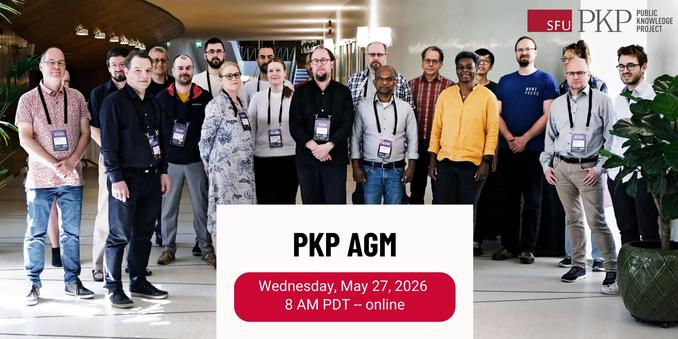
 Ecology & Evolution of Health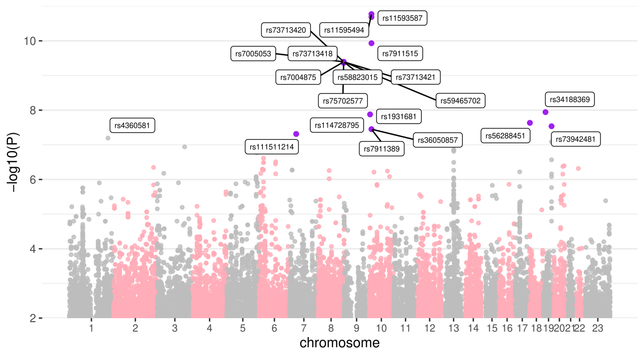

 Björn Brembs
 Georg Weissenbacher
 Open Science Pasteur
 Thomas