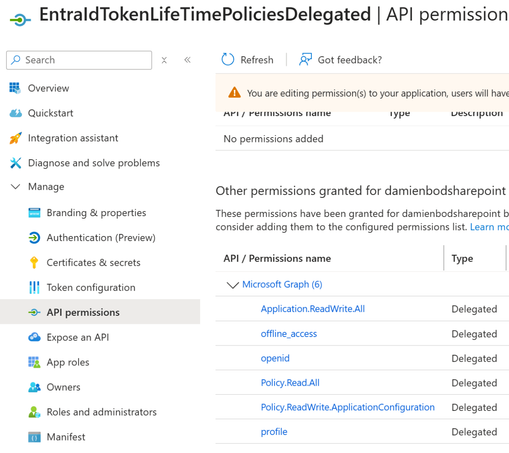
Using configurable token lifetimes in Microsoft Entra ID, .NET and Microsoft Graph

Configurable token lifetimes in the Microsoft identity platform went GA and I thought I would look at implementing this using a .NET console application using Microsoft Graph . This article looks a…

Software Engineering
One Open-source Project Daily

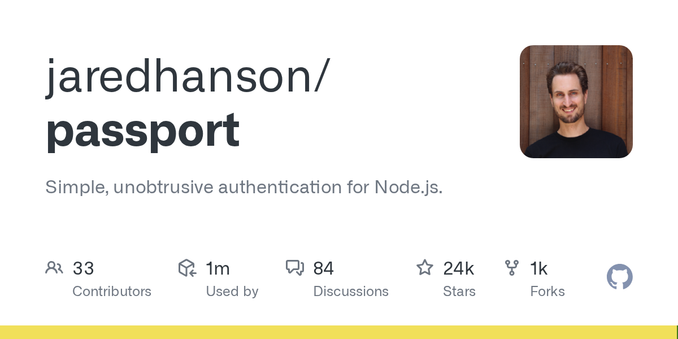
Simple, unobtrusive authentication for Node.js.

https://github.com/jaredhanson/passport

#1ospd #opensource #express #nodejs #oauth #oauth2 #openid #openidconnect #passport #saml
GitHub - jaredhanson/passport: Simple, unobtrusive authentication for Node.js.

Simple, unobtrusive authentication for Node.js. Contribute to jaredhanson/passport development by creating an account on GitHub.

GitHub

blogged: How I authenticate users with OIDC Access Tokens and track their sessions without a user database.

https://www.benjamin-schieder.de/blog/2026/04/29/secure-stateless-token-authentication.html

#blog #blogged #rss #OpenIDConnect

Secure stateless token authentication

How I store an OIDC access token client-side without disclosing it to the user

By the way, I set up an Authentik instance just so I could use Tailscale with my own OpenID Connect provider, because I didn't feel like dealing with a Google account, Microsoft account, or anything like that xD

#openidconnect #authentik #tailscale

SAML 2.0 is een veilige, bewezen manier om authenticatie mogelijk te maken.

DigiD, eHerkenning en eIDAS zijn erop gebouwd en op die manier vinden er per dag miljoenen logins plaats op basis van deze techniek.

Toch is SAML niet ideaal in zowel technisch opzicht als op het vlak van gebruiksvriendelijkheid.

SAML is in de kern ontworpen voor browser-based SSO, niet voor bijvoorbeeld API beveiliging.

Er is een standaard die dit intuïtiever doet: OpenID Connect.

#openidconnect #saml #digid

"We want to authenticate our end-users through the Client Credentials flow, because it's easier to use!"

So sick and fucking tired of that statement.

#IDM #CIAM #OpenIDConnect #OIDC

Digitale Souveränität jetzt sichern

Digitale Souveränität ist längst keine theoretische Debatte mehr, sondern eine strategische Notwendigkeit. Was sich aktuell abzeichnet, ist nicht nur ein technologischer Wandel, sondern eine geopolitische Verschiebung, die direkten Einfluss auf europäische Unternehmen hat. Die Diskussion in der Schweiz über ein faktisches Cloud-Verbot für sensible Daten zeigt, wie ernst die Lage inzwischen eingeschätzt wird. Gleichzeitig geraten große Anbieter wie Microsoft zunehmend unter Druck durch wettbewerbsrechtliche Prüfungen. Sicherheitsvorfälle wie das Datenleck im Schweizer Außendepartement verdeutlichen zusätzlich, wie verwundbar zentrale Systeme sind. Auch politisch verschärft sich die Lage. Frankreich denkt offen darüber nach, sich von US-Technologien wie Windows zu lösen. Der Hintergrund ist klar. Digitale Infrastruktur ist längst Teil geopolitischer Macht. […]

https://blog.infinito.nexus/blog/2026/04/11/digitale-souveranitat-jetzt-sichern/

ClaimMaps in Kanidm on NixOS fixed.
Now paperless-ngx and wiki-js can read user groups/roles over OIDC.

The trick wad to `_` instead of `-` in thr naming scheme.

#KanIDM #NixOS #OIDC #OpenIdConnect

Invite Guest users in a Entra ID Multi-tenant setup

This post looks at implementing a guest user invite in a cross tenant setup. This is useful when creating partner tenants using an Entra ID MAU license for all partner guests and members. This make…

Software Engineering

OAuth 2.0 and OIDC Explained with UML
A blog by Ronald

The purpose of Open Authorization 2.0 (OAuth 2.0) is to give an application (the "Client") limited access to your data at another service (the "Resource Server"), without having to give your password to that application. When OIDC is added Single Sign-On (SSO) is supported as well. The flow...

#dev #softwaredevelopment #Security #OpenIDConnect #UML #Authentication #OAuth2.0 #OIDC #Authorization #SSO #SingleSign-On

https://jdriven.com/blog/2026/03/OAuth-2.0-Explained-with-UML/

OAuth 2.0 and OIDC Explained with UML

The purpose of Open Authorization 2.0 (OAuth 2.0) is to give an application (the "Client") limited access to your data at another service (the "Resource Server"), without having to give your password

JDriven Blog