An organ recital with Anna Lapwood

Before we start, let’s just make this clear: This has nothing to do with anatomical dissections. The organs involved in this concert might be bigger than a muscle vehicle owned by someone said to have a small organ, but they refer to different things. Are we clear about this? This concert is totally G rated.

Forgive me, but this organism didn’t know who Anna Lapwood was before he booked his ticket to this concert. Oh, he knew she was an organist because he is organised and read the Sydney Symphony Orchestra’s guide when he was searching for concerts to subscribe to so he could book his precious film music concerts targets. There were a couple of film music pieces in her concert list, so that would do to fill up another spot. Anyway, the organ is an interesting instrument in itself, right?

It turns out that Anna Lapwood is a big star on the socials.

A damn fine pipe organist, musician and communicator.

And a huge fan of film music.

When I received an email from the orchestra telling me that four of the other pieces listed were dumped and replaced with a suite from Lord of the Rings I was suddenly really looking forward to this concert. Film music. Pipe organ. Wow!

And it was sold out too. Except for the empty seat next to me. Sorry whoever booked that. You missed out.

This wasn’t quite my first pipe organ concert. I once had the pleasure of hearing a short, but very impressive, performance at the Melbourne Town Hall prior to an orchestral concert of film music by the Melbourne Symphony Orchestra a decade or two ago.

I also have a little bit of family history with the pipe organ. One of my uncles rebuilt a small organ in the basement of his previous home in Adelaide and served as a consultant for the instrument on the set of the Australian movie Sweet Country.

I don’t think he appreciates film music though.

For a star of the socials there seemed to be quite a few in the audience approaching my uncle’s advanced age. There were plenty on the other side of the spectrum too. Even the rear stalls were filled with an excited crowd. The only empty spot was the stage, for most of the action takes place high above.

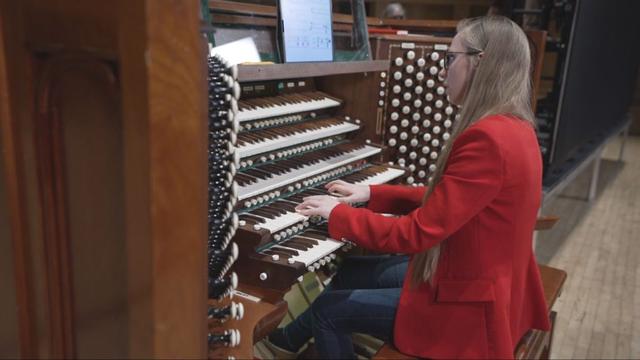
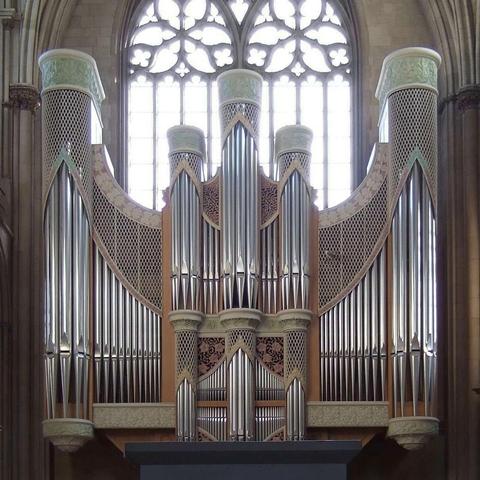
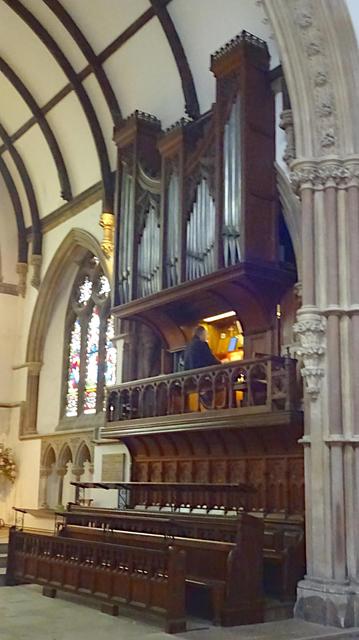
A magnificent pipe organ towers over the concert hall with pipes of shining chrome, the organist’s keyboard located on a small balcony overlooking the stage. The organ is believed to be the world’s largest mechanical tracker-action organ, meaning that the keys and the valves allowing the air to flow into the 10,244 individual pipes are mechanically linked rather than by triggering an electrical motor. However, more recently electric motors have been added to allow for the organ to be remotely controlled.

Lapwood runs out on to the empty orchestral stage in a dazzling coat that sparkles with the amazing lighting from above. She is full of energy and excitement at performing and is greeted with enthusiasm by the crowd. Then she bounds up three flights of steps and out to the balcony of the organ to begin the concert with Hans Zimmer’s Chevaliers de Sangreal from The Da Vinci Code, telling us how she transcribed the music when she was eight years old.

Prior to each piece, Lapwood not only describes the music itself and what it is about, but also what it means to her, personalising it, dedicating it to someone in the audience or elsewhere. She is plays her own arrangements, for most music is not written for a solo organ. But it is a versatile instrument with an incredible range, capable of gentle flute tones to a thunderous cacophony that even an entire orchestra cannot match.

The concert continues with Rachel Portman’s Flight and Olivia Belli’s Limina Luminis, the latter presented as describing the perspective of an astronaut from before their launch to the view of Earth from space. Both are concert pieces rather than film music, but would easily belong in the cinema.

Then we come to a suite of music from Lord of the Rings, excerpts from an organ symphony adaptation that Lapwood is writing. She attempts to describe the nature of the music and the sequence of events portrayed by the 9 individual pieces in under the 5 minutes she took in Melbourne, asking the audience to time her.

Instead we get the 6 minute extended edition.

Now, the Art of the Score are hosting a Lord of the Rings concert with the Sydney Symphony Orchestra later this year and good luck achieving better than that.

The translation of the Howard Shore’s multi-instrumental score to the organ is absolutely incredible. I especially love the Hobbit’s themes, but there is opportunity to explore the full dynamic and tonal range of the pipe organ in the suite. At certain points Lapwood sings in Elvish with a beautiful clear voice, demonstrating her many talents.

We then break for a twenty minute interval, before returning with some John Williams and Dual of the Fates from Star Wars: The Phantom Menace. With its battle between different sections of the orchestra and overall drama, Dual of the Fates works well with the organ. Following on is another movie set mostly in space, though not in a galaxy far, far away, and that is Interstellar, with the Cornfield Chase. Hans Zimmer heavily utilised the pipe organ in his score to Interstellar and perhaps the minimalist nature of his music is better suited to the instrument that John Williams’ classical orchestral complexity. It would be interesting to explore this further.

Luduvico Einaudi’s Experience is another minimalistic piece and it sounds wonderful, as is Lapwood’s story about performing with the composer. Eugene Gigout’s Toccata from his 10 Pieces for Organ is the oldest and most classical of the music performed tonight and it does stand out. I appreciate it for it complexity and skill, but like it the least out of all I hear tonight.

The last item on program for the night is a suite from Pirates of the Caribbean: At World’s End by Hans Zimmer. Lapwood describes it as her favourite music, the one that gives her energy, and that can certainly be heard here. I too would have picked At World’s End from that series. It is a wonderful arrangement for the organ, encompassing the playful music of Jack Sparrow, the diegetic organ playing of Davy Jones and the longing of One Day. She gets the audience to sing along the words to Hoist the Colours at the beginning, then somehow plays four separate melodies simultaneously with each hand, feet and thumbs in Drink Up Me Hearties.

But of course that’s not all. Lapwood offers the audience a choice of Test Drive from John Powell’s score to How To Train Your Dragon or No Time For Caution from Interstellar. We get both and it is perfect way to end.

Lapwood then returns to the stage for a standing ovation. And she tells us that, though many come to concert halls and recitals expecting to hear the great classical composers, it is film music that resonates most with her. I cannot help but agree with her. It is music that goes beyond decoration and technique, instead incorporating fantasy and reality. Listening to her play Lord of the Rings I am not just on a quest in Middle Earth, I’m driving through the South Island of New Zealand on our first holiday there, the music on the car CD player. Or I’m 39,000 feet in the air watching Interstellar on a flight back from Japan. Those are my stories. Others have theirs. It was a privilege to hear Anna Lapwood’s tonight, both in her words and her music.

I really enjoyed An Organ Recital With Anna Lapwood. It was a very different way to listen to the music that I love and a wonderful experience. Unfortunately, I wasn’t able to hang around and purchase a signed CD, but I will definitely be adding her performances to my collection. Organic is supposed to be good for you!

When I reach home my 17 year old kid tells me that he is familiar with Anna Lapwood online and in an amazing coincidence, I switch on the television and Sweet Country is showing on the ABC! I can’t see a pipe organ in it, maybe that’s a task for another day. I shall certainly be paying more attention now.

#AnnaLapwood #Concert #HansZimmer #HowardShore #Interstellar #JohnWilliams #LordOfTheRings #Organ #PipeOrgan #PiratesOfTheCaribbean #RachelPortman #StarWars #SydneyOperaHouse

@classicalmusic
Thomaskirche, Leipzig

Bach: Orgelwerke

Johannes Lang (Organist)

The Australian Ballet
Semperoper Ballett Dresden
Music Academy Katowice Ballet
New Chamber Ballet, New York
Bianca Bor Ballet Romania

https://www.arte.tv/de/videos/128073-000-A/bach-orgelwerke/

#music #barock #organ

Bach: Orgelwerke - Thomaskirche, Leipzig - Programm in voller Länge | ARTE Concert

The Best of ʺGravity Bachʺ: 2025 wurde in der Thomaskirche Leipzig Musikgeschichte geschrieben – der Organist Johannes Lang stellte sich der monumentalen Herausforderung, das gesamte Orgelwerk Johann Sebastian Bachs innerhalb von 22 Stunden aufzuführen. Ballett-Ensembles tanzten zur Bach-Musik. Julia Sophie Wagner und Daniel Hope führten als Moderatoren durch den Abend.

ARTE

Space Organ by Vienna Symphonic Library
Creative Conc 🌌
Legendary Rieger Organ, 116 stops, FX presets, Flow View, 528 samples (165MB)

💻 Win/Mac (VST/VST3/AU/AAX)
🎁 FREE https://www.vsl.co.at/products/free/space-organ

More freeware 👉 https://linktr.ee/legalvst

#freeplugin #organ #vsl #spatialaudio #vst #musicproduction

@FotoVorschlag : Voll cool

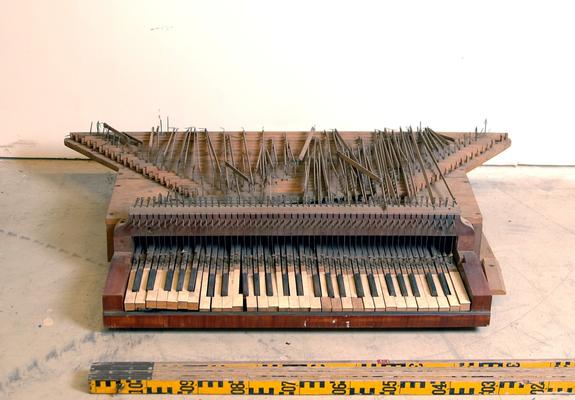
ist das Innenleben einer Orgel.
Hier das Innenleben der Göthel-Orgel in Grünlichtenberg, Mittelsachsen.
Sehr empfehlenswert so eine Besichtigung.

#fotoVorschlag #orgel #organ #fotografie #photography #mittelsachsen

Surgeon, patient decry 5-year wait time for cornea transplants in N.L.
A Conception Bay South man says the estimated five-year wait time for cornea transplants in Newfoundland and Labrador — one of only two provinces without an organ bank for eye tissue — is far too long.
https://www.cbc.ca/news/canada/newfoundland-labrador/wait-time-cornea-transplant-nl-9.7122474?cmp=rss
Immerse yourself in the rich tones of Psalm 26 on the Brombaugh Organ (Op. 25, 1981) at Fairchild Chapel, Oberlin Conservatory. Warm, resonant and meditative — ideal for focused listening or quiet reflection. Enjoy every pipe and swell! #Organ #OrganMusic #PipeOrgan #Classical #SacredMusic #Psalm #Brombaugh #Oberlin #Organist #English
https://video.sethgoldstein.me/videos/watch/1fe1db26-197c-45dd-81b9-8d4893c952da
Psalm 26

PeerTube

First organ gig

(Scroll to the bottom for the video)

My friend Evan suggested that I could just remove all the organ electronics and replace the MIDI jack and this would likely work without posing a danger to my laptop. So I finally did.

I replaced the original batteries with a phone charging battery from Argos. It goes to a PD trigger – a USB C board that tells the battery something is using it and draws a steady DC voltage. I’m drawing 12 volts.

This voltage is then split to go to two buck stepdown boards. The one currently in use is 8v, because the part of the organ in the wind chest uses 8v. The other part of the system is not yet installed, but will run on 5v.

A block diagram of how things are powered.

The actuators have three power cables, a heavy yellow ground and a red and a blue wire both at 8v.

The power wires in the original electronics are on the left screw terminal.

Then there are the MIDI wires.

This picture of the original electronics shows the MIDI white and orange wires. Neither is ground. One is 5v and the other is the data.

Fortunately, looking at the existing MIDI jack revealed which wire was which.

Instead of using a cable, the previous owner has driven nails into the jack.

Simply compare the nail position with the MIDI spec.

The MIDI pins are not in the order I would have guessed.

Fortunately, this followed the spec, as the data changed too fast to be discovered via voltmeter.

The voltmeter did let me know that the PD trigger I bought has on and off labelled in reverse on the device.

The board has limited documentation.The one with the glowing red numbers is reporting the output voltage.

The black thing on the breadboard is the new input MIDI jack.

And it worked.

So I brought it to the algorave and live coded it with SuperCollider.

https://www.youtube.com/live/8qwSbHKV5eQ?si=oES4-ZyXUGZ6j9rK&t=2180

#liveCode #organ

Organs, Clowns, and Queers [delete as appropriate]

As winter is the off-season for organ grinding, the only event in January’s BOGA calendar was the open day at the Amersham Fair Organ Museum. This monthly event is free. The museum is set up like a giant cafe, filled with round tables and with a kiosk near the door selling sandwiches, tea and cake. Visitors buy their snack and settle at a round table in a large room surrounded by the loudest fair organs you have ever heard in your life.

Visitors listening to a CH Merenghi & Co organ

The musical selection was highly varies Britania Rules to Waves, Onward Christian Soldiers, Rah Rah Rasputin, a Beatles song and many things I did not recognise. The major unifying factor is that everything seemed to be more than 30 years old.

Some of the repertoire of the AFOM

The music was mostly played off of “books”. This is a format very similar to a piano roll, but in an organ-specific format for hole punching. Rather than being played from a spool, the holes are punched into tougher card, which is folded in a butterfly / Z form, so one card proceeds to the next. The start in a neat pile and finish in a neat pile. Using this format rather than scrolls allows for the use of thicker material and also allows arrangements to be arbitrarily long. This layout method was invented by Gavioli.

They were the makers of many of the organs at the Amersham Fair Organ Museum, was a Franco Italian venture that worked in both countries. It was Anselme Gavioli, heir to the family business, who invented and patented the book format.

I had the impression that Gavioli was really the major organ manufacturer of their heyday, but according to Wikpedia, they mostly survive in the UK.

More Repertoire. I’ve transcribed the titles on flickr.

Gavioli shut down in 1912, so many of of the books on the second shelf post-date the company that invented them.

By that time, they had moved to France and organ grinding in general had lost its association with Italians, which perhaps explains why there are so many German songs.

In the late Victorian period, as organ busking was a major form of employment for Italian migrants, London streets were also full of German brass bands. The large format organs have the presence of a full band and, indeed, many full band pieces are in their repertoire. For example, on the shelf you’ll see The Washington Post March, by Sousa – an American. The old German pieces may have made their way to big organs. As for polkas, they were already part of street organ repertoire.

One of the larger books on the shelf is an Al Jolson medley. was the star of The Jazz Singer and was the biggest star of the 1910s and 20s. He is best remembered now for performing in blackface. However, he was extremely popular at the time and his ‘style was “arguably the single most important factor in defining the modern musical.” ‘ (Wikipedia) Jolson was a migrant to the US from what is now in Lithuania in 1894 – part of a massive wave of Jewish immigration of people fleeing violence. [Obligatory Spivak reference goes here.] Anyway, there’s some minstrelsy archived in Amersham.

As to the organs themselves, the larger organs seem to be intended to mimic large brass or marching bands, in terms of amplitude, repertoire and available timbres. I only saw one relatively small organ, which was still bigger than mine. Like the MIDI repertoire that came with mine, the arrangements seemed to be based on wind ensemble, crossed with player piano.

Limonaire Frères organ

Clowns

Tthe 80th Annual Grimaldi Service took place on Sunday 1 February 2026, at All Saints Church in Haggerston. This is not the clown’s church. The Grimaldi service is too popular to fit in that smaller venue.

This turned out to really just be a mass but with some clowns in it. It had all the normal elements of a mass, but with some honking during the breaks. Before the service, the organist played some slow moving music with midrange drones. It was not at all like fair organ music. The opening hymn was Tis a Gift to be Simple but with the Shaker lyrics, Lord of the Dance, which are unfortunately seared into my brain from Catholic school.

One of the main readings was from Ecclesiastes, the list of binary oppositions. This was also a major theme of the homily and I guess the idea of clowns in church. I suspect there was intention to have this holding of opposites be an element in a joyful memorial mass. However, this is fairly normal in US culture where people have “celebrations of life” rather than “sad” funerals, because grief is a failure under neoliberalism. It’s too hard to constrain. It doesn’t make people into better workers but instead feeds an implicit, emotional demand for justice. Grief must be denied.

Christianity, which co-developed with neoliberalism and is the major spiritual underpinning of the ideas within it, is all too willing to accommodate this. Your friends will be back as soon as Jesus finishes his brief holiday.

Instead, clowning itself provides the rupture, making space for grief and complicated joy. Clowning is queer. Clowning disrupts or at least complicates power structures. Clowning has much more spiritual potential than anything the CoE has to offer.

A page from the service order

Anyway, I felt alienated by the Christianity, as I should have known I would. The bake sale had nothing vegan. But at least there was a clown show afterwards.

A clown who fails to play guitar, in. The religious banner on the right says “Here we are fools” and has an image of Grimaldi

Queer Theory

Has been moved to it’s own post, but I don’t want to untangle the bibliography, so all of it is here.

Works Cited

Al Jolson (2026). Wikipedia [Online]. Available at: https://en.wikipedia.org/w/index.php?title=Al_Jolson&oldid=1341751665 [Accessed: 9 March 2026].

Cabaret (1972).

Ecclesiastes 3:1 [Online]. Available at: https://www.sefaria.org/Ecclesiastes.3.1?lang=bi [Accessed: 9 March 2026].

Frankfurt, H.G. (2009). On bullshit.

Gavioli (2025). Wikipedia [Online]. Available at: https://en.wikipedia.org/w/index.php?title=Gavioli&oldid=1301641269 [Accessed: 9 March 2026].

Halberstam, J. (2011). The Queer Art of Failure. [Online]. Duke University Press. Available at: http://read.dukeupress.edu/books/book/1581/The-Queer-Art-of-Failure [Accessed: 10 February 2026].

Huston, W. (1985). The Greatest Love of All.

Hutchins, C. (2026). Newer-Looking Repertoire. [photo]. Available at: https://www.flickr.com/photos/celesteh/55038200962/ [Accessed: 9 March 2026].

Limonaire Frères (2025). Wikipedia [Online]. Available at: https://en.wikipedia.org/w/index.php?title=Limonaire_Fr%C3%A8res&oldid=1323198570 [Accessed: 9 March 2026].

Sartre, J.-P. (1948). Anti-Semite and Jew.

Spivak, G.C. (2023). Can the subaltern speak? In: Imperialism. Routledge, pp. 171–219.

The Crazy Clown Church Service That Happens Every February (2026). [Online]. Available at: https://londonist.com/london/things-to-do/clowns-church-service-hackney-february [Accessed: 9 March 2026].

#clown #organ

Pachelbel: Fantasia in E=Flat Major
Jon Liechty, keyboard

https://youtu.be/Wxyo1tGD8TQ

#Pachelbel #Baroque #Barock #baroquemusic #organ #keyboard

Pachelbel Fantasia in E Flat Major

YouTube