Pleased to join the Joint Task Force on Negotiating Openness of Publication Metadata, launched by Barcelona Declaration and OA2020.
Publication metadata locked behind paywalls limits transparency and academic sovereignty. Our task force will develop practical negotiation frameworks and tools to embed metadata openness in publisher agreements.
Co-chaired by Miranda Bennett and Ludo Waltman.
#OpenScience #OpenMetadata #BarcelonaDeclaration #OA2020
https://oa2020.org/2025/10/02/barcelona-declaration-and-oa2020-launch-joint-task-force-on-negotiating-openness-of-publication-metadata/
Barcelona Declaration and OA2020 Launch Joint Task Force on Negotiating Openness of Publication Metadata – OA2020

Save the date: OA2020 Focus Session — Open research information in negotiations with Miranda Bennett & @LudoWaltman

This session aims to develop practical tools and guidance to help negotiators embed open research information into their negotiation objectives.

🗓 25 Sep 2025
⏱ 16:00 CEST · 90 min
🔗 Register: https://eu02web.zoom-x.de/meeting/register/oSHH7a7OQo-o-jbVB3-JcA

#OpenResearchInformation #OA2020 #OpenScience

Welcome! You are invited to join a meeting: Moving OA Forward Focus Sessions: The relevance of Open Research Information. After registering, you will receive a confirmation email about joining the meeting.

Key research data and analytics—such as publication metadata, citation counts, and funding information—are often locked behind paywalls, creating a “black box” that limits transparency, accountability, and academic freedom. These closed systems influence researcher careers and funding decisions without clear scrutiny or reproducibility. For negotiators, understanding the power of truly open research information—freely accessible, reusable, and transparent data on research outputs and impact—is crucial for shaping a fair, transparent and sustainable open access ecosystem. In this session, Miranda Bennett (California Digital Library) and Ludo Waltman (Leiden University/Barcelona Declaration) will explore the background and context of the Barcelona Declaration and the work of the Joint Task Force which aims to develop practical tools and guidance to help negotiators embed open research information into their negotiation objectives. The session presentations will be recorded and later published on the OA2020 webpage. [Audience: Library and library consortia leadership]

Zoom

Very excited about the partnership between @BarcelonaDORI and #OA2020 to work together on advancing openness of publication metadata in publisher negotiations!

Interested to learn more? Join next Thursday's OA2020 webinar.

Registration: https://eu02web.zoom.us/meeting/register/oSHH7a7OQo-o-jbVB3-JcA#/registration

@cwts

Welcome! You are invited to join a meeting: Moving OA Forward Focus Sessions: The relevance of Open Research Information. After registering, you will receive a confirmation email about joining the meeting.

Key research data and analytics—such as publication metadata, citation counts, and funding information—are often locked behind paywalls, creating a “black box” that limits transparency, accountability, and academic freedom. These closed systems influence researcher careers and funding decisions without clear scrutiny or reproducibility. For negotiators, understanding the power of truly open research information—freely accessible, reusable, and transparent data on research outputs and impact—is crucial for shaping a fair, transparent and sustainable open access ecosystem. In this session, Miranda Bennett (California Digital Library) and Ludo Waltman (Leiden University/Barcelona Declaration) will explore the background and context of the Barcelona Declaration and the work of the Joint Task Force which aims to develop practical tools and guidance to help negotiators embed open research information into their negotiation objectives. The session presentations will be recorded and later published on the OA2020 webpage. [Audience: Library and library consortia leadership]

Zoom
Supporting institutions to have openness of research information included in publisher negotations is one of the actions on the roadmap of the Declaration https://barcelona-declaration.org/roadmap/, so it's great to see the consensus on this in the #OA2020 statement!
Barcelona Declaration on Open Research Information

Road map on Open Research Information At the Paris Conference on Open Research Information in September 2024, signatories and supporters of the Barcelona Declaration formulated and prioritized concrete actions on the following topics: Journal article metadata Metadata for research outputs in institutional repositories, preprint repositories and data repositories Funding metadata Replacing closed systems for research information Sustainability of infrastructures Evaluating open data Evidence of benefits of open research information. Following the meeting, a theory of change framework was applied dividing actions into four categories (information gathering, frameworks & analysis, principles & guidelines and implementation & monitoring).

Barcelona Declaration on Open Research Information

Earlier this week, the final statement of the #OA2020
17th Berlin Open Access Conference was published

https://oa2020.org/b17-conference/final-statement/

It's great to see transparency highlighted as one of the objectives for publisher negotiations.

The statement calls on publishers to collaborate with the research community to enable the full opening of research information, with an explicit mention of the Barcelona Declaration.

B17 final statement – OA2020

I just heard that #SpringerNature is charging for "Rapid Service Fee".

I wonder if this is not an example of business criteria interfering on editorial decisions. Something that #OA2020, 2023, let very clear to publishers that it wasn't a good practice.

Anyway. I consider that a really adequate example of #enshittification.

#enshitification #OpenAccess #scholarlyPublishing #Springer

Final statement of the 16th Berlin Open Access Conference #OA2020 https://oa2020.org/b16-conference/b16-final-statement/
B16 final statement – OA2020

@brembs #oa2020
ja, das war lustig. aber immerhin war der Abschnitt zu "Academic self-governance is an imperative in scholarly publishing" etwas stärker.

😂 😆 😅 🤣
"Publishers can restore our trust in their commitment to the integrity of scholarly communication"
https://oa2020.org/b16-conference/b16-final-statement/

Reminds me of the movie "Mars Attacks", where the Marsians were invited to Congress after they apologized for killing everybody on first contact...

Goes to show #oa2020 really is #oa for 2020 😇

#OpenAccess #OpenScience

B16 final statement – OA2020

@[email protected]

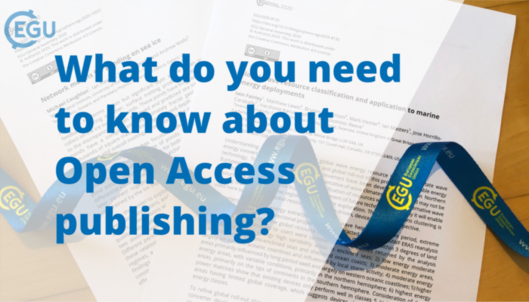
Are you concerned about publishing your #scientific data #OpenAccess - or submitting unpublished #data to #vEGU21 with #OpenScience? We asked #OA2020 initiator and EGU Publications Committee member Ulrich Pöschl this week, for his advice. #science

https://blogs.egu.eu/geolog/2021/01/08/open-access-publishing-and-open-science-at-conferences-what-do-you-need-to-know/

Open Access publishing and Open Science at conferences: what do you need to know?

Earlier this week EGU’s Policy Officer, Chloe Hill was lucky enough to sit down with one of the many advocates for Open Access publishing on EGU’s Publications Committee: Ulrich Pöschl. Whilst all the members of our Publications Committee are fully committed to making EGU’s journals accessible and open, Ulrich has a unique perspective on this, as he is also the initiator and co-chair of the OA2020 initiative. If you missed the webinar, you can watch the recording of it here:   As so much useful information was shared during the webinar, we thought we would highlight a few key questions and their answers here, in case anyone has concerns about submitting their paper Open Access, or about submitting their abstracts Open Access to our digital conference in the spring, vEGU21. As always if you have any additional questions you can contact us or our publishing partner Copernicus.org about vEGU21 or journal questions.   What is Open Access and Open Science? Open Science is a term that refers to all sorts of ‘open’ approaches to a scientific enterprise, which includes the products of your research (like research papers), but also the raw data itself and any code or tools you use or develop. Therefore Open Access is a facet of an Open Science approach to doing research. Open Access, particularly when it comes to published research, was in fact one of the first ‘pillars’ of Open Science, and it specifically refers to ensuring the open ability to access and reuse published scientific research. Though some aspects of Open Science may feel difficult for researchers to do (particularly Open Data), Open Access is fairly straightforward and something we should all strike to achieve, it is even in the root of the Latin word for ‘publications’; these documents are supposed to be open to the public! EGU is a big supporter of this and has been publishing Open Access research since 2000.   What’s a DOI, and why is it important for Open Access publishing? A DOI is a Digital Object Identifier, and is currently the most common way to uniquely identify objects on the internet, and it can be used to keep track of different versions of your research, and make sure that it is attributed to you. In fact there are other naming strategies and conventions that can be used, but it is currently the most widespread approach. Each DOI is unique and usually includes metadata, such as publication date, which helps keep track of your research.   Is there a risk to publishing Open Access, or following the principles of Open Science and publishing or sharing data before it has been fully peer reviewed? There is always a risk in any kind of scientific publication or communication that people might not give you the full credit for your work. With Open Access, when we are referring specifically to sharing published materials, there is actually no additional risk at all. When it comes to sharing your data before it has been peer-reviewed there is a risk that if you are slower to publish peer-reviewed research then someone else may publish before you. However, anything that you share in a permanent way (as Open Science materials are supposed to be) acts as a publication, which is public evidence that protects your ownership of these ideas. Although conference materials are not peer-reviewed, or are light peer-reviewed, they still act as a publication (of sorts) of your work – though this does not replace peer-reviewed publications. So basically, the risk is actually pretty low, and the real advantages outweigh the potential disadvantages of sharing your research openly.   What advice would you offer to someone who is interested in submitting an abstract to vEGU21 Open Access, maybe for the first time? Go for it! Submitting an abstract to present your work at the virtual General Assembly vEGU21 will give you the ability to engage with public commenting on your open resource materials and get immediate feedback and recognition of your work. In our experience Early Career Scientists in particular enjoy this kind of engagement, so you shouldn’t be afraid to discuss your work, even at early stages, in this open and supportive environment. If you have any questions about the process, email [email protected].   How has Open Access and Open Science landscape has changed in Europe over the last few years? Open Access science, much like EGU itself, is a bottom up idea that was started by scientists themselves, and was afterwards adopted by several science institutions, leading to the signing of the Berlin Declaration (of which EGU was one of the first learned societies to sign). Since then change has been moving pretty slowly, as it is still mostly driven by scientists themselves, and the focus has been on bringing scientists into an Open Access way of publishing for example with OA2020. However, with growing support from the European Commission and Science Europe, along with practices such as Plan S these top down initiatives including funders, publishers and institutions is helping to work with the bottom up approach to clarify the importance of Open Access to European research. In fact now, some European countries have converted up to 60% of their whole research output into Open Access, which is a huge step forward. The benefits of Open Access publishing are undeniable, so we are hoping to see this continue to increase over the next few years.   Thank you so much to Ulrich Pöschl for his great interview – check the link above for the full video. Don’t forget to submit your abstracts to vEGU21 by 13.00 CET Wednesday 13 January 2021! We look forward to seeing you online between the 19 and 30 April 2021!  
GeoLog