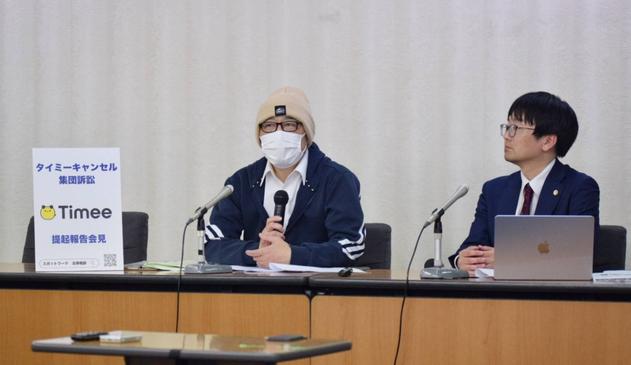
Users of ‘spot work’ app sue service over last-minute cancellations
Despite employers having accepted their applications, the nine users had their contracts canceled right before the day of work a total of 135 times.
President Lee Jae-myung criticizes South Korea's two-year fixed-term employment law as effectively becoming an employment ban, calling for practical alternatives while proposing collective bargaining rights for small business owners at KCTU meeting
#YonhapInfomax #FixedTermEmploymentLaw #LaborMarketReform #NonRegularWorkers #CollectiveBargaining #SmallBusinessOwners #Economics #FinancialMarkets #Banking #Securities #Bonds #StockMarket https://en.infomaxai.com/news/articleView.html?idxno=114863
President Lee - 'Two-Year Fixed-Term Law Has Become De Facto Employment Ban... Alternatives Needed'
President Lee Jae-myung criticizes South Korea's two-year fixed-term employment law as effectively becoming an employment ban, calling for practical alternatives while proposing collective bargaining rights for small business owners at KCTU meeting
Government adopts support program for 'Ice Age' generation
The term refers to people who had trouble finding jobs after graduating from school in the wake of the collapse of Japan's bubble economy in the early 1990s.
More and more older people in Japan are taking up short-term resort jobs, particularly those with accommodation included, as they embark on their "second life" post-retirement.
https://www.japantimes.co.jp/news/2026/03/30/japan/society/older-people-resort-jobs/?utm_medium=Social&utm_source=mastodon #japan #society #jobs #elderly #tourism #nonregularworkers
For some retirees, life is a little bit like a holiday
More and more older people are taking up short-term resort jobs as they embark on their 'second life' post-retirement.

President Lee - 'Minimum Wage Is Only a Floor—Public Institutions Must Ensure Fair Pay for Non-Regular Workers'
President Lee Jae-myung called for public institutions to pay non-regular workers fair wages above the minimum, stressing the government's role in setting a standard for equitable compensation.
Japan’s tight labor market has led more companies to relax their rules, such as those concerning employees' hair and nail polish color, in order to attract and retain workers.
https://www.japantimes.co.jp/business/2025/11/17/companies/japan-workers-rules-relaxed/?utm_medium=Social&utm_source=mastodon #business #companies #jobs #hairdressing #nonregularworkers
More Japanese firms relax rules in tussle for workers
The country's labor shortage has led companies to ease up on various aspects, such as hair and nail polish color, to secure enough part-timers.
South Korea's non-regular workforce hit a record 8.57 million in August, with the wage gap versus regular employees widening to an all-time high of 1.81 million won ($1,330) per month, according to official data.
#YonhapInfomax #NonRegularWorkers #WageGap #NationalDataOffice #EmploymentStatistics #MonthlyWage #Economics #FinancialMarkets #Banking #Securities #Bonds #StockMarket https://en.infomaxai.com/news/articleView.html?idxno=86717
Number of Non-Regular Workers in South Korea Tops 8.57 Million—Wage Gap with Regular Employees Hits Record High
South Korea's non-regular workforce hit a record 8.57 million in August, with the wage gap versus regular employees widening to an all-time high of 1.81 million won ($1,330) per month, according to official data.

Japan firms facing challenge of employing more workers with disabilities
According to the latest survey conducted by the labor ministry, Japanese companies' employment rate of disabled people was 2.4%.

Miho Koshiba: ‘Wouldn’t it be nice if people looked forward to Mondays?’
The cofounder of the Midori.so coworking space shares her inspirations and aspirations for career and community.

Parliament enacts revised pension reform bill
The legislation passed the House of Councilors by a majority vote.
 The Japan Times
 Yonhap Infomax News