 DrWeb
DrWebOn Politics: Mayor Trump – The New York Times
Trump’s Washington
How President Trump is changing government, the country and its politics.
Good evening. Tonight, we’re looking at how President Trump’s latest concern is local. We’re also covering the fallout over his decision to assert his authority over Washington D.C. And we have a (very) early report from Iowa. We’ll start with the headlines.
Mayor Trump
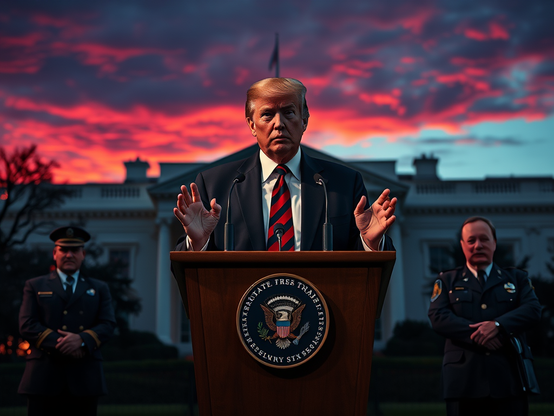
Closely flanked by the defense secretary and the nation’s top law enforcement official, President Trump sought to project an image of raw power on Monday as he announced his plans to send National Guard troops to the nation’s capital and engineer a federal takeover of its police department.
He also sounded a little like he wanted a job other than his own: Mayor.
“We’re going to replace the medians that are falling down all over the road, we’re going to replace the potholes,” Trump said, just after urging the nation’s tourists not to be put off from their trips to see the White House or the Air and Space Museum by the apocalyptic stories of murders and carjackings that he was telling at that very moment, despite the fact that the city’s violent crime rate has fallen.
“Keep coming!” Trump said, briefly assuming another mantle, that of local tourism director. “By the time you get your trip set, it’s going to be safe again.”
While Trump has deployed the National Guard to cities before, including in Los Angeles earlier this year and in Washington in 2020, this is the first time that he has actually moved to take control of a local police force, and to make a city’s crime his problem.
“I actually think it’s easy,” Trump said today. “If you’re competent, it’s easy.”
Some actual mayors, however, would disagree.
What mayors say
Earlier today, I called Mayor Jane Castor of Tampa, a Democrat in a red state who spent decades working as a police officer and then as her city’s police chief before being elected mayor in 2019. I wanted to know what she had to say about reducing crime.
“I’m not sure that President Trump would be interested in my advice,” Castor said. But she offered her perspective anyway.
“Law enforcement can only be successful by earning and keeping the trust of the community,” she said. “Just by putting sheer numbers of individuals out on the community in a law enforcement position, it may bring the city to a halt, but it’s not going to have a long term positive effect on any community.”
Bringing crime down, Castor added, “is painstaking and it can’t be done overnight.”
When I asked Mayor Randall Woodfin of Birmingham, Ala., how his city reduced homicides by 50 percent compared to this time last year, he offered a multipronged and technical answer that touched on things like solving and deterring crimes, and services aimed at stopping juvenile offenders from committing new crimes.
“It is far from easy, it takes a lot of work, but you have to listen to people on the ground and you have to listen to local law enforcement,” Woodfin, a Democrat, said.
A long history of talking crime
In some ways, Trump’s sudden interest in the local crime statistics — even as he ignored the ones that show violent crime in Washington to be at its lowest level in decades — is nothing new. He has, as my colleague Katie Rogers pointed out today, railed against images of urban blight and decay for decades, often calling for a heavy-handed response from law enforcement.
In the late 1980s, as an up-and-coming Manhattan developer, he seized on the rape and beating of a woman in Central Park, taking out ads calling for the death penalty that brought a cascade of media attention his way. (The five men who were accused of the crime were later exonerated.) In his first presidency, Trump also called for an intense police response during the Black Lives Matter protests that erupted in multiple cities, at one point tweeting, “When the looting starts, the shooting starts.”
He has not, however, been uniformly supportive of police. He was silent for hours while rioters angry about his election loss battled police in Washington on Jan. 6, 2021, and later pardoned even those involved who were convicted of crimes against police. Still, he has long seen crime as a political winner, turning to it as an issue on the campaign trail last year (F.B.I. statistics show that violent crimes, including homicides, fell across the country last year). When a member of the Department of Government Efficiency was assaulted last week, he seized on the news.
Still, despite spending days posting on social media about crime in Washington and hyping this morning’s news conference, Trump insisted he would rather do more presidential things than worry about law enforcement for a city of 700,000 people.
“It’s embarrassing for me to be up here. You know, I’m going to see Putin. I’m going to Russia on Friday,” Trump said, although he is actually planning to meet the Russian president in Alaska. “I don’t like being up here talking about how unsafe and how dirty and disgusting this once-beautiful capital was.”
And yet he kept doing so. When reporters tried to change the subject to Russia and Putin, he grew visibly annoyed, demanding that everyone stay focused on Washington.
The actual mayor of Washington, Muriel Bowser, called Trump’s actions “unsettling” in a news conference on Monday, but suggested there was little she could do to stop it. The Home Rule Act of 1973 gives the city the power to elect its own local government, but allows for presidents to declare a state of emergency to assert control over local law enforcement for 30 days at a time.
“It says the mayor shall comply with those requests,” she said.
Editor’s Note: Read the rest of the story, at the below link.
Continue/Read Original Article Here: On Politics: Mayor Trump
#2025 #America #CrimeStatistics #DC #DonaldTrump #FederalizePolice #Health #History #Libraries #Library #LibraryOfCongress #MayorTrump #Politics #Resistance #Science #TheNewYorkTimes #Trump #TrumpAdministration #TrumpLies #UnitedStates #Washington