RE: https://bsky.app/profile/did:plc:ozma3timm5c32fa7bimb4zaj/post/3mlty4isimk2s
Matilda effect - Wikipedia
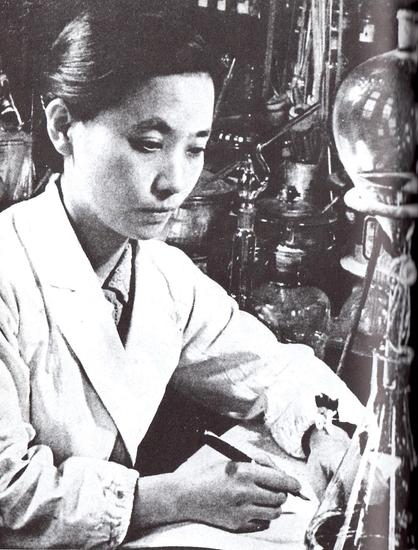
Photo via Wikimedia Commons The history of science, like most every history we learn, comes to us as a procession of great, almost exclusively white, men, unbroken but for the occasional token woman—well-deserving of her honors but seemingly anomalous nonetheless. “If you believe the history books,” notes the Timeline series The Matilda Effect, “science is a guy thing.
Interestingly, one archival witness remembered Zinaida Mulchenko as a "PhD student from #Kyiv" – an unconfirmed but intriguing Ukrainian thread in the story of a scholar who helped shape global scientometrics.
👉 https://doi.org/10.1162/QSS.a.397
@QSS_ISSI #Scientometrics #MatildaEffect #HistoryOfScience #WomenInScience #Bibliometrics #Ukraine
Abstract. This article revisits the early history of Soviet scientometrics, examining the role of Zinaida Mulchenko in writing Naukometriya – the foundational book in this field. While Vasily V. Nalimov is widely regarded as the sole author of the book, the influence of Mulchenko remains mostly unknown. We argue that her involvement in writing Naukometriya was also significant. To support this claim, we first reveal the key aspects of her biography obtained through the archival research and informants’ testimonies. Then, we compare the content of Naukometriya with Mulchenko’s Ph.D. dissertation, i.e. the first doctoral thesis in scientometrics defended in the Soviet Union, underlying the structural, systematic and content overlaps that question the commonly held view of sole authorship. Such analysis is further accompanied with the track-record of Nalimov-Mulchenko co-authorship reconstruction preceding the years of Naukometriya publication. Finally, we propose that Mulchenko’s diminished positionality as the co-author of the book can be understood through the lens of the Matilda Effect – a systematic under-recognition of women’s contributions to science. Drawing from multi-level analysis, we reconstruct her role in writing the book and identify the reasons that eventually led to Mulchenko’s erasure from the history of Soviet scientometrics.Peer Review. https://www.webofscience.com/api/gateway/wos/peer-review/10.1162/QSS.a.397
#Scientometrics is a direct translation of the Soviet term naukometriya, introduced through the 1969 monograph by Vasily Nalimov and Zinaida Mulchenko. A new paper in @QSS_ISSI reveals that around 15% of that monograph consists of fragments from Mulchenko’s PhD thesis on information flows in science — meaning that many core ideas of Soviet scientometrics were actually hers. Yet she almost disappeared from the historical record = #MatildaEffect
Historian Margaret W. #Rossiter exposed the long-standing erasure of women scientists and named it the #MatildaEffect, after Matilda Joslyn #Gage. Through decades of research, she restored hundreds of women to the scientific record and reshaped how history is written.
📢 Une fois de plus, les femmes astronomes sont effacées de l’histoire : le hors-série Ciel & Espace sur les “découvreurs de l’Univers” n’en mentionne qu’une seule.
Ce silence répète l’effet Matilda : nier ou minimiser les apports des femmes en science.
Nous exigeons une réécriture inclusive et factuelle de l’histoire de l’astronomie.
✊ Pour que les filles d’aujourd’hui aient des modèles.
📄 Communiqué complet ici: https://sf2a.eu/website2023/wp-content/uploads/2025/05/Communique_CielEspace.pdf
No flowers today but the lets appreciate the women everywhere.
For example in science: "Timeline of women in science" https://en.wikipedia.org/wiki/Timeline_of_women_in_science
They are many. And they are hidden as Margaret Rossiter has coined the #MatildaEffect
https://news.cornell.edu/stories/2023/03/how-margaret-rossiter-uncovered-hidden-women-science