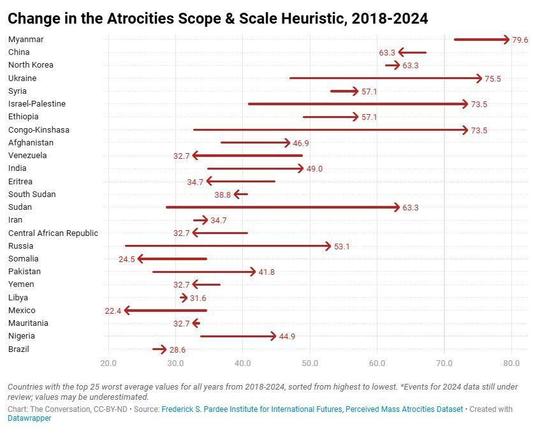
https://iwpost.com/atrocities-take-place-in-democratic-nations-as-well-as-autocratic-ones-our-database-has-logged-them-all/?fsp_sid=2791
USCIRF’s new report links severe religious freedom violations to the risk of genocide and mass atrocities, naming Yazidis, Christians, Muslims, Uyghurs, and Armenians as targets, but notably omitting Pagans, polytheists, and contemporary Pagan traditions.
#uscirf #genocideandatrocitiespreventionact #massatrocities #massviolence #religiousfreedom #pagan #religion
This book brings together a diverse range of international voices from academia, policymaking and civil society to address the failure to connect historical dialogue with atrocity prevention discourse and provide insight into how conflict histories and historical memory act as dynamic forces, actively facilitating or deterring current and future conflict. Established on a variety of international case studies combining theoretical and practical points of view, the book envisions an integrated un
'We are seeing urgent signs of more mutual #MassAtrocities to come in #Israel and #Gaza
There is little chance that the spiral of killing will subside. The international community must work to prevent further death'
https://www.theguardian.com/commentisfree/2023/oct/20/urgent-signs-mutual-mass-atrocities-israel-gaza-war
#WarCrimes #Palestine #OPT
The most relevant collection for studying the wars accompanying the breakup of Yugoslavia, which resulted in over 130,000 dead or missing, is the archive of the International Criminal Tribunal for the Former Yugoslavia (ICTY) in The Hague. The Tribunal established by the UN Security Council in 1993 to prosecute genocide, crimes against humanity, and war crimes indicted 161 people and had accumulated millions of pages of testimony, military and police reports, and videos when it closed in late 2017. This invaluable record details the massacres and includes well-known incidents, such as the mass executions after the fall of Srebrenica, but also killings and torture elsewhere in the former Yugoslavia. This article investigates the history of this archive, analyzes its contents, and argues that the collection has two important features which present both a huge opportunity and a significant challenge for research—the immense volume of the archive, and a lack of access to important parts of it.