 Biblians
Offer yourself to God, living worship today. 🙏
#biblians #bibliansapp #verseoftheday #romans12 #livingSACRIFICE #spiritualworship #christianfaith #walkwithGod #graceandmercy
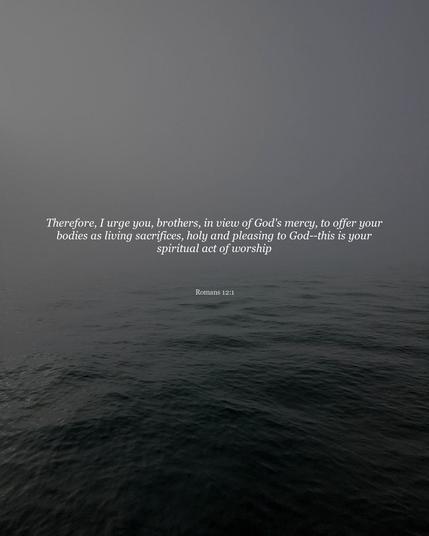
Offer yourself to God, living worship today. 🙏
#biblians #bibliansapp #verseoftheday #romans12 #livingSACRIFICE #spiritualworship #christianfaith #walkwithGod #graceandmercy
Building an Altar That Endures
The Bible in a Year
“There shalt thou build an altar unto the Lord thy God, an altar of stones; thou shalt not lift up any iron tool upon them.” — Deuteronomy 27:5
As we continue our journey through Scripture this year, we come to a moment of quiet significance in Israel’s story. After wandering through the wilderness for forty years, the nation was finally preparing to enter the land God had promised to Abraham, Isaac, and Jacob. Crossing the Jordan River would mark a new beginning, yet before Israel could settle into the blessings of the land, God gave them a command that might seem surprising. They were to build an altar.
The instruction appears simple: “There shalt thou build an altar unto the Lord thy God.” But the details surrounding this command reveal something important about the heart of worship. God was teaching His people that their life in the promised land must begin with devotion to Him. Before building cities, planting vineyards, or establishing homes, Israel was to build an altar.
The place of the altar is the first lesson we notice. The command says the altar was to be built “there”—in the land of Canaan itself. Israel would soon live among nations that worshiped many false gods. Temples, shrines, and idols would surround them. Yet in the midst of that environment, they were to publicly declare their allegiance to the Lord. In the same way, believers today are called to honor God wherever they are placed. Our faith is not meant to remain hidden in private spaces. Jesus said, “You are the light of the world. A city set on a hill cannot be hidden” (Matthew 5:14). The altar in Canaan was a declaration that Israel belonged to God even in a land filled with competing voices.
The altar was also meant to communicate permanency. Scripture specifies that it should be built of stones. Stone altars were not temporary structures; they endured. In a similar way, faith is not meant to be fragile. The apostle Paul later warned believers about being “tossed to and fro, and carried about with every wind of doctrine” (Ephesians 4:14). The Christian life requires stability. A relationship with God must be built on a foundation that survives pressure, criticism, and uncertainty. Just as those stones formed a lasting altar, our faith must be grounded in the enduring truth of God’s Word.
Another lesson emerges from the physical labor required to construct the altar. Gathering and stacking stones would not have been easy work. It required effort, energy, and determination. This reminds us that devotion to God often involves discipline. Spiritual growth does not happen automatically. Prayer, Scripture study, obedience, and service all require intentional commitment. Dietrich Bonhoeffer once wrote, “When Christ calls a man, He bids him come and die.” Bonhoeffer was describing the reality that discipleship involves sacrifice and effort. The altar in Deuteronomy symbolized that truth long before the New Testament was written.
The purpose of the altar also deserves careful attention. Altars in the Old Testament were places where sacrifices were offered to God. Worship in Israel was never separated from sacrifice. The Hebrew word for offering, קָרְבָּן (qorban), literally means “that which draws near.” In other words, sacrifice created the pathway for approaching God. Ultimately, these sacrifices pointed forward to the work of Jesus Christ. The New Testament identifies Jesus as the final and perfect sacrifice for sin. Hebrews 10:10 explains that believers are sanctified “through the offering of the body of Jesus Christ once for all.” Every Old Testament altar quietly anticipated the cross where Christ would give His life for the redemption of humanity.
There is one final instruction in Deuteronomy 27 that carries great spiritual insight. God told Israel not to use iron tools on the stones. At first glance, this might seem like a minor construction detail, but it had an important purpose. Carving designs into the stones could easily lead to decoration, symbolism, and eventually idolatry. God wanted the focus of the altar to remain on the sacrifice, not the structure.
This principle continues to speak to us today. Worship can easily become distracted by appearances, traditions, or personalities. Churches may sometimes emphasize buildings, music styles, or human leaders. Yet the heart of worship must always remain centered on Christ. The altar in Deuteronomy teaches us that the sacrifice—not the decoration—is what truly matters.
The great preacher A.W. Tozer once wrote, “The essence of idolatry is the entertainment of thoughts about God that are unworthy of Him.” God knew the human heart well enough to guard Israel against even the subtle beginnings of misplaced devotion. By commanding simple stones without carvings, He ensured that attention would remain on the act of worship itself.
As we reflect on this passage today, it invites us to ask a personal question: what does the altar of our life look like? In the Old Testament, altars marked places where people encountered God. Abraham built altars as he journeyed through the land. Elijah repaired an altar before calling down fire from heaven. Altars were reminders of God’s presence and faithfulness.
Today we no longer build physical altars, but the principle remains. The apostle Paul writes in Romans 12:1, “Present your bodies a living sacrifice, holy, acceptable unto God, which is your reasonable service.” The Christian life itself becomes an altar of worship.
Each day we decide whether we will place our lives on that altar—our time, our priorities, our resources, and our obedience. The stones of that altar are built through daily choices to honor God.
As we continue through the Scriptures this year, passages like Deuteronomy 27 remind us that worship is not merely a Sunday activity. It is a life built carefully, faithfully, and intentionally for the glory of God.
For further study on the significance of altars in Scripture, see this helpful article:
https://www.gotquestions.org/altar-Bible.html
FEEL FREE TO COMMENT, SUBSCRIBE, AND REPOST, SO OTHERS MAY KNOW
#biblicalWorship #Deuteronomy27Altar #livingSacrifice #OldTestamentAltar #sacrificeAndWorship
A Living Offering of the Heart
As the Day Begins
Romans 12:1
Meditation
Paul’s appeal in Romans 12:1 is both tender and urgent: “I beseech you therefore, brethren, by the mercies of God, that you present your bodies a living sacrifice, holy, acceptable unto God, which is your reasonable service.” It is one of the most compelling “therefores” in Scripture. After eleven chapters unfolding God’s saving mercy in Christ—the depths of sin, the heights of grace, the mystery of salvation—Paul now invites us to respond. Not with mere thoughts, but with our whole selves. The Christian life begins not in our feelings, achievements, or circumstances, but in the daily surrender of our lives to the God who has given us mercy upon mercy.
To offer ourselves as a living sacrifice is not a call to dramatic gestures; it is a call to daily devotion. It means placing my desires, my fears, my goals, and my tendencies on God’s altar each morning and saying, “Lord, make my life usable.” Unlike the sacrificial system of the Old Covenant, the offering Paul speaks of is not consumed in a moment. It is a life that remains on the altar—breathing, moving, choosing, and growing as an act of worship. This is what makes it “living.” Each decision becomes a way of loving God back. Each act of obedience becomes a whispered, “Here I am.”
As the day begins, the invitation of Romans 12:1 reminds us that the Christian life is not compartmentalized. Worship is not reserved for a church building or a single quiet moment. It is woven into our speech, our patience, our honesty, our compassion, our schedule, and our willingness to be interrupted for the sake of love. Paul calls this our “reasonable service”—the kind of worship that simply makes sense in light of all God has done. When mercy has saved us, mercy becomes our offering. When grace has found us, grace becomes our posture. Today, as you step into the ordinary routines before you, God invites you to present yourself—fully, willingly, joyfully—as a living sacrifice. There is no richer way to begin the day.
Triune Prayer
Father, as this morning unfolds, I come before You with gratitude for the mercy You have poured over my life. I offer myself to You—not in part, but wholly. Teach my heart to rest on Your altar willingly. Let every task, conversation, and decision today be shaped by Your wisdom rather than my impulses. Draw me away from self-centered habits and into a place of surrendered trust. I ask You to renew my mind so that I may see the world with clarity, humility, and compassion. May my life honor You as a true offering of worship.
Son, my Savior and my Teacher, thank You for showing me what it means to live as a holy sacrifice—fully obedient, fully loving, fully devoted to the Father. You gave Yourself for me, and now I ask for the grace to give myself for Your purposes. Walk beside me throughout this day so that my actions reflect Your heart. When selfishness rises, teach me to choose love. When weariness grows, remind me of Your strength. When pride whispers, call me back to the cross. Shape me into Your likeness so that my life becomes a witness to Your redeeming power.
Holy Spirit, dwell deeply within me today. Stir my heart toward the things that bring life and pull me gently away from anything that does not belong on God’s altar. Empower me to love when it is difficult, to forgive when it costs me something, and to serve even when unnoticed. Guide my thoughts, guard my words, and strengthen my resolve to remain a living sacrifice throughout the day. Move freely in me so that my life may reflect Your presence and bear the fruit that brings glory to the Father and the Son.
Thought for the Day
Offer God the first moments of this day, and you will find that the rest of the day begins to take the shape of worship. Let your life—ordinary as it may seem—become a living sacrifice in His hands.
Thank you for beginning your day in God’s presence.
Relevant Resource:
Read more on Christian discipleship and spiritual formation at The Gospel Coalition: https://www.thegospelcoalition.org/
FEEL FREE TO COMMENT SHARE SUBSCRIBE
#dailyChristianWorship #livingSacrifice #romans121Devotional #spiritualDisciplinesMorningDevotion #surrenderToGod

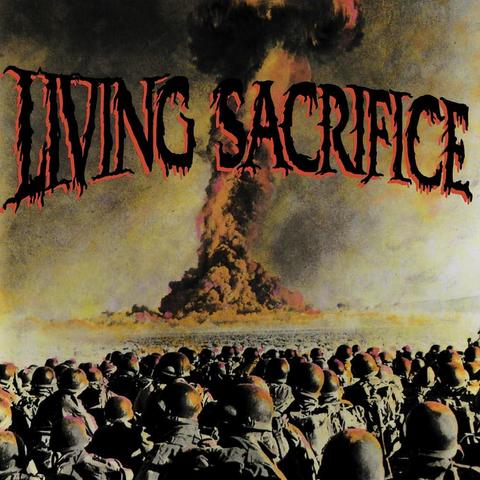
This album here comes in swinging and freakin' hits!
Living Sacrifice - Self-Titled (1991)
#nowplaying #livingsacrifice #thrash #metal #hardcore #rock #music #albums #musicrecommendations
Album recommendation:
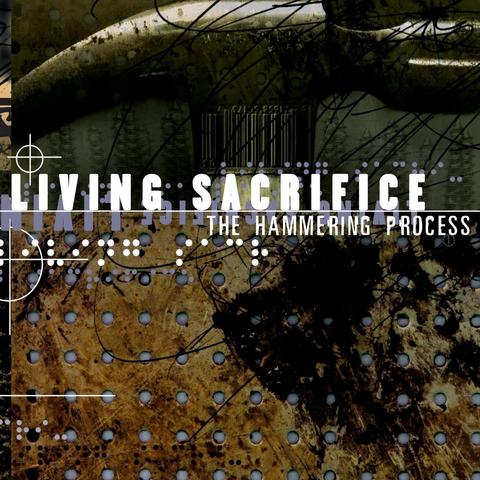
Living Sacrifice - The Hammering Process
A freaking epic album! Those chords, the percussion, and vocals make for a brutal, heavy, and aggressive listen.
Highly recommended for fans of groove and hardcore metal!
#livingsacrifice #metal #hardcore #groovemetal #music #solidstaterecords
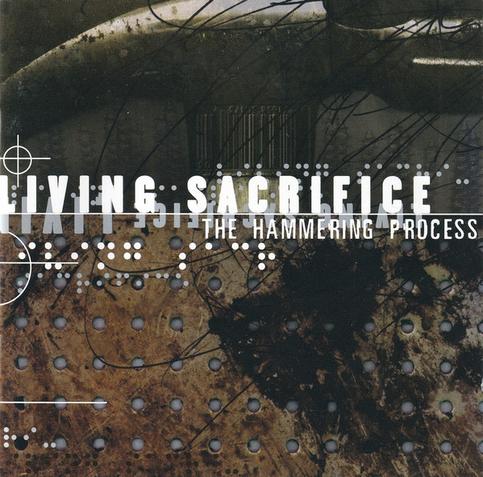
6. Living Sacrifice - The Hammering Process (2000)
This album was the start of me listening to extreme metal to relax/focus, being my regular soundtrack for studying organic chemistry - I made sure it was always in my bag with my discman my whole undergrad. They were a Christian metal band that started as thrash/death metal, but this album is (really solid) groove metal/metalcore.
#SongOfTheDay
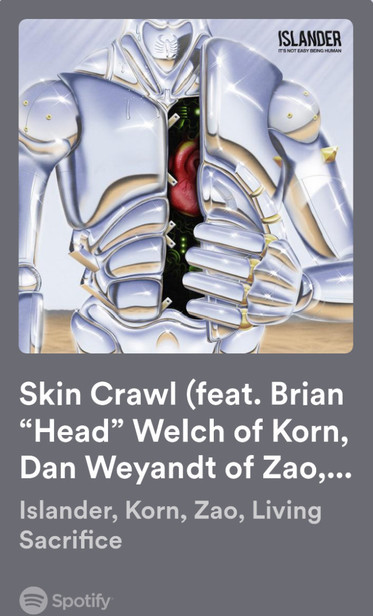
Skin Crawl, off the 2022 album It’s Not Easy Being Human by #Islander
https://open.spotify.com/track/05ExgiMCSDdT15nwhMf8ow?si=mH-nMVu0RrKrVwsluVJ3zQ
“It makes my skin crawl
Feeling anything,
feeling everything
Makes my skin crawl
Feeling nothing, nothing at all
Castle in the clouds
Dungeon in the earth
It makes my skin crawl
Feeling nothing,
feeling nothing at all”
(Brian "Head" Welch of #Korn, Dan Weyandt of #Zao, Bruce Fitzhugh of #LivingSacrifice)
 Intentional Faith
 derliebewolf
 Lambheart Studios
 the buff who fell to earth
 Bill Latronica
 Aldi80s 🇯🇵 アルディ
 Aldi80s 🇯🇵 アルディ