Rail chaos hits Swansea as 12‑day shutdown begins — passengers warned to expect long delays

The closure — running from Monday 26 January to Friday 6 February, with an additional full shutdown on Sunday 8 February — has been confirmed by Network Rail, which says engineers will be working “around the clock” on the Landore Viaduct and the surrounding track.

Network Rail says the work involves renewing rails, sleepers, switches, crossings and points, as well as refurbishing the viaduct structure that carries trains over the River Tawe. The organisation describes the upgrades as “vital” to keeping services safe and reliable.

Nick Millington, Network Rail’s Wales & Borders Route Director, said the closure was unavoidable:

“We’re carrying out vital track renewal work and refurbishing Landore Viaduct to improve the reliability of the railway for passenger and freight services. To complete this work safely, we need to close the railway between Port Talbot Parkway and Swansea. We’re sorry for the disruption this will cause.”

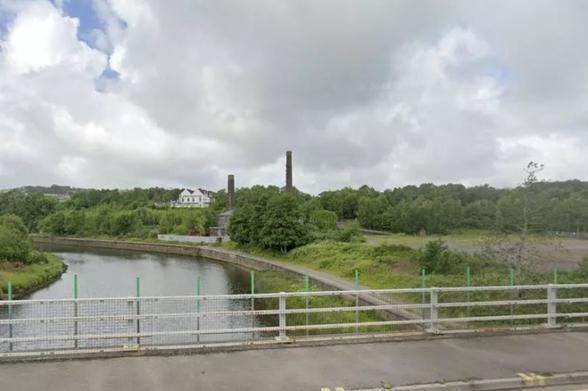
Landore Viaduct near Swansea.com Stadium, where Network Rail engineers are carrying out vital refurbishment and track renewal work.
(Image: Network Rail / J Williams)

The history of Landore Viaduct

Landore Viaduct first opened in 1850 as part of the South Wales Railway engineered by Isambard Kingdom Brunel. The original structure was built largely from timber and carried trains across the River Tawe into Swansea.

The viaduct was rebuilt in the late 19th century as rail traffic increased, replacing the timber superstructure with stronger materials. Further modernisation took place in the 1970s, leaving only a handful of Brunel’s original masonry piers still visible today.

For more than 170 years, the viaduct has remained a key route for passenger and freight services travelling in and out of Swansea, linking the city to the wider South Wales Main Line.

The shutdown means no trains at all between Port Talbot Parkway and Swansea for most of the next 12 days. Both Transport for Wales and Great Western Railway say their services will be heavily affected, with replacement buses running throughout the closure.

TfW says passengers should expect longer journeys and changes to connections, with some early‑morning and late‑evening services diverted or curtailed. Services to West Wales will continue to run, but many will start or finish at different stations than usual.

Colin Lea, TfW’s Planning and Performance Director, said:

“These essential works are an important investment in making the railway more reliable for years to come. We know disruption is frustrating and we’re grateful to customers for bearing with us.”

A GWR Intercity Express Train at Swansea station during South Wales rail services.
(Image: GWR)

GWR has confirmed that its London Paddington services will now start and finish at Port Talbot instead of Swansea for most of the closure period. Some trains will not run at all on Friday 6 February because rolling stock will be out of position.

Passengers travelling through Gowerton face additional disruption because a low bridge prevents full‑size coaches from serving the station. Smaller buses are being used, meaning passengers heading beyond Swansea will need to change vehicles at the station before continuing their journey.

The disruption will intensify again this coming weekend, with buses replacing trains between Cardiff, Bridgend and Swansea on Saturday 31 January and Sunday 1 February, and further changes on Sunday 8 February.

Despite the upheaval, Swansea Station itself remains open, with ticketing, toilets and refreshments available as normal.

With the closure now underway, thousands of commuters are bracing for delays, packed buses and longer journeys — and hoping the promised improvements will justify the disruption.

#featured #Gowerton #GreatWesternRailway #GWR #Landore #LandoreViaduct #Llanelli #Neath #NetworkRail #PortTalbot #railDisruption #railReplacementBuses #Swansea #TfW #TransportForWales #TransportForWalesDisruption

Landore woman jailed after glassing ex-boyfriend in face at Snooker Club

28-year-old Roisin Hannon, from Landore, encountered her ex-boyfriend with a new partner at a snooker club in Uplands on Sunday 26 January.

During a late-night heated argument about money, Hannon threatened to burn her ex’s house down, before pouring her drink over him and smashing him in the face with her glass, leaving him hospitalised with an arterial bleed.

The victim says he does not accept that any money was owed, and was concerned about inaccurate “gossip” about the incident in the community.

Hannon, who previously pleaded guilty to inflicting grievous bodily harm with intent, has four previous convictions for six offences including Class B drug-trafficking, shoplifting, being the owner of a dog that was dangerously out of control, and drink-driving.

She has been sentenced to 26 months in prison. Taking into consideration her guilty plea, she will serve up to half that sentence in custody before being released on licence to serve the remainder in the community.

Acting Detective Inspector Danielle Thorne from South Wales Police said: “This was a shameful act of violence which left the victim with serious injuries.

“Roisin Hannon did not care one bit about the wellbeing of the victim. Such violence has no place anywhere or at any time.

“She is now rightfully starting a term in prison, where hopefully she will reflect upon her actions and change her ways.”

(Lead image: South Wales Police)

#assault #Landore #snooker #SouthWalesPolice #Swansea #Uplands

Swansea police appeal to help identify body found by River Tawe

The body was found on November 22 and the force is keen to identify the individual but the circumstances surrounding the death are not considered to be suspicious.

The man is approximately 50-70 years of age and is bald with a grey goatee beard.

He was found wearing a red roll neck woollen jumper with camouflage overtrousers.

He had a number of tattoos, which included:

ANGEL 5 written on top of right hand

AKHISAR / ELIJAH/ BELTESHAZZA on left arm

8395 on neck

Large flower and emblem on his chest

If this description matches a person you know, please contact South Wales Police, quoting reference number 2400388650.

🗪 Live Chat https://www.south-wales.police.uk/

Contact via https://bit.ly/SWPProvideInfo 101

#Landore #SouthWalesPolice

Historic building set to be saved by council and Swansea firm

The company secured the contract to renovate the historic structure after Swansea Council advertised the opportunity.

The work, expected to take around 16 months, will see the building made suitable for a restaurant or a number of other possible uses.

The building is thought to date from the second half of the 1800s, with the planned work being supported by the UK Government’s Levelling-Up Fund.

A range of other Lower Swansea Valley schemes funded by Levelling-Up are due to follow.

The derelict Grade II listed Laboratory Building at Hafod-Morfa Copperworks as it looks today (Image: Swansea Council)

Cllr Robert Francis-Davies, Swansea Council’s Cabinet Member for Investment, Regeneration and Tourism, said:

“We’re saving the Laboratory Building and bringing it back into use – and we’re delighted that a Swansea business employing local people will undertake the construction work.

“The copperworks site is a key part of Swansea’s heritage and we see it becoming a major leisure destination.

“We’ve saved two nearby historic engine houses for future redevelopment and use, and we’ve installed a boating pontoon on the River Tawe nearby. Significant progress on our Lower Swansea Valley Project will be made this year and next.”

Work on the Laboratory Building will include stabilising the building, sensitively refurbishing it, and making it watertight and usable. There’ll be a new Welsh slate roof, new external doors and windows, a terrace and level access to the building making it accessible to all.

Cllr Rob Stewart, Swansea Council Leader, said:

“This project forms part of an investment worth over £1bn in Swansea that’s transforming our city into one of the UK’s very best places to live, work, study, enjoy and visit.

“It’s part of our commitment to restore and celebrate Swansea’s rich heritage, while boosting the local economy and creating more jobs and opportunities for local people.”

The council engaged GWP Architecture to undertake designs. As a restaurant it could seat more than 100 diners.  The council will deliver the project with Coreus Group.

John Weaver Contractors is a family firm with over a century of construction experience.

Heritage projects it has worked on include the city’s Glynn Vivian Gallery and Brangwyn Hall, plus Caerphilly Castle, Hay Castle and Port Talbot’s Margam Castle.

Terry Edwards, Managing Director of John Weaver, said:

“We’re delighted to be selected as the contractor rejuvenate the Laboratory Building.

“Our in-house artisan trades personnel look forward to working with the local community.

“We pride ourselves in delivering quality conservation projects for future generations to enjoy for many years to come.”

In the copperworks’ heyday, copper ore from around the world was smelted at the Swansea site, putting the area at the centre of a global web of copper trading connections.

The Laboratory Building was probably used to test the quality of copper ore coming into the copperworks that helped put Swansea on the world’s industrial map.

It’s architecturally the most ornate of all the surviving buildings on the copperworks site, with many classical features.

However, it became derelict and unsafe in recent years, losing much of its roof.

The two and three-storey structure, with ornate windows and a fine stone doorcase, stands next to the Morfa Gates, once a key copperworks entrance.

The planning and listed building consent approval it has means that the council can now repair and enhance the structure’s existing fabric and fully repair and refurbish of the exterior and key internal elements.

[Lead image: Swansea Council]

#HafodMorfaCopperworks #Landore #restoration #SwanseaCouncil

It will help lead to the return of 112-year-old Bascule Bridge in Landore.

The structure is earmarked by Swansea Council as a key heritage feature of the Hafod-Morfa Copperworks site’s bright future.

The aim is to re-install the restored 70-tonne steel span at its site crossing the River Tawe. Restoration work, in the form of detailed investigations, structural repairs and painting, has taken place at Afon Engineering, Swansea Vale, since summer 2019.

Having investigated the bridge’s timberwork that helps support the span, the council is now about to look for a specialist business to repair those wooden elements.

Officers continue to work closely with Welsh Government’s historic environment service Cadw on the project.

Council cabinet member Robert Francis-Davies said:

“Our detailed work so far puts us in a strong position to move to the next stage of repairing and restoring this wonderful survivor of Swansea’s industrial history.

“We’re in constant contact with Cadw to ensure that the restoration journey meets their requirements.”

Fellow cabinet member Mark Thomas said:

“The timber restoration will be specialist work and we hope to start that early next year.

“In the meantime, we plan to move the span from Afon Engineering to a new short-term temporary home close to the former Hafod-Morfa Copperworks site which is undergoing regeneration.

“Work is essential at this time to prevent further decay and risk loss of this grade II listed structure and scheduled monument. Any further delay would result in the loss of this valuable heritage that forms a critical part of Swansea’s story.

“Our work on the Bascule Bridge will complement the work we are doing to develop a world class tourist destination at the copperworks; this attracted National Lottery Heritage Funding of £3.75m to restore the Powerhouse for future use as a Penderyn Distillery visitor attraction.”

Wales’ Deputy Minister for Climate Change Lee Waters added:

“I am pleased that we’ve been able to contribute to this important project via our Transforming Towns programme which supports the economic and social recovery of our town and city centres across Wales.   

“Restoring this historic bridge is important to the overall development of the Hafod-Morfa Copperworks as a heritage and tourism site that I am sure will attract visitors from far and wide.”

Louise Mees, Cadw’s regional inspector of ancient monuments, said:

“The Bascule Bridge was pivotal to the area’s time as the world copper capital and is a unique part of Swansea’s industrial heritage.  

“It was built in 1909 to carry materials and waste between the two copper works on either side of the River Tawe. It was hinged so that it could be lifted to allow the ships with high masts that were carrying cargo and trade to and from all around the world to navigate the river.”

A unique feature of Swansea’s industrial heritage, the Bascule Bridge was pivotal to the area’s time as the world copper capital. Its hinged steel structure would lift to allow the passage of river traffic.

The initial main work on the steel elements was part funded by Welsh Government Transforming Towns funding support together with a funding contribution from the council.

Businesses involved in the work include lead contractor Griffiths, through the Swansea Highways Partnership, and  structural engineers/consultants Mann Williams.

[Lead image: Swansea Council]

https://swanseabaynews.com/2024/09/13/restoration-work-on-historic-swansea-bridge-moves-ahead/

#featured #Landore #RiverTawe #SwanseaCouncil

Restoration work on historic Swansea bridge moves ahead

A big new step is about to be taken in the repair and restoration of an historic Swansea landmark.

Swansea Bay News