Packer: City staff created shovel-ready design for Lake Washington Blvd safety upgrades before Mayor Harrell cancelled them

A construction-ready engineering plot city staff created for a planned safety upgrade to the intersection of Lake Washington Boulevard and S Orcas Street. Published by the Urbanist.

Staff at both Seattle Parks and SDOT worked together to fully design a series of planned street safety upgrades to Lake Washington Boulevard, including additional speed humps to slow speeding and a redesigned intersection at S Orcas Street. The existence of late-stage design documents and internal communications uncovered by Ryan Packer at the Urbanist demonstrate that the city was planning to go ahead with the previously announced safety upgrades to the street as recently as the spring before Mayor Bruce Harrell’s office told them to cancel them.

Final design documents represent a lot of work and public investment to create a plot ready to be handed off to a city work crew or contractor. Usually public debate happens during earlier phases of design, such as the concept images Seattle Bike Blog posted in a previous story. The concept phase gives the public enough information to have an informed debate before investing a ton of time and money into the minute details needed to create a final construction plot. For a final design, staff must study the existing conditions to make exact measurements and check for any needed repairs to existing infrastructure like damaged pavement or curbs. They also need to determine the locations and access needs for any other utilities (the new design can’t obstruct a gas or sewer cover for example). They have to make sure water drainage will still function correctly and safely, and they have to analyze all the turning angles and line markings to ensure every detail meets the relevant engineering standards. It’s a huge amount of work, and something the city only does if they actually intend to build something because it would be a big waste of precious staff time and taxpayer money to go through all this work for nothing. A February Teams chat documented both that staff were intending to move forward with construction and that the mayor’s office stopped them:

With the intersection changes fully designed, city staff asked superiors if the city move forward with issuing a work order for it in a late February Teams chat.

“Yes, that should work from an outreach standpoint. The only consideration is if the mayors office wants that pulled from the project, but we won’t know until march,” was the reply from Jordan Hoy, leading the Lake Washington Boulevard project for Seattle Parks. It was also Hoy who raised questions about a proposal to remove an all-way stop near Mount Baker Beach from an earlier set of changes to the corridor, a move that also seemed to go against what the Seattle Department of Transportation (SDOT) had determined was warranted at the intersection.

When Mayor Harrell’s office cancelled the project over the summer, they tried to hide their decision by announcing a dramatically reduced project list without acknowledging that anything had been cut. Seattle Bike Blog and others had to use the Wayback Machine to find archives of older versions of the project webpage to determine what the mayor’s office had removed. The list included most of the safety upgrades, including the Orcas intersection.

Within a couple weeks of the reduced and changed work on the street, which included some new center line reflectors and new fog lines on the sides of the road, Bradley Hawkins was struck from behind and injured while biking home from a trip to the mountains. The person who hit him did not cross the newly-reflectorized center line or slow down, then fled the scene after the collision. He was struck so hard that multiple pieces of the damaged car were destroyed as well. He had some bad scrapes and back pain, but luckily his injuries were not more serious considering the speed of the impact. He was struck in an area what was scheduled to get speed humps before the mayor cancelled them. His injuries should be a wake-up call to city leaders that this work has real life consequences.

These documents, uncovered through a public information request because the city is still obscuring the truth around the handling of this project, further make the case that Bruce Harrell isn’t up for the job of mayor. The public bears the consequences of the mayor’s anti-safety decisions like these whether they are injured, killed or simply feel unsafe accessing our streets and parks. Now it is time for the mayor to bear the consequences of his decisions as the public heads to the ballot box. Vote for Katie Wilson!

Ballots will be mailed tomorrow and are due back by 8 p.m. November 4. The deadline to register or update your registration online is November 27. After that, you can still register and vote in-person at a vote center up to and including election day.

#SEAbikes #Seattle

Man struck from behind while biking on section of Lake Washington Blvd where city dropped planned safety upgrades

Photo from Bradley Hawkins.

If you’ve ever seen someone biking around town pulling a bright yellow or magenta cello case in a bike trailer, you’ve seen Bradley Hawkins. Even without his cello, he’s a self-identified “die-hard bicycle dude” who has been biking pretty much everywhere for a long time. But all that could have easily come to an end last week when someone driving a Hyundai Elantra ran into him from behind while he was biking on Lake Washington Boulevard on a section of road where the city under Mayor Bruce Harrell’s leadership recently cut some planned speed humps and intersection safety improvements. The person responsible never stopped, fleeing the scene and leaving behind a pile of broken car parts and a seriously injured Hawkins.

“I feel really lucky,” said a mobile but bandaged-up Hawkins when I spoke to him in his home a few days after the collision. Hawkins is a longtime reader and friend of the blog. His bike is damaged well beyond repair, but he somehow didn’t have any broken bones. He has pain between his shoulders and in his lower back, and he has scrapes and bruises all over, but it could have been a lot worse.

Photo from Hawkins.

“If I had had the cello behind, I bet I wouldn’t have gotten hit,” Hawkins joked (or maybe he was serious, he did bike his cello to Friday Harbor once). But he was on his way home from a long three-day tour of Oregon and Washington “to see as many volcanoes as I could.” He started in Breitenbush and rode to Mounts Jefferson, Hood, Adams, St. Helens and Rainier. On August 13, he woke up on St. Helens and rode to Rainier before heading back to Seattle.

“It was starting to get dark around Renton, so I decided to go up Lake Washington Boulevard because I figured it would be safer,” he said. His bike had a bright front and rear lights as well as large reflectors on the back of his panniers and helmet, so he was fully prepared for night biking. In Renton, he rode a bit with a bunch of teens on Lime bikes and was feeling good about the world. As he got further north on Lake Washington Boulevard, he noticed the new center lane reflectors and lane-edge fog lines that the city added, and he said he felt like people were driving faster than usual.

“I’ve ridden Lake Washington Boulevard at all hours, and at least ten times at night this year, and I get the sense the cars are going a lot faster now,” he said. He worried that the new fog lines look too much like bike lanes even though they are not wide enough to be real bike lanes, and the shoulder space varies in width along the road. “Every driver is going to think that bicyclists need to be in that spot,” he said of the fog lines. “That was worse than nothing, putting those lines in.”

As he approached the fishing pier south of Mount Baker Beach, “I noticed somebody was not moving over and going at a clip, and I got hit from behind,” he said. “I somehow ended up in the grass on the side of the road, got on my hands and knees, lifted my hand up, and a car stopped.” The first person to stop came to his aid, then someone with EMT experience showed up and got him to lie back down until Seattle Fire Department medics arrived. He was taken to Harborview Medical Center and spent about eight hours there. The driver never stopped to render aid and remains at large.

“All that I know about them is from the parts that they left,” said Hawkins. He has a rearview mirror, a fog light, and two pieces of the front fender for a 2011–2013 Hyundai Elantra. It’s possible there was additional damage like a cracked windshield or dented hood, but it happened so fast Hawkins isn’t sure. Given the number of car pieces left behind, it was clearly a high-speed impact. Seattle Police arrived and started an investigation, but Hawkins hadn’t heard any updates on the case as of our interview.

As his ride-tracking app notes, it was an abrupt end to what had been his longest recorded ride:

Not the best way to earn a PR. Screenshot from Hawkins.

A Seattle Parks project map from 2024 shows that the city had planned multiple speed humps on the segment of road where Hawkins was struck, including two within a few hundred feet of the location where the collision occurred. A series of speed humps had been installed in the southern segment of the project as a first phase of work, and rest were scheduled for installation this summer before the department suddenly backtracked in July and cancelled nearly all the remaining safety upgrades. When crews went to work in late July, they painted new wide stripes on the side of the street (that are not bike lanes) and added some reflectors to the dashed yellow center line. Neither the lane reflectors nor wider fog lines had been mentioned in public outreach materials before July. One of the new wide fog lines is visible in Hawkins’ bike wreckage photo from the scene.

The green boxes note approximate locations for the planned speed cushions, which the city cut from the plan despite years of public outreach strongly in favor of improving safety on the street.

Hawkins said the new center lane reflectors make the road feel more like a freeway, and perhaps they also make it so his lights and reflectors didn’t stand out as much. While we can’t know for sure whether speed humps would have prevented this collision, they do slow vehicle speeds, and speed is a top factor in both the likelihood of a collision and the severity of a collision. Unfortunately, the only person who knows what role the street changes (or lackthereof) played in the collision fled the scene and is still at large, so we cannot ask them (or get them to pay for Hawkins’ health care and bike replacement). Hit and run is a shameful crime.

It’s also shameful for the city, and in this case Mayor Harrell especially, to choose to remove safety from city park and street investments. Hawkins is far from the first person to be injured in a collision in this area, as Seattle Parks’ own study from 2024 clearly documented:

Map from a spring 2024 traffic study by Seattle Parks (PDF). I marked the approximate collision location.

We don’t need to see anymore to call it: The Settle Parks 2024-25 Lake Washington Boulevard Renovations project has failed. The next mayor should commit to a complete redo under SDOT’s Vision Zero program, our city’s staff of professional street safety experts. The Board of Park Commissioners may also want to look into how the Parks Department blew this project so badly. Cancelling most the publicly-announced project elements and secretly replacing them with never-discussed and much less effective ones just weeks before construction is not good governance and points to some serious issues within the department (in my original story from July I had to use the Wayback Machine to figure out what had been cut because this information was not disclosed in the department’s communications). Seattle expects and deserves better from its Parks Department.

What happened to Bradley Hawkins is yet another reminder of what is at stake when we are planning and investing in street safety projects. We are talking about people’s lives. It’s not hyperbole, and it’s not “cars versus bikes” or any of the other garbage that too often weighs down these debates. Seattle Parks and Mayor Harrell made a huge mistake, safe streets advocates made it clear that it was a mistake, and then this happens to a guy who was just biking home to the Central District after a lovely vacation. Southeast Seattle deserves safe streets, and Lake Washington Boulevard should be an oasis where everyone can enjoy the lakeside without being put at risk of a serious traffic injury or worse.

In a complete coincidence, Seattle Bike Blog and friends are hosting a family-friendly bicycle rally for Katie Wilson tomorrow (August 23) on Lake Washington Boulevard. Meet at 11 a.m. near 43rd Ave S. This event was planned before Hawkins was injured, but his story will certainly add fuel to the community push for safety on this street and mayor who will take this work seriously.

#SEAbikes #Seattle

Best Side Cycling filmed the rainy Montlake bike/walk bridge opening + Temporary Arboretum connection needed

https://www.youtube.com/watch?v=KbasAdObT0I

I was out of town when WSDOT cut the ribbon on the walk/bike bridge over SR 520 in Montlake earlier this month. Luckily, Best Side Cycling was there to capture it all.

It’s always cool to see how many people show up even when it is pouring rain. But it stopped long enough to get some cool drone shots.

The new trail bridge connects to a new bike route nexus where the 520 Bridge Trail and the Bill Dawson Trail to Montlake Playfield meet up with the Shelby/Hamlin connection to the Montlake Bridge. The parts that are connected work great, and the new bridge makes navigating the area much easier for many trips after years of ever-changing construction detours.

Enjoy the Bill Dawson Trail connection while you can, however, because it is due to close in the spring as crews begin work on the next major phase of the 520 project across Portage Bay.

However, there are two major complaints I have been seeing consistently:

No more Bill Dawson Trail on the west side of Montlake Boulevard

For NOAA workers and anyone else with easy access to the west sidewalk of Montlake Boulevard, the removal of the old connection to the Bill Dawson Trail forces them to now cross the widened boulevard only to then pass under the Boulevard again using the new trail tunnel. The east-side access point is a huge upgrade for most users, but it is a clear downgrade for some. I was a bit surprised myself that there was no connection from the west side of the street. The boulevard is not only very wide, but there are also several missing crosswalks that leave a gap from Hamlin Street to Lake Washington Boulevard where people cannot cross.

The south terminus is not good enough

The new bridge is glorious for crossing the freeway, but it doesn’t actually connect to the Arboretum. Instead, it ends at a flashing beacon crosswalk across Lake Washington Boulevard at E Roanoke Street. From there, people on bikes can catch the popular Lake Washington Loop bike route at 25th Ave E and then lake the old stone bridge at E Lynn Street to get to the Arboretum Trail (the west sidewalk on Lake Washington Boulevard also connects to paths leading to the stone bridge). This is fine though out-of-the-way route for those who know it, but there are going to be a lot of people who assume they will be able to take the new trail directly to the Arboretum since it gets so close. It is disappointing that with as long as this freeway project has taken, there is still very little movement on the project to develop the old construction staging site into a park as is the plan. The 22-acre North Entrance Project remains unfunded, so it’s going to be a long time before it is constructed. A trail was shown in the environmental review documents for the Montlake part of the SR 520 Bridge project, so this is a known issue.

Perhaps the city/state can at least build out a temporary trail in the meantime since planning for the full site has not even begun, and that process will likely take some time since there will be a lot of public interest in what will feel like an expansion (or reclaiming) of the beloved Arboretum. The park is not something that should be rushed because quality is more important than speed, but the trail connection is needed now.

#SEAbikes #Seattle

Best Side Cycling filmed the rainy Montlake bike/walk bridge opening + Temporary Arboretum connection needed – Seattle Bike Blog

https://www.youtube.com/watch?v=KbasAdObT0I I was out of town when WSDOT cut the ribbon on the walk/bike bridge over SR 520 in Montlake earlier this month. Luckily, Best Side Cycling was there to capture it all. It's always cool to see how many people show up even when it is pouring rain. But it stopped long enough to…

Alert: It is once again time to voice overwhelming support for a safer Lake Washington Blvd

Speed cushions don’t stop anyone from driving, but they do make it a little harder to drive too fast.

Even the dramatically watered-down and insufficient traffic calming improvements planned for Lake Washington Boulevard are now apparently at risk after pushback from “people who enjoy driving as fast as they want along the boulevard,” as Seattle Neighborhood Greenways put it. Neighbors have campaigned for years about the need for safer walking and biking space on the storied lakeside boulevard, one of the only reasonably flat north-south routes in southeast Seattle. Extensive public outreach showed very strong support for ambitious changes, but SDOT and Seattle Parks decided to ignore their own outreach and instead give a baffling amount of authority to a failed and resentment-consumed community task force effort in 2022–23 that was unable to agree on much of anything beyond a short list of low-cost, unoffensive and insufficient traffic calming improvements that finally made it to construction in 2024 and 2025. We’re talking about a handful of crosswalk improvements, some speed humps, and some boulders in places where people keep driving off the road and into the park and lake. The final list falls far short of than the permanent on-street walking and biking path and expanded Bicycle Weekend hours advocates were initially hoping for. Safety opponents won, and now at least some of them are fighting even the scraps that made it through by pressuring the city to cancel the second half of the planned improvements.

You can help by using their handy online form to send letters to city leaders supporting completion of the traffic calming work. You can also join supporters at a community meeting 6:30 p.m. December 12 at the Mount Baker Rowing and Sailing Center (3800 Lake Washington Blvd S) in person or online.

I honestly have no idea why the winners of this joke of a public process would want to reopen debate on this matter, but fine. Let’s do it. Let’s reopen this project debate. If they don’t know how to take a W, then let’s turn it into an L.

Every time the city surveys people about the idea of a permanent safe space for walking and biking on Lake Washington Blvd., the result is resounding and enthusiastic support. A 2022 public outreach effort got survey responses from 3,048 people, 73% of whom lived in a Seattle zip code that includes Lake Washington Boulevard. The survey asked respondents to pick up to three of their preferred improvements they you like to see on the boulevard. Respondents overwhelmingly supported adding dedicated space for biking (2,319 or 76%), increasing the number of Bicycle Weekends days (1,754 or 58%), and adding traffic calming like speed humps (1,664 or 55%), the top three of eight options. Even though 31% of respondents said they drive on the boulevard as their main commute route, only 14% chose “do nothing” as one of their three preferred changes to the street, a dismal 5% of total responses to the question. Even when they did in-person intercept surveys at nearby grocery stores and community events, they got similar support for better walking and biking conditions on the boulevard even from people who said they usually drive there. Yet we find ourselves once again having to fill out action alerts and pressure city leaders not to listen to this demonstrably unpopular opinion even after these decisions were already made and work is already underway.

From Jan 2015 to April 2022, there were 101 collisions on this park boulevard, including 36 that injured at least one person and 6 that resulted in serious potentially life-long injuries. This is unacceptable and must change. Speed humps, stop signs and raised crosswalks should help, which is why Rainier Valley Greenways has been supporting the watered-down plans despite their frustrations with the process and result. But even once the traffic calming elements are completed, the work will not be finished. Hopefully the rate of serious crashes will be reduced, but there will still be no dedicated space for people of all ages and abilities to bike on the street.

Lake Washington Boulevard is a park. It falls under the purview of the Department of Recreation and was originally designed by the Olmsted Brothers in the early 1900s as a park boulevard, though the Parks Department has since deferred much of the process to SDOT as the city’s experts on roads and traffic. Lake Washington Boulevard is not and has never been a highway, and fast car travel should not be a priority on this street at all. The goal should be to maintain vehicle access to homes and destinations including parking lots, loading zones and boat launches, but that is where a park’s duty to vehicle access ends. The primary goal needs to be providing safe access to everyone regardless of how they traveled there, and the secondary goal should be fostering an extraordinary park experience along our waterfront.

The issue of how to make Lake Washington Boulevard safe for everyone is not over. I am still angry at the city for the way they handled the task force in 2022, which had no logical reason to be given decision-making power. Ideas that got 73% support from a survey of thousands of neighbors got shut down because on the day of task force voting only 10 people could make it and 5 of them voted no. This is not how public outreach or community task forces are supposed to work. Community task forces are supposed to exist so a subset of community members can discuss an issue in a more in-depth manor. You can gather a lot of qualitative feedback, and the task force members can take what they learn back to their larger communities, etc. They are not supposed to be used as democratic decision-making bodies because they were not selected by a population. In a best scenario, task force members could come together and attempt to find some common ground, learn from each other and then maybe some people would change their minds. If you purposefully create a task force so that it contains half people in favor and half against as the city did in this case, you cannot treat a resulting 5–5 split vote as a sign of anything other than that your task force process did not change anyone’s mind. By saying that they would follow whatever the task force recommends, the city essentially told a few safe streets supporters that if they wanted the city to make it safe to ride a bike on this park boulevard, they would need to change the minds of a couple of their outspoken opponents within 10 meetings. They couldn’t, and so the city didn’t. What a ridiculous hoop to force advocates to jump through, and what a mockery of real public outreach.

Let’s get the rest of these speed humps and crosswalks done so we can get to work on the next phase: Safe access for all park users.

More details on the latest action from Seattle Neighborhood Greenways:

Thanks to past community advocacy for a safer and more accessible Lake Washington Boulevard, construction began this November, dramatically reducing dangerous speeding on the boulevard! 🎉🎉🎉 The project is now half completed, with another round of construction expected in spring/summer 2025.

📣But now, completion of the these basic safety improvements for Lake Washington Boulevard are at immediate risk. People who enjoy driving as fast as they want along the boulevard are opposed to basic traffic calming improvements like speed humps are pushing to axe the second phase of traffic calming improvements slated for next summer.

We need your help:

  • Show up: Community Meeting on Thursday, Dec 12, 6:30 – 8:00 pm. In person at the Mount Baker Rowing and Sailing Center (3800 Lake Washington Blvd S)
  • Write an email in support of a safer and more accessible Lake Washington Blvd. Use the easy form letter to the right or write your own and send to: [email protected], [email protected], [email protected], [email protected], [email protected], [email protected], [email protected], [email protected], [email protected].
  • Share this page with 3 neighbors or friends. Word of mouth is the best form of advocacy.
  • Thank you for your ongoing advocacy!

    BACKGROUND:

    Lake Washington Boulevard is one of Seattle’s greatest parks. Year round, Seattle families enjoy walking, biking, rolling, swimming, pleasure drives, and more along the 3-mile shoreline between Mt Baker Beach and Seward Park.

    As our city has grown, car traffic on Lake Washington Blvd has grown dramatically. More and more drivers use the blvd as a highway, rather than as a scenic drive, bike ride, or stroll it was originally designed for, threatening the safety of other park users.

    The proposed renovations are a set of low-cost “short term improvements” that are the result of an extensive three-year process, with vocal and ongoing community support for slowing dangerous speeding and rollover crashes along this peaceful park boulevard. The goal is to reduce vehicle speeds to the posted speed limit, reduce street racing, improve pedestrian access when crossing the blvd to access the waterfront, and improve safety for people walking, rolling, and biking along the blvd.

    The curb bulbs, stop signs, and speed humps installed in November are incredibly helpful in slowing dangerous speeding, but not adequate to address safety for the full 3-mile corridor.

    We are asking elected officials and city staff to complete the remaining portion of the project without delay or watering down the designs from Mt. Baker Beach to Seward Park.

    #SEAbikes #Seattle

    My sister was in town so her, my mom, kiddo & I biked down #LakeWashingtonBlvd to Seward Park, with a stop at Franklin HS enabled by the new MLK bike lane to show kiddo how some track and field sports work. I have not run a 100m in decades but ran two as fast as I could and kiddo beat me by a lot. 😂

    Only sketch parts were Genesee on the way back to get to the greenway to go home (we stopped for late pizza lunch). It's a door zone paint bike lane arterial so of course. #SeaBikes #Seattle

    Posting on behalf of Rainier Valley Greenways-Safe Streets:

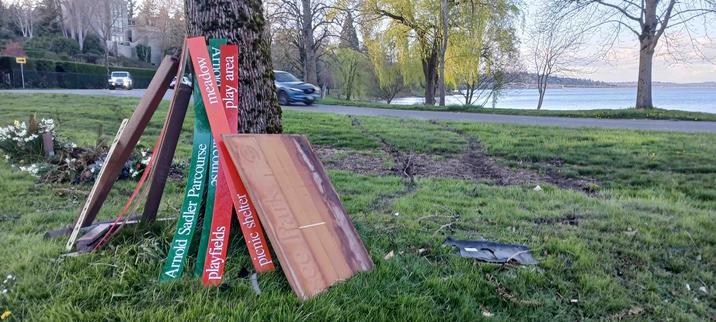
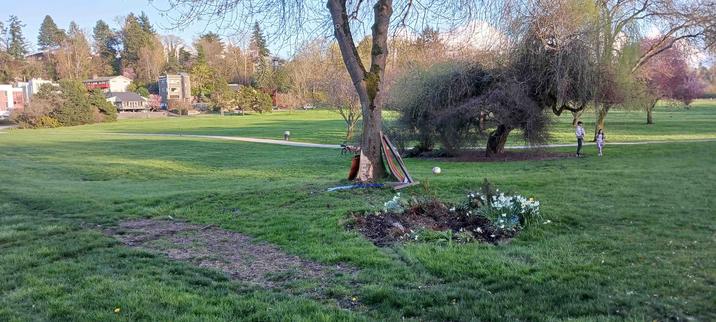
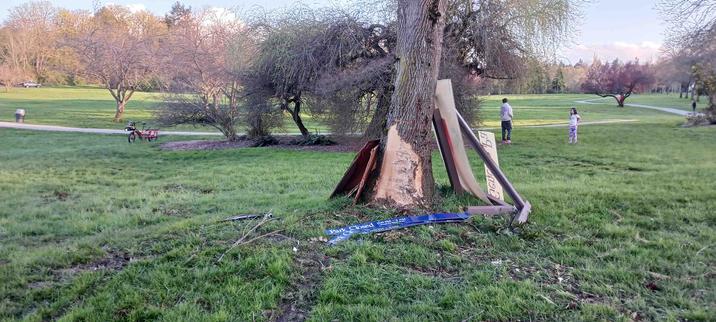
    -Saturday (3/23): driver on Lake Washington Blvd hits a tree, obliterates a park sign at Genesee Park
    -Last month: driver on Lake Washington Blvd hits tree at Alaska St, has to be extracted from their vehicle

    We need this park road to be slower & safer for everyone
    #Seattle #PNW #VisionZero #SEAbikes #BikeTooter #LakeWashingtonBlvd #LakeWaBlvd @seabikeblog
    Pics courtesy of @jrock08 (thank you for alerting us to these recent events)

    Seattle needs a permanently safe space for biking and walking on Lake Washington Blvd

    https://www.seattlebikeblog.com/2023/09/06/seattle-needs-a-permanently-safe-space-for-biking-and-walking-on-lake-washington-blvd/

    #bruce-harrell #lake-washington-blvd #parks-and-recreation #seattle-neighborhood-greenways #seattle-parks-district #tammy-morales

    Rainier Valley Greenways: How to make ‘Bicycle Weekends’ on Lake Washington Blvd better

    Since 1968, … Continue reading

    https://wp.me/pYeSb-275r

    #bicycle-sunday #bicycle-weekends #lake-washington-blvd #parks-and-recreation #rainier-valley-greenways #sdot

    Rainier Valley Greenways: How to make ‘Bicycle Weekends’ on Lake Washington Blvd better | Seattle Bike Blog