Void of Light – Asymmetries Review By Thus Spoke

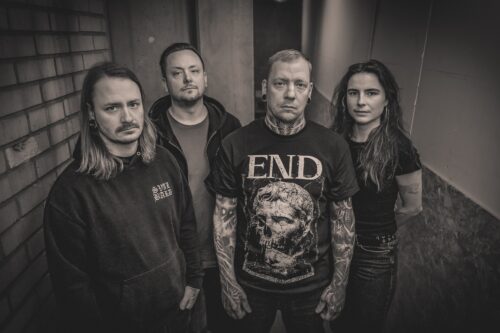
Does Void of Light refer to a source of luminescence, or is it shorthand for its total absence? The group might know something about the latter, hailing as they do from the northerly latitude of Glasgow, Scotland. Their musical medium—a sludgy, atmospheric post-metal—also reflects a dichotomous embodiment of light and dark: often crushingly heavy and thematically bleak, but also upliftingly melodic. Asymmetries—another nod to duality and imbalance—is a debut four years in the making, drawing together the fragments of brutality and reflective ambience from the preceding EPs into a bold statement on who Void of Light are. And decisive that statement certainly is.

Void of Light’s approach to post-metal is rich and dynamic, layering leaden riffing, melancholic melody, and flexible tempos around one another to augment the music’s ability to captivate. Strikingly, flatteringly akin to Deadly Carnage in the expert intermingling of delicacy and harshness (“Still the Night Skies”) and an ever-evolving rhythm, the album flows gracefully. Dips into The Ocean of steady, progressive builds, tangles with LLNN-levels of skull-bashing heaviness (“Mirrorings”), and even flirtation with black metal (“Ends,” “Mirrorings”) compliment a nuanced, emotional soundscape with heart and bite.

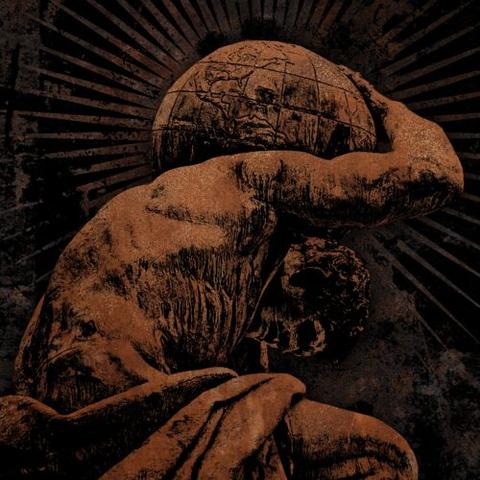
Asymmetries by Void of Light

The magnetism of Asymmetries is felt gradually and with progressive strength, like approaching a planet’s gravitational field. Things begin almost understatedly in “The Passing Hours,” with a loose, modulated melody and a steady onward crush that only hints at the depths to come. That is, before the final act gives the game away when soft singing gives way to a jubilant guitar solo over the rush of blackened percussion: a dramatic backdrop for the final reprise. These soaring, energetic guitar lines weave in and out across the record, communicating joy and bittersweet blueness as they variously dance (“Silver Mask,” “Ends”) and float (“The Passing Hours,” “Still the Night Skies”) over the comparative bluntness. Gentle (“The Passing Hours,” “Ends”) and impassioned (“Silver Mask,” “Still the Night Skies,” “Mirrorings”) cleans add still more layers of emotion as they move in pitch and volume with or in brilliant opposition to the instrumentation, and equally ardent screams (“Silver Mask,” “Still the Night Skies”). None of this would be half as stirring, however, were it not wrapped around the multidimensional rhythmic core that spills over from the percussion to riffs and vocals alike. Rippling fills and agile rolls thread texture upon which singing floats or screams rain down (“The Passing Hours,” “Mirrorings”). Frequent slides into snappy off-beats (“Silver Mask,” “Ends”) and impressively rich, cascading blackened tirades (“Ends,” “Still the Night Skies,” “Mirrorings”)—the kind you’d expect from Panopticon—intensify already incendiary peaks where aforementioned guitars dance or soar.

Asymmetries, as a name, can only be used complimentarily here; perhaps the worst that could be said is that the album might get even better as it progresses. If I had to be incredibly harsh, I would point to the oft-repeated pattern of songs lapsing midway into stripped-back plucking and singing before the reprise of heaviness. Even then, songs don’t sound the same, and the formula is an effective conduit for tension and emotion, formula though it may be. Really, though, Asymmetries feels ideally formed and structured to deliver the maximum impact as it is: the rhythms growing more fluid and restless, the layers of sung and screamed vocals more multiplicitous, and the returning spaces of poignant ambience serving to gradually dial up the pathos as well as the more tangible force of the riffs, drumbeats, and roars. If the ascendant singing in the final act of “Silver Mask” lifts you up, wait until “Still the Night Skies,” and the cascading multitracking on “Mirrorings”. If “The Passing Hours” jolts you into attention with its final forcefulness, wait until the sudden savagery that closes “Ends” and then how the following songs stack this ardour with that singing, and the consistently gorgeous waves of clear and hazy melody.

Asymmetries’ power was not instantly obvious, but with every listen its grip grew tighter and the sky around it lost its colours as they were drawn into the void. Void of Light effectively communicate a dichotomy between light and shadow in their sad, uplifting, harsh, fragile debut. And if this is where they’re starting from, then heads, hearts, and score-safety-counters everywhere will need to watch out in the future.

Rating: Great!
DR: 7 | Format Reviewed: 320 kbps mp3
Label: Ripcord Records
Websites: Bandcamp | Facebook
Releases Worldwide: April 3rd, 2026
#2026 #40 #Apr26 #Asymmetries #DeadlyCarnage #LLNN #PostRock #PostBlack #PostMetal #Review #Reviews #Sludge #TheOcean #UKMetal #VoidOfLight
OBSIDIAN, by LLNN

from the album Unmaker

LLNN

#Abraham: Suurwäut

https://song.link/0vg5td3fhn9x9

#PostHardcore #PostMetal

FFO #Adzes #LLNN #YearOfNoLight

"Mein Freund hat so laut gelacht, dass die Nachbarn gekommen sind, um zu sehen, was passiert ist. Jetzt sehen sie sich das Video auch an"

#OwlClub

Suurwäut by Abraham

Listen now on your favorite streaming service. Powered by Songlink/Odesli, an on-demand, customizable smart link service to help you share songs, albums, podcasts and more.

Songlink/Odesli

I can’t express how much I love the crushing cosmic sound of #LLNN #Interloper #SaturDoom

https://llnn.bandcamp.com/track/interloper

INTERLOPER, by LLNN

from the album Unmaker

LLNN

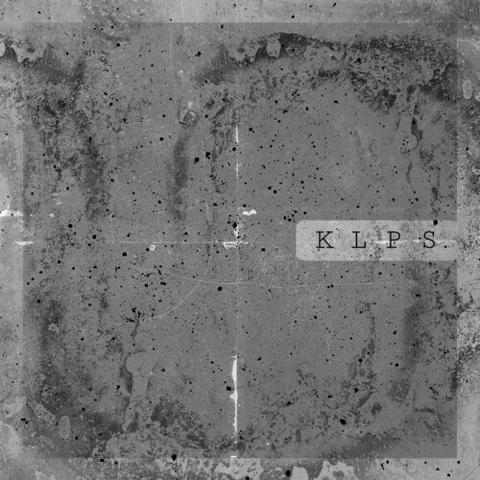
K L P S – K L P S Review

By Maddog

Determined to explode my word count while safeguarding my character count, K L P S is a familiar band with an unfamiliar name. The band’s 2023 debut Phantom Centre, released under the name Kollaps\e, got stuck in our filter before I yanked it out. Phantom Centre’s sludgy mix of atmosphere and eighteen-wheeler riffs made it concise and compelling, albeit one-track. Two years on, K L P S sees Sweden’s sludgers drop a backslash and four letters while adding even chunkier riffs, more atmosphere, and three non-breaking spaces.1 After an already-promising start, K L P S has taken one leap closer to being a titan of their genre.

K L P S takes Phantom Centre’s measurements and doubles each one. The riffs are bigger, with distorted rhythmic explosions that recall LLNN. Conversely, even these heavier sections come drenched in post-hardcore sorrow. Adding to the soup, K L P S’ use of chunky riffwork to build meditative atmospheres resembles stoner sludge acts like Dvne. While K L P S has amped up their extremity, K L P S’ softer pieces step up as well. The album’s sparser passages, often featuring just simple guitar melodies and ritualistic drum beats, add stark contrast to its heavyweights. Although K L P S is less rhythmic and bass-focused than Phantom Centre, it magnifies nearly every other dimension of its predecessor. The resulting record bears the familiar markers of sludge, but accentuates them all to avoid fading into irrelevance.

K L P S’ blend of heft and emotion makes every track a highlight. The album’s hulking riffs harness sludge’s power while eschewing its typical laziness, tethering themselves to ominous, infectious melodies (“Undertow”). Aided by blackened motifs, even these heavy segments ooze pathos (“Subverse”). K L P S’ descents into minimalism stand in stark musical contrast but embody the same strengths, using subtle melodic tweaks to both hypnotize and grip the listener (“Katarsis”). The record’s greatest triumph is that it never treats these diverse elements as mutually exclusive. The sections that blur the line between heart and muscle show off the best that K L P S has to offer, like the interplay of meditative guitars, post-rock ambience, and climactic riffcraft on “Tribulation.” Like Amenra before them, K L P S wields beauty and brawn in ways that are at once worlds apart and inextricable.

Although K L P S remains interesting throughout, its tracks bleed together over several listens. The album’s six songs have similar lengths and lean into similar styles, without a clear sense of evolution or climax in the tracklist. While each song navigates deftly between serene minimalism and sludgy cacophony, this style grows stale by the end. K L P S’ production choices magnify this feeling; although each instrumental line shines through, the loud master and the muddled sludge riffs make K L P S seem more repetitive than it really is. Still, these are faint splotches on an otherwise impressive record. Given its tempered 43-minute runtime, K L P S never threatens to lose my interest altogether. And when the album does prioritize buildup and climax, the results are spectacular. The closer “Aureola” takes the cake, using powerful melodies to anchor the listener before building up into oblivion and then back down into cathartic quiet. K L P S would benefit from more of this continuity overall.

K L P S has improved upon their debut on nearly every axis. While Phantom Centre was already a breath of fresh air in a moldy genre, K L P S steps up its riffs, its ambience, and its emotional weight. Displaying an uncanny level of maturity, K L P S’ sophomore release shines by blending these elements into a heady brand of sludge where the riffs have soul and the atmosphere has grit. While I wish K L P S had more ebb and flow as an album, its masterful songs keep me coming back for more. Even skeptics of sludge and post-metal owe this hidden gem a listen.

Rating: Very Good!
DR: 6 | Format Reviewed: 320 kb/s mp3
Label: These Hands Melt
Websites: kollapsemusic.bandcamp.com | facebook.com/kollapsemusik
Releases Worldwide: March 7th, 2025

#2025 #35 #Amenra #Dvne #KLPS #Kollapse #LLNN #Mar25 #PostHardcore #PostMetal #Review #Reviews #Sludge #SwedishMetal #TheseHandsMelt

K L P S - K L P S Review | Angry Metal Guy

A review of K L P S by K L P S, available March 7th worldwide via These Hands Melt.

Angry Metal Guy
Unmaker, by LLNN

10 track album

LLNN

Panzerfaust – The Suns of Perdition – Chapter IV: To Shadow Zion Review

By Carcharodon

The Panzerfaust tetralogy, The Suns of Perdition series, began all the way back in 2019 with Chapter I: War, Horrid War. Despite being a great record, delivered by a band showing huge promise, this massive saga wasn’t one that I really expected to ever see finished. Bands break up, get dragged into controversies1 or whatever. But, five years later, here we are, at the conclusion of The Suns of Perdition series and the end of the world. For that is what Chapter IV: To Shadow Zion explores: the world slowly falling apart, as human society and civilization approach inevitable collapse, and descends into chaos. At my hands, the series to date has gone 4.02-4.5-3.5. Does the final entry represent a triumphant conclusion to an epic saga or Panzerfaust’s unavoidable descent into the reality of the cold light of day?

To say that Panzerfaust’s music is misanthropic would be an understatement. The entire thesis of The Suns of Perdition is that to put it bluntly, humanity is a collection of twats doing awful things, which will eventually lead to the apocalypse. Even measured against that yardstick, Chapter IV: To Shadow Zion is bleak. And unrelenting. Unrelentingly bleak, one could say. Gone are the shimmering adornments and twisted, yet familiar, touchpoints scattered across War, Horrid War. Gone are the dancing melodies that occasionally lifted the gloom brooding over of Chapter II: Render unto Eden. Gone (thankfully!) are the interludes that disrupted the threat of Chapter III: The Astral Drain. Panzerfaust is unleashed on To Shadow Zion, with nothing held back. From start to finish, this is the sound of The End. However, where a band like LLNN rendered the apocalypse real on Unmaker through sheer heaviness measured in metric tonnage, Panzerfaust achieves the same by tone alone. Don’t get me wrong, To Shadow Zion is crushing, with savage carnage on the likes of “When Even the Ground is Hostile,” as Goliath’s sulphuric, rasping roar rips out over the backing vocals and cascading tremolos of Brock van Dijk. But from the doom-laden overtones that open “Occam’s Fucking Razor,” with its half-heard, half-chanted backing vocals to the brutal but stripped-back closing third of “The Hesychasm Unchained,” Panzerfaust achieve a cohesive tone of desolation through a variety of means.

As on previous outings in The Suns of Perdition saga, so on To Shadow Zion, Panzerfaust’s true MVP is drummer Alexander Kartashov. His ability, and crucially willingness, to shift between metronomic, artillery-like blasts, doom-laden rhythmic patterns, and something altogether more progressive is what both holds Panzerfaust’s compositions together and drives them forward. Most evident on album highlight, “The Damascene Conversions,” Kartashov modulates his patterns to perfectly accentuate and highlight the bağlama3 (contributed by guest Ahmet lhvani). Far from introducing a lift in mood, the bağlama’s discordant, twanging harmonies bring a sense of mournful hopelessness. The epic closer, “To Shadow Zion (No Sanctuary),” is massive, its rolling guitar lines and thick, meaty bass steamrollering forward, as Goliath switches up his delivery in places, leaning into a snarling, half-spoken rasp that conveys nothing but contempt for his subject: us.

“Fuck hope” intones Goliath (or possibly van Dijk) toward the back end of “When Even the Ground is Hostile,” capturing the entire feel of To Shadow Zion. Panzerfaust has created a dark portrait of a world in flames and done so in five, tightly written tracks, spanning just 45 minutes. The Astral Drain devoted ten full minutes of its run to meandering interludes. These are abandoned entirely here, which means that despite being two minutes shorter than its predecessor, To Shadow Zion delivers more actual music and does so cohesively, without sacrificing its flow or tracks transitions. The production is good, without being stellar. A lot of emphasis is placed on the (excellent) drums and (trademark) vocals, but I do wish Van Dijk’s guitars were pushed just a little more into the foreground in the heavier passages. That said, the guitar tone in melodic places, like the melancholic opening to “The Damascene Conversions,” is perfect and the overall soundstage is dynamic.

The slight (and relative) drop in quality on last installment, Chapter III: The Astral Drain, notwithstanding, delivering a worthy conclusion to The Suns of Perdition saga was always going to be a huge challenge for Panzerfaust. On To Shadow Zion, they have risen to the occasion. “The Damascene Conversions” is likely to follow “The Far Bank at the River Styx” in finding a high place on my SOTY list, while the album as a whole delivers on everything that Panzerfaust set out to achieve. Whilst not quite reaching the stellar heights of series-highlight Chapter II: Render unto Eden, Chapter IV: To Shadow Zion has a devastating flow to it and it’s more than worthy of closing this epic saga.

Rating: 4.0/5.0
DR: 8 | Format Reviewed: 320 kb/s mp3
Label: Eisenwald Records
Websites: panzerfaust.bandcamp.com | facebook.com/PANZERFAUST.BM.OFFICIAL
Releases Worldwide: November 22nd, 2024

#2024 #40 #AtmosphericBlackMetal #BlackMetal #CanadianMetal #EisenwaldRecords #LLNN #Nov24 #Panzerfaust #Review #Reviews #TheSunsOfPerditionChapterIVToShadowZion

Panzerfaust - The Suns of Perdition - Chapter IV: To Shadow Zion Review | Angry Metal Guy

A review of The Suns of Perdition - Chapter IV: To Shadow Zion by Panzerfaust, available November 22nd worldwide via Eisenwald Records.

Angry Metal Guy

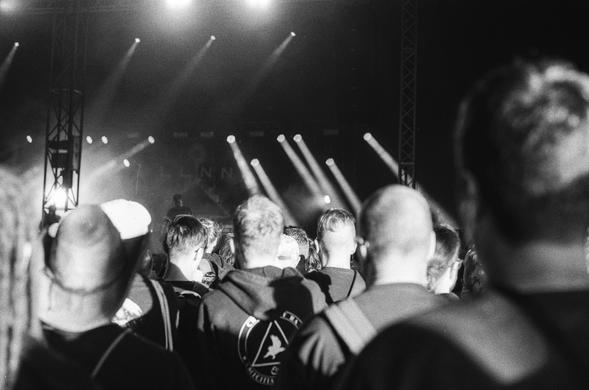
Evening sunlight under the Yohkai tent.

📷 Pentax KX
🎞️ Ilford Delta 400
🔭 Pentax M 50mm/1.7
⚗️ Come Through Lab

#BelieveInFilm #FilmPhotography #AnalogPhotography #BlackAndWhitePhotography #BlackAndWhite #MonochromePhotography #35mm #Bristol #ArcTanGent #ATG #LLNN

A well-known scientific fact that listening to one #PostMetal song is equal to drinking 10 shots of espresso.
For @AqiDraco's #TheSundayStarter:

Love Sex Machine: Hollywood Story

https://song.link/7stbtvk7rqnhc

FFO #AdmiralAngry #BlackSheepWall #LLNN

HOLLYWOOD STORY by Love Sex Machine

Listen now on your favorite streaming service. Powered by Songlink/Odesli, an on-demand, customizable smart link service to help you share songs, albums, podcasts and more.

Songlink/Odesli

So, you like #Psychonaut? You'll most probably like them as well. For @DXMacGuffin's #ProgTuesday:

Hippotraktor: Stasis

https://song.link/5vb03rgtnqt98

FFO #IrisT #LLNN #TheOcean

Stasis by Hippotraktor

Listen now on your favorite streaming service. Powered by Songlink/Odesli, an on-demand, customizable smart link service to help you share songs, albums, podcasts and more.

Songlink/Odesli