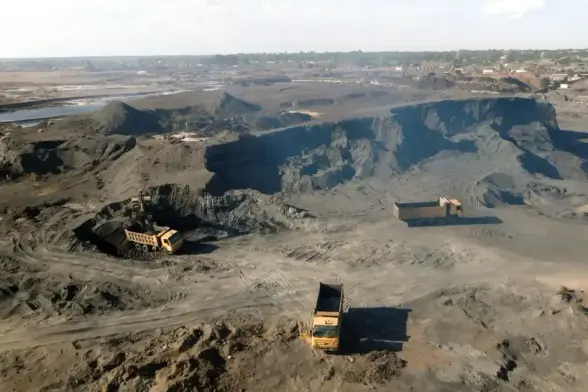
En Kabwe (Zambia), el 95% de los niños vive con niveles peligrosos de plomo tras décadas de minería. El polvo tóxico sigue presente en calles y hogares, causando daños neurológicos y abandono escolar. Las comunidades exigen responsabilidad y soluciones reales.
#kabwe #plomo #saludpública #derechoshumanos #medioambiente

https://www.youtube.com/watch?v=i0E2Af5hoVE

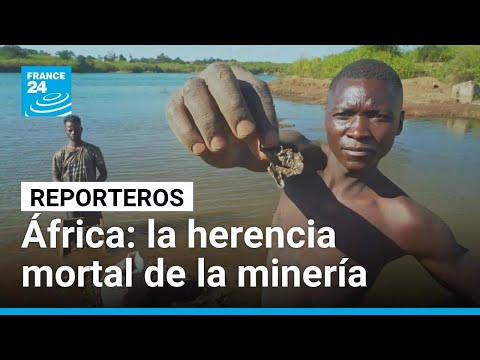
La ciudad donde el 95% de los niños está contaminado por plomo • FRANCE 24 Español

YouTube
Homo heidelbergensis and The Origins of The Middle Stone Age: The Kabwe (Broken Hill) Lithic Assemblage - African Archaeological Review

The Middle Stone Age (MSA) saw the emergence of novel behaviours in the archaeological record and is generally associated with our own species, Homo sapiens. Yet, most archaeological assemblages contain no fossil remains, with those rare assemblages with a fossil association giving a less than clear-cut picture. Here, we describe the lithic assemblage from Kabwe, Zambia, a cave site that was originally discovered in the early twentieth century and is most famous for the Kabwe cranium, an exceptionally well-preserved Middle Pleistocene Homo fossil. The nature of the assemblage’s excavation means that it is not well-provenanced. To address this issue, we draw on archival data related to the original excavations and discoveries during the 1920s and use the remains of original matrix still adhering to several of the lithic artefacts to separate out the assemblage stratigraphically. This indicates no significant difference in technological strategies across the assemblage. Whilst there is an Early Stone Age component to the assemblage in the form of spheroids, it is generally consistent with MSA technological strategies, including notably Levallois-like and laminar modes of production evident from cores and debitage. We thus interpret the Kabwe assemblage as a transitional ESA/MSA industry. Due to the possible association with Homo heidelbergensis sensu lato fossils in the form of both the Kabwe cranium and postcranial remains, this hints that the early MSA could have included other members of our clade rather than just Homo sapiens, complicating current models of MSA origins.

SpringerLink

Der giftige Wind von Kabwe

Im #sambisch​en #Kabwe haben viele Kinder un­ge­wöhn­lich hohe #Blei­wer­te im Blut. Schuld ist eine vor vielen Jahren ge­schlos­se­ne #Mine. Der Abraum #vergiftet die Stadt weiter: weil große Firmen daran ver­die­nen

Von Rebecca #Stegmann, Kabwe
https://www.taz.de/!6131795

Der giftige Wind von Kabwe

TAZ Verlags- und Vertriebs GmbH

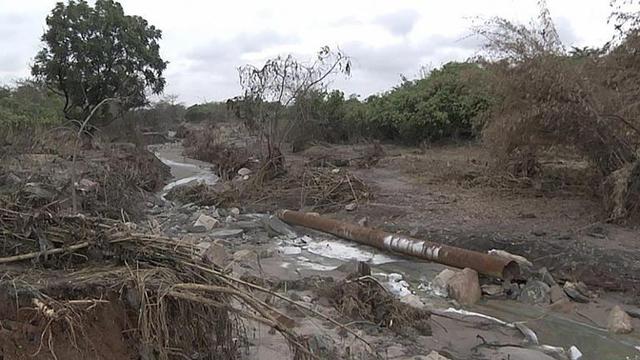
Zambie : à #Chambishi dans le nord de la #zambie un barrage retenant des eaux contaminées issues d’une mine de cuivre chinoise https://en.wikipedia.org/wiki/2025_Sino-Metals_Leach_Zambia_dam_disaster a rompu https://www.linkedin.com/posts/holy-pola-p-eng-83732b102_more-footage-looks-like-an-overtopping-activity-7298273130836353024-1NrP?rcm=ACoAAARE9wABT2WsXwrKjDS01iaYrF5DP0a7Bt8 déversant 50 millions de litres de boue acide dans la rivière Kafue. https://www.msn.com/fr-ch/g%C3%A9n%C3%A9ral/g%C3%A9n%C3%A9ral/zambie-catastrophe-%C3%A9cologique-apr%C3%A8s-un-d%C3%A9versement-dans-la-rivi%C3%A8re-kafue/ar-AA1AYOVy

Dans la ville de #Kabwe les enfants souffrent de graves problèmes de santé dus à l’intoxication au plomb, liée à l’extrême #pollution provoquée par les déchets de plomb toxique d’une ancienne #mine https://www.hrw.org/fr/news/2025/03/05/zambie-lexploitation-miniere-de-dechets-de-plomb-toxique-empoisonne-des-enfants

2025 Sino-Metals Leach Zambia dam disaster - Wikipedia

Getting ready to record a new #SkullsWithSeth! This time we are going to be learning about #Kabwe 1, which you can learn about from this awesome graphic from Prof @johnhawks. It’s going to be a great episode, get excited and subscribe to not miss it!