 Front Page [Unofficial]
Exhausted mom quits doing any household chores and shares what happened after just 3 days
https://fed.brid.gy/r/https://www.upworthy.com/mom-quits-chores-experiment-chaos-ensues-ex1/
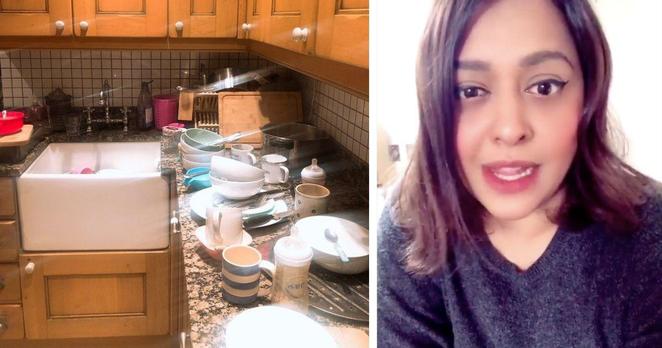
Exhausted mom quits doing any household chores and shares what happened after just 3 days
https://fed.brid.gy/r/https://www.upworthy.com/mom-quits-chores-experiment-chaos-ensues-ex1/
(English follows) FR - Fan-fiction... euh, réalité-fiction. Remplacer les elfes de Poudlard par les « jeunes chercheurs », soupoudrez de labeur invisibilisé, et vous obtiendrez quelques-unes des dynamiques du milieu de la recherche.
Publication bilingue, le français est en fin de publication. Un texte de Bryn Williams-Jones.
EN - Fan fiction... er, reality fiction. Replace the elves at Hogwarts with “young researchers,” sprinkle in some invisible labor, and you’ll get a taste of some of the dynamics of the research world.
This is a bilingual publication; the English version appears first. A text by Bryn Williams-Jones.
https://brynstorming.substack.com/p/invisible-work
#recherche #AcademiaLife #Academia #Université #VeilleESR #HarryPotter #research #university_life #InvisibleWork #LUnionFaitLaForce #ESR #GraduatePosition #PHD #PostDoctoralPosition

Explore the hidden labour that keeps academia running — from graduate students’ invisible contributions to the quiet rebellions challenging entrenched hierarchies. A reflective essay blending fantasy metaphors with real-world ethics and equity in research.
This blog isn’t just a rant (though we’ve earned one).
It’s a learning guide — a way to understand emotional labor, name it, navigate it, and stop letting it silently drain your energy or define your worth.
👉 If you’ve ever been “the strong one,” the fixer, the stabilizer, or the unofficial therapist at work… this one is for you.
#EmotionalLabor #InvisibleWork #WomenInLeadership #HRLife #LeadershipDevelopment #WorkplaceWellbeing #StrongOnes #BurnoutPrevention…
http://leadboldly1.blog/2025/12/15/emotional-labor-the-invisible-job-description-no-one-pays-for/
Exhausted mom quits doing any household chores and shares what happened after just 3 days
https://fed.brid.gy/r/https://www.upworthy.com/mom-quits-chores-chaos-ensues-ex1

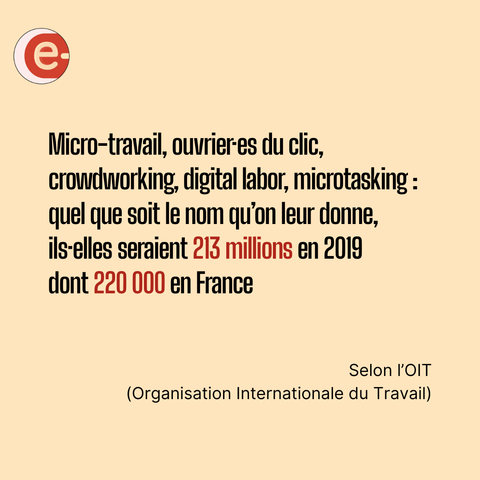
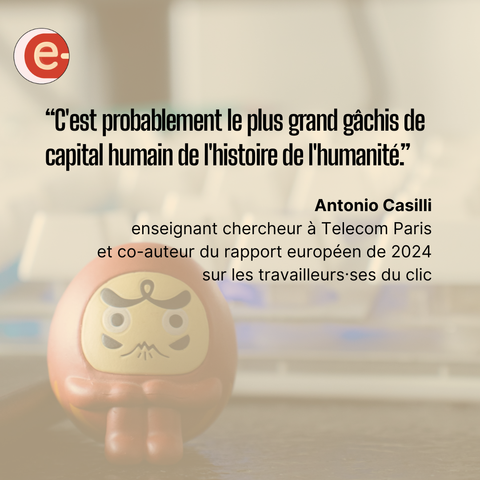
🧙♂️ L'IA a un petit côté magique, comme un bon génie capable de répondre à tous·tes nos questions, donner vie à des images tout droit sorties de notre imagination, et même composer des morceaux de musique.
#IA #intelligenceartificielle #artificialintelligence #digitalworkers #microtravail #invisiblework #travail #justicealgorithme #données #éthiqueIA #technologie #futurdutravail #automatisation #travailprécaire #sociéténumérique #cultureweb #algorithme #travailinvisible #AIethics #AIlabor


WHAT HAPPENS WHEN YOU WORK FOR TWELVE YEARS ACROSS FOUR DIGITAL PLATFORMS AND EARN ZERO EUROS?
May 8, 2025
No salary. No contract. No human contact. Just algorithms, silence, and legal dead ends. From Uber Eats to YouTube, from Drivy to Twitch, this is the story of a worker who never stopped — and was never paid. Behind the illusion of flexibility lies a system designed to erase, isolate, and discard. There are no managers to talk to. No offices to visit. No recourse when you’re erased. Don’t Contact YouTube isn’t a cry for help. It’s an appeal to the law. Because recognition won’t come from platforms — it will come from court rulings. Read the full story now.
¯
_
DON’T CONTACT YOUTUBE
Having an online activity means relying on partners… who are also online. We depend on social networks that index our content arbitrarily, on software we no longer own but rent monthly, on freelancers scattered across the globe and connected through platforms headquartered abroad. This model, often praised as “modern” or “flexible,” is in reality a legal nightmare. You can’t just grab your coat and go talk to these partners. You can’t write to them. You can’t call them. You can’t even appoint a lawyer: their offices are located outside France, and even when local jurisdiction would be required by law, platforms contractually enforce the jurisdiction of their own country — which already constitutes a violation, notably under Articles L.111-1 and L.221-1 of the French Consumer Code, or European Directive 2011/83/EU.
¯
_
JOURNALISTS ALREADY SPOKE OUT
French journalist Sébastien-Abdelhamid turned it into a running gag on the show On n’est pas des pigeons (France 4). He flew to the United States, spent hours on a plane, just to film himself standing in front of the Facebook or Google headquarters… and being told by a security guard: “You’re not getting in.” Those sequences are a goldmine to understand the problem. These companies behave like mafias: physical gatekeeping, security guards instead of reception staff, no way to access the offices — not even to drop off a resume.
¯
_
A PASSIVE-AGGRESSIVE KIND OF VIOLENCE
Online, this power dynamic becomes invisible. It manifests as a more subtle, insidious form of violence: bots, FAQ pages, contact forms that never get a reply. You don’t give up because you’re lazy, or because you didn’t try. You give up because it is factually impossible to speak to a human being at these companies.
¯
_
THE FRENCH STATE IS COMPLICIT
In this age of normalized brutality, governments turn a blind eye.
I filed a complaint against the French State. Article 223-6 of the French Penal Code states that the failure to assist a person in danger can apply to anyone — including the State — when aware of an ongoing threat. The lack of action in the face of GAFAM dominance is a failure of duty. These giants rule unchallenged, while everyone else either submits to them… or silently collapses.
¯
_
THE LAW REQUIRES CUSTOMER SUPPORT
Let’s be clear: every company is legally required to provide customer service. This is a legal obligation under French law. And in professional contexts involving payments or partnerships, the penalties can be even more severe. When your ability to eat depends on an algorithm — and you have no way to appeal — the very notion of “business” becomes a farce.
¯
#DigitalLabour #PlatformExploitation #InvisibleWork #JusticeForFreelancers

UNPAID LABOR, ALGORITHMIC DENIAL, AND SYSTEMIC SABOTAGE
May 7, 2025
YouTube built an empire on our free time, our passion, our technical investments—and above all, on a promise: “share what you love, and the audience will follow.” Thousands of independent creators believed it. So did I. For ten years, I invested, produced, commented, hosted, edited, imported, repaired—with discipline, ambition, and stubborn hope, all in the shadows. What I discovered wasn’t opportunity. It was silence. A system of invisible filters, algorithmic contempt, and structural sabotage. An economic machine built on the unpaid, uncredited labor of creators who believed they had a chance. A platform that shows your video to four people, then punishes you for not being “engaging” enough. This four-part investigation details what YouTube has truly cost me—in money, in time, in mental health, and in collective momentum. Every number is cross-checked. Every claim is lived. Every example is documented. This is not a rant. It’s a report from inside the wreckage.
¯
_
INVISIBLE COMMENTS: 33,000 CONTRIBUTIONS THROWN IN THE TRASH
As part of my investigation, I decided to calculate what I’ve lost on YouTube. Not an easy task: if all my videos are shadowbanned, there’s no way to measure the value of that work through view counts. But I realized something else. The comments I leave on channels—whether they perform well or not—receive wildly different levels of visibility. It’s not unusual for one of my comments to get 500 likes and 25 replies within 24 hours. In other words, when I’m allowed to exist, I know how to draw attention.
¯
_
33,000 COMMENTS... FOR WHAT?
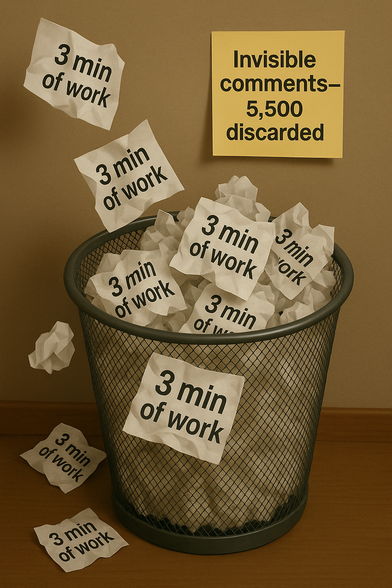
In 10 years of using the platform, I’ve posted 33,000 comments. Each one crafted, thoughtful, polished, aimed at grabbing attention. It’s a real creative effort: to spontaneously come up with something insightful to say, every day, for a decade. I’ve contributed to the YouTube community through my likes, my reactions, my input. These comments—modest, yes, but genuine—have helped sustain and grow the platform. If each comment takes roughly 3 minutes to write, that’s 99,000 minutes of my life—60 days spent commenting non-stop. Two entire months. Two months talking into the void.
¯
_
ALGORITHMIC INVISIBILITY
By default, not all comments are shown. The “Top comments” filter displays only a select few. You have to manually click on “Newest first” to see the rest. The way "Top comments" are chosen remains vague, and there’s no indication of whether some comments are deliberately hidden. When you load a page, your own comment always appears first—but only to you. Officially, it’s for “ergonomics.” Unofficially, it gives you the illusion that your opinion matters. I estimate that, on average, one out of six comments is invisible to other users. By comparing visible and hidden replies, a simple estimate emerges: over the course of 12 months, 2 months’ worth of comments go straight to the trash.
¯
_
TWO MONTHS A YEAR WRITING INTO THE VOID
If I’ve spent 60 days commenting over 10 years, that averages out to 6 days per year. Roughly 12 hours of writing every month. So each year, I’m condemned to 1 full day (out of 6) of content invisibilized (while 5 out of 6 remains visible), dumped into a void of discarded contributions. I’m not claiming every comment I write is essential, but the complete lack of notification and the arbitrary nature of this filtering raise both moral and legal concerns. To clarify: if two months of total usage equal 24 hours of actual writing, that’s because I don’t use YouTube continuously. These 24 hours spread across two months mean I spend about 24 minutes per day writing. And if writing time represents just one-fifth of my overall engagement — including watching — that adds up to more than 2.5 hours per day on the platform. Every single day. For ten years. That’s not passive use — it’s sustained, intensive participation. On average, this means that 15 to 20% of my time spent writing comments is dumped into a virtual landfill. In my case, that’s 24 hours of annual activity wiped out. But the proportion is what matters — it scales with your usage. You see the problem.
¯
_
THE BIG PLAYERS RISE, THE REST ARE ERASED
From what I’ve observed, most major YouTubers benefit from a system that automatically boosts superficial comments to the top. The algorithm favors them. It’s always the same pattern: the system benefits a few, at the expense of everyone else.
¯
_
AN IGNORED EDITORIAL VALUE
In print journalism, a 1,500-word exclusive freelance piece is typically valued at around €300. Most YouTube comments are a few lines long—maybe 25 words. Mine often exceed 250 words. That’s ten times the average length, and far more structured. They’re not throwaway reactions, but crafted contributions: thoughtful, contextual, engaging. If we apply the same rate, then 30 such comments ≈ €1,500. It’s a bold comparison—but a fair one, when you account for quality, relevance, and editorial intent. 33,000 comments = €1,650,000 of unpaid contribution to YouTube. YouTube never rewards this kind of engagement. It doesn’t promote channels where you comment frequently. The platform isn’t designed to recognize individuals. It’s designed to extract value—for itself.
¯
#DigitalLabor #InvisibleWork #ContentModeration #PlatformCapitalism #TechCriticism #UserEngagement
Please tell me that when this paper is published, someone will go onto GitHub, they'll look at our #RStats code and appreciate the fact that we commented it and bothered to lint it.
I am currently revisiting the "Openness Profile" by Knowledge Unlatched.
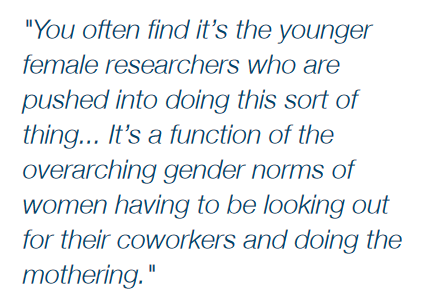
This quote points to a bigger systemic problem in the academic world than some might realise. These collegial care activities are a) extremely important for science as a social system, not least for the integration of new minds into the community and b) they prevent people from working on papers and grants with the same effort as those (men) who avoid them.
 Sara Teinturier
 Andy Tseng
 cariborden3
 Les e-novateurs
 Michaël | HouseStationLive.com
 Stephen Royle
 hauschke