 Wen
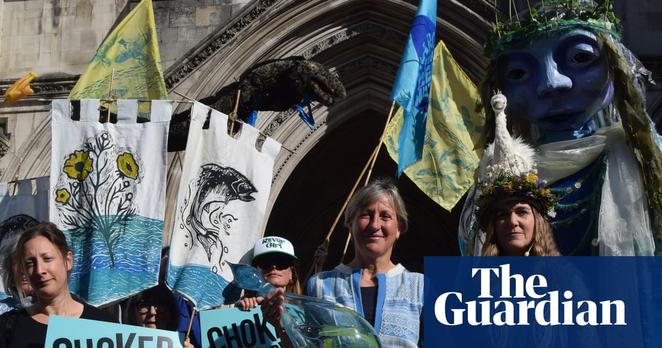
WenThese lawyers are giving gaslighting a bad name
#Pollution #Water #WaterQuality #IntensiveFarming #Wye #Usk #Ecology #Gaslighting
These lawyers are giving gaslighting a bad name
#Pollution #Water #WaterQuality #IntensiveFarming #Wye #Usk #Ecology #Gaslighting
Soil is under-appreciated. But it's vital in so many ways.
We depend on it for our survival yet we’re currently losing it 50-100 times faster than it’s able to rebuild.
There are more micro-organisms in one teaspoon of soil than there are humans on the planet! 🪱
Here's a deeper look at the importance of soil for #WorldSoilDay…

Soil is underappreciated. But it's vital in so many ways. Here's a look at the importance of soil - and why soil matters so much. This was made in partnership with The Royal Society. Animation by Flock London. Enjoyed this? Have a watch of this video next! Why water is really, really weird 👉 https://www.youtube.com/watch?v=mPpKhxtFf1Q Subscribe to BBC Ideas 👉 https://bbc.in/2F6ipav ____________________________ Do you have a curious mind? You’re in the right place. Our aim on BBC Ideas is to feed your curiosity, to open your mind to new perspectives, and to leave you that little bit smarter. So dive in. Let us know what you think. And make sure to subscribe! 👉https://bbc.in/2F6ipav Visit our website to see all of our videos: https://www.bbc.com/ideas And follow BBC Ideas on Twitter: https://twitter.com/bbcideas #bbcideas #soil #planetEarth
"#IntensiveFarming is the predominant method of producing #meat, #dairy products and #eggs in Europe and elsewhere in the world. It is also recognised as one of the most polluting industries worldwide in 2024, generating nearly 15% of global #greenhousegas emissions. However, the impact of #livestock farming on its immediate environment remains relatively unexplored."
Intensive agriculture is killing the environment.
In Campo de Cartagena in #Murcia illegal wells, illegal desalination and overuse of fertiliser turned #MarMenor into a sewer.
In this article: illegal irrigation of avocado and mango plantations is drying up rivers in the #Malaga area - in turn this will lead to #desertification of the region.
That avocado on your toast is costing the Earth, probably.
Are home #hydroponics the answer?

La sequía y la sobreexplotación agrícola dejan una postal dramática en un acuífero de Andalucía. "Donde antes había naranjas, ahora hay aguacates. Vamos camino a un colapso hídrico", denuncian ecologistas.
Infections from animals may cause 12 times more deaths by 2050 - study
=====
Most modern epidemics have been caused by pathogens that spread from animals to humans, also known as zoonotic diseases.
They can spread to humans via direct contact with animals, vectors such as ticks or mosquitoes, contact with an area where animals live, or consuming contaminated food or water.
=====
Paper: https://gh.bmj.com/content/8/11/e012026
#animals #disease #pandemic #outbreak #zoonosis #zoonoses #spillover #domestication #wildAnimalFarming #hunting #trapping #backyardFarming #CAFO #IntensiveFarming #stopFuckingAroundWithAnimalsOrElse
The COVID-19 pandemic has focused attention on patterns of infectious disease spillover. Climate and land-use changes are predicted to increase the frequency of zoonotic spillover events, which have been the cause of most modern epidemics. Characterising historical trends in zoonotic spillover can provide insights into the expected frequency and severity of future epidemics, but historical epidemiological data remains largely fragmented and difficult to analyse. We utilised our extensive epidemiological database to analyse a specific subset of high-consequence zoonotic spillover events for trends in the annual frequency and severity of outbreaks. Our analysis, which excludes the ongoing SARS-CoV-2 pandemic, shows that the number of spillover events and reported deaths have been increasing by 4.98% (confidence interval [CI]95% [3.22%; 6.76%]) and 8.7% (CI 95% [4.06%; 13.62%]) annually, respectively. This trend can be altered by concerted global efforts to improve our capacity to prevent and contain outbreaks. Such efforts are needed to address this large and growing risk to global health. Data are available in a public, open access repository. All data and code used to perform this analysis are available in our data and code repository ([https://github.com/concentricbyginkgo/zoonotic\_spillover\_trend][1]). [1]: https://github.com/concentricbyginkgo/zoonotic_spillover_trend
PM2.5 pollution from ammonia resulting from spreading manure on farmland much more relevant than particulate pollution from cars. I wasn't expecting THAT!
https://www.theguardian.com/commentisfree/2023/sep/22/air-pollution-lobbying-politics-ulez?s=09
 Sam
Sam SubtleBlade ⚔️
 CuNha
CuNha Marcus Jenkins
 Science News
 idw
idw
 VeganPizza69 ⓋⒶ
 Joseph Lim