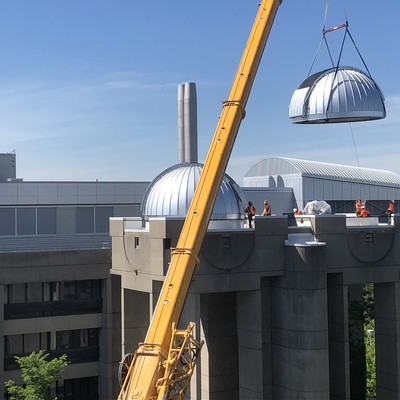
 AstroHyde
That special #astronomy feeling when your new Halpha filter arrives, is installed in the #telescope and.... it's totally cloudy all week 😂 #Toronto #weather
#science #Astrodon #observatory #yorkuniversity #hydrogenalpha @AllanICarswellObservatory
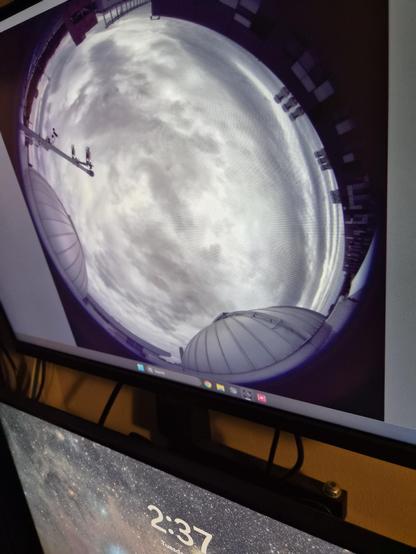
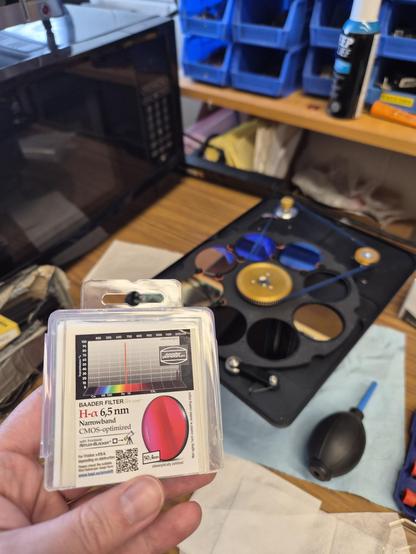
That special #astronomy feeling when your new Halpha filter arrives, is installed in the #telescope and.... it's totally cloudy all week 😂 #Toronto #weather
#science #Astrodon #observatory #yorkuniversity #hydrogenalpha @AllanICarswellObservatory
Recent Solar adventures
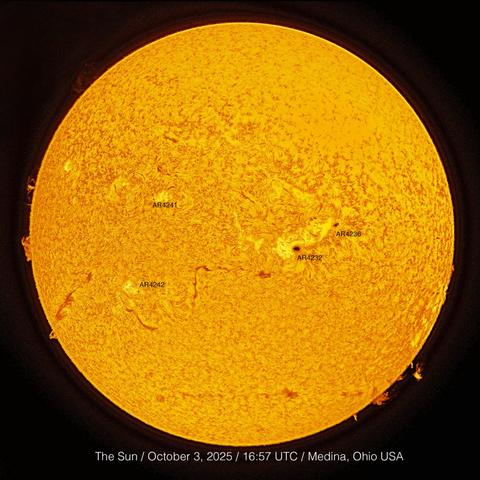
A full-disk image of Sun, as recorded in hydrogen-alpha light. Visible are two large sunspots, several serpentine filaments, and prominences that appear around the star’s limb. Credit: Stella-Luna Observatory / James GuilfordOctober 3, 2025 — We had been having quit a lot of trouble lately, recording data and reproducing images of Sun with prominences. There was some early success but even those images were a struggle to produce. Taking a look at suggested camera settings found in an article on solar imaging, one thing stood out — gain! We had nudged the camera’s gain setting upward and that’s not helpful and certainly not recommended; the setting should be very low or even zero! A few adjustments in data capture parameters was all it took to make a big difference in image processing and results!
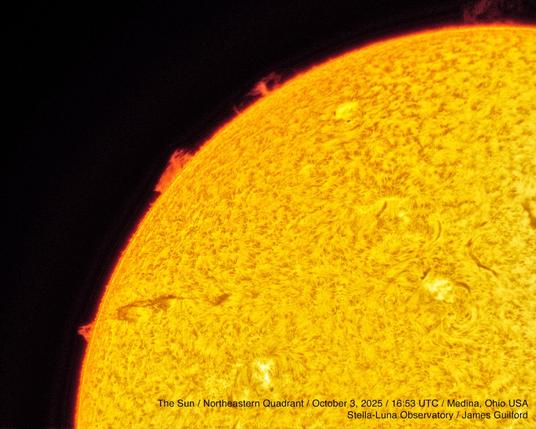
Sun’s northwest quadrant, as recorded in hydrogen-alpha light. Visible are several filaments, as three prominences appear along the star’s limb. The “peach fuzz” appearance of the edge of the solar disk is caused by the presence of innumerable spicules or small prominences.We’re very pleased with Barlow-boosted views, shown here, though we’re still having some issues with achieving even lighting across whole-disk views — just can’t seem to get them tuned right with the Coronado SolarMax III. Visual observing was also very good, especially with the TeleVue 10mm eyepiece. October 3 conditions: Clear sky, temperature of 74°F, light southeast wind.
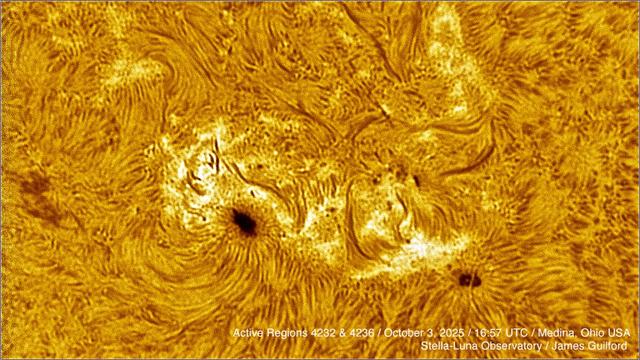
A close-up view of two large sunspots, as seen in hydrogen-alpha light. Solar plasma follows the intense and curved lines of magnetic force to highlight the turmoil in the vicinity of the spots.#2025 #astronomy #astrophotography #chromosphere #hydrogenAlpha #prominences #solar #sun #sunspots


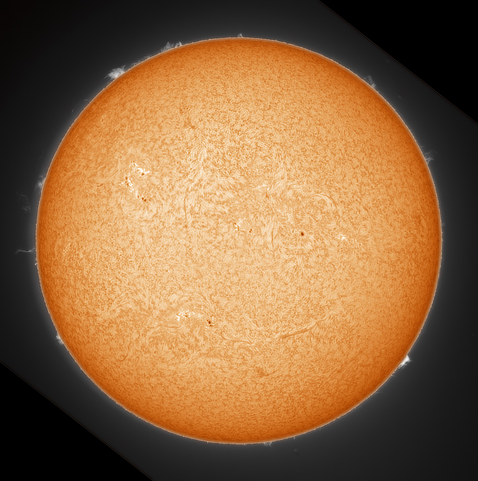

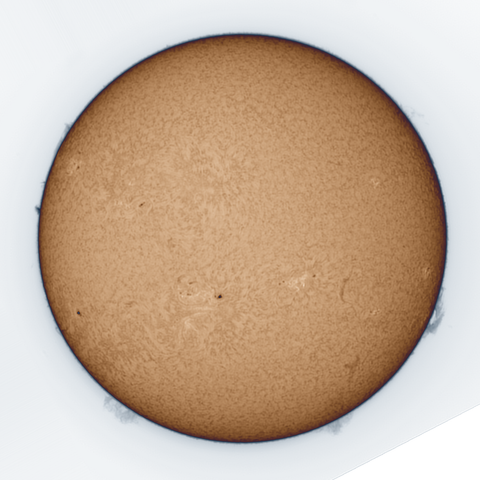
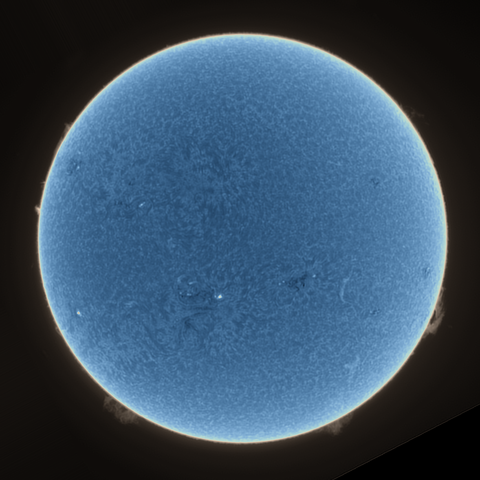
The Sun today in hydrogen alpha. Processed in natural and inverted luminance.

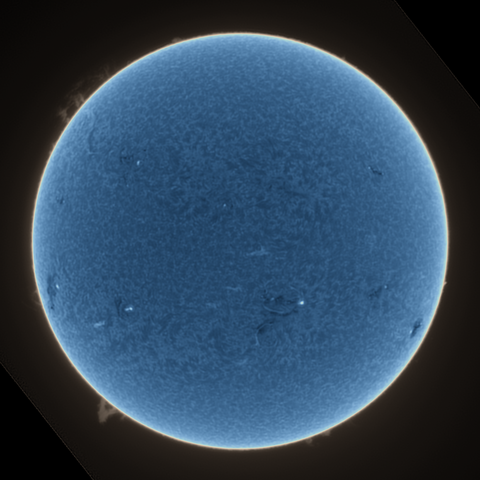
The Sun today in hydrogen alpha. Processed in inverted and natural chromosphere luminance.
 Frank Adler
 Stella-Luna Observatory
 Unofficial PetaPixel Bot

 Justin Quade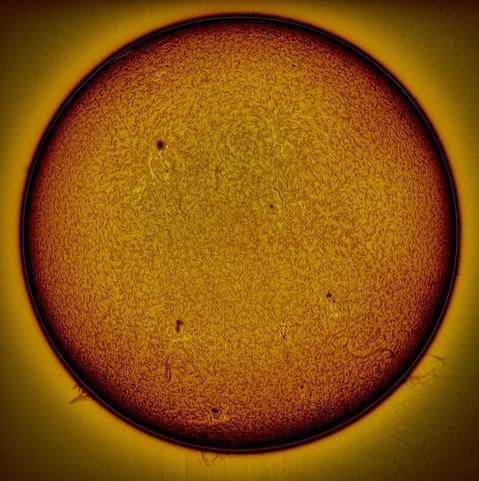
 Kevin M. Gill