Snooz Ice Cream Branding: How&How Built the World’s First Truly Nocturnal Brand Identity

Sleep-friendly ice cream sounds like a contradiction. It sounds like something a wellness influencer made up at 2 a.m. But Snooz is real, and the brand How&How built around it is one of the most strategically coherent — and visually arresting — brand identities to emerge from the functional food space in years.

This is a story about more than good design. It’s about what happens when a genuinely differentiated product finally gets a brand brave enough to match it. And it raises a question worth sitting with: what does it actually mean to design for the night?

Branding by How&How studio for Snooz: the world’s dreamiest ice-cream.

What Makes Sleep-Friendly Ice Cream Branding So Difficult to Get Right?

Most functional food brands fall into one of two traps. Either they lean too hard into the clinical — white packaging, medical-adjacent typography, the visual language of a pharmacy — or they overcorrect into “wellness pastels,” soft greens and creamy beiges that whisper good for you without saying anything at all.

Snooz, by design, avoids both. But that’s because How&How asked a smarter question from the start. Rather than asking how do we make this look healthy?, they asked, “Where does this product actually live? The answer, of course, is the night. And the night has its own visual vocabulary. It just hadn’t been applied to ice cream before.

Over 60% of ice cream is consumed after 6 p.m. That statistic alone should have been the inciting incident for a category-wide rethink. Instead, supermarket freezers remain stacked with seaside bunting, pastel scoops, and gingham — visual shorthand for summer afternoons that has nothing to do with how or when most people actually eat ice cream.

How&How recognized this gap. Then they built an entire brand identity inside it.

The Nocturnal Brand Framework: A New Model for Night-First Positioning

What How&How created for Snooz can be understood through what might be called Nocturnal Brand Architecture — a term worth defining precisely, because it captures something the industry hasn’t named yet.

Nocturnal Brand Architecture is the strategic and aesthetic alignment of a product’s visual identity, tone of voice, and consumer touchpoints with the behavioral and psychological context of nighttime consumption. It doesn’t simply use dark colors. It thinks in terms of mood, ritual, and the specific way humans perceive and interact with brands after dark.

This framework has three defining pillars:

1. Contextual Inversion

Contextual Inversion is the deliberate subversion of category conventions by anchoring every design decision to the product’s actual usage context. For Snooz, this meant stripping out every “daytime” code — saturated color, outdoor photography, cheerful typefaces — and replacing them with cooler, quieter, more considered alternatives.

The result isn’t just visually distinctive. It’s logically consistent. Every element earns its place by answering the same question: does this belong to the night?

2. Gravitational Visual Language

How&How introduced what Snooz’s visual world calls “zero gravity” animation — product visuals that drift, float, and orbit rather than sit still or snap into place. This is gravitational visual language: motion design that mimics the weightlessness of falling asleep. It’s screen-saver quality, deliberately so, and it’s precisely calibrated to feel like the mental state Snooz is designed to induce.

The animated visuals don’t just look good. They feel like the product works.

3. Nocturnal Tone Calibration

Most ice cream brands speak to children, or to the nostalgic inner child. Snooz speaks to adults who are tired. Not in a sad way — in a knowing, wry, slightly irreverent way. The brand’s tone of voice is “more comfortable jumping on the bed than lounging on the sofa,” as How&How puts it. That’s a precise tonal brief. It’s playful without being juvenile, relaxed without being flat.

This is Nocturnal Tone Calibration: matching verbal register to the emotional state of the consumer at the moment of consumption. At 10 p.m., after a long day, people don’t want to be talked to. They want to be understood.

The Logo: Two Moons and a Wordmark That Does Real Work

Good logos carry meaning without explanation. Great logos carry meaning and feeling simultaneously. The Snooz wordmark — enhanced by not one but two eclipsed moons — achieves both.

The dual-moon device is a masterstroke of functional symbolism. It communicates sleep, space, calm, scale, and the particular quiet of late-night hours. And it does all of this while remaining a piece of genuinely beautiful typography. The moons finesse the letterforms rather than compete with them.

Consider the alternative: a crescent moon slapped above a sans-serif logotype. That’s the obvious solution. How&How chose the harder, better path — integrating celestial imagery into the wordmark itself rather than decorating around it. The logo feels like something you want to touch. It has the visual weight of something premium, but the warmth of something personal.

That balance is difficult to strike. Most brands choose one or the other.

How the Photoshoot Reframes Ice Cream Photography Entirely

Ice cream photography has a formula. Overlit studio shots. Melting scoops in golden hour. Hands holding waffle cones against blurred beach backgrounds. The visual grammar of ice cream advertising was written in the 1980s and has barely been revised since.

How&How’s art direction for Snooz broke this entirely. The photoshoot uses overexposed, flash-on imagery — the kind of photo that looks like it was taken at midnight by someone who forgot to turn off their flash. It’s the visual language of late nights, of parties winding down, of that particular kind of memory that exists at the edge of consciousness.

This is not accidental. Overexposed flash photography has cultural associations with authenticity and intimacy that no amount of studio lighting can replicate. It feels real. It feels after hours. And for Snooz — a brand that literally exists after hours — it’s the most honest visual language possible.

The creative decision also solves a practical brand challenge: how do you make ice cream look cool without making it look cold? Flash photography does this naturally. The warmth of the flash against dark backgrounds creates a glow that makes the product feel both appetizing and atmospheric.

Why Functional Food Branding Usually Fails — And What Snooz Gets Right

The functional food and drink space has a branding problem. Products in this category routinely have strong science and weak stories. They solve real problems — sleep, focus, gut health, energy — but they communicate those solutions through the visual and verbal language of supplements rather than the language of desire.

Desire is what ice cream has always sold. How&How’s genius move was to recognize that Snooz didn’t need to abandon desire — it needed to redirect it. Instead of the desire for sweetness on a hot day, Snooz sells the desire for rest. For the pleasurable surrender of going to bed. For the small luxury of a nighttime ritual that feels indulgent rather than medicinal.

This reframe — from functional product to desirable ritual — is the most important strategic decision in the Snooz brand. It positions sleep-friendly ice cream not as a compromise but as an upgrade. You’re not giving up sugar. You’re choosing something better. Something that understands you.

That’s a fundamentally different emotional proposition, and it required a brand built to carry it.

The Snooz Brand as a Case Study in Category Creation

There’s a concept in brand strategy called category design — the idea that the most powerful brands don’t compete in existing categories; they create new ones. Snooz is doing exactly this.

Traditional ice cream brands compete on flavor, on nostalgia, on occasion. Snooz competes on timing. It owns the after-dark consumption occasion more completely than any other ice cream brand because it has built its entire identity around that moment.

The Snooz brand implicitly defines a new product category: nighttime functional desserts. This is a space that barely existed before, and Snooz — with How&How’s branding behind it — has planted its flag early. As sleep science continues to enter mainstream consumer consciousness, and as functional food continues to grow, that flag will become more valuable.

This is a forward-looking brand strategy at its most effective. How&How haven’t just made a beautiful brand. They’ve made a brand with a structural advantage in a category that’s about to get very competitive.

Ingredients as Identity: Camomile, Theanine, and the New Language of Sleep Desserts

The formulation behind Snooz — camomile, theanine, magnesium, lemon balm — is genuinely impressive. These are evidence-backed sleep-support ingredients, not wellness window dressing. But how a brand communicates its ingredients is almost as important as what those ingredients are.

How&How’s approach to ingredient communication in the Snooz brand avoids the clinical trap cleanly. Rather than listing functional benefits in the manner of a supplement label, the brand lets its ingredients live inside the broader narrative of night and ritual and rest. The ingredients are real; the brand makes them feel magical.

This is a sophisticated balance. Consumers in the functional food space increasingly demand transparency — they want to know what’s in it and why it works. But they also want to be seduced. They don’t want to feel like they’re managing their sleep; they want to feel like they’re treating themselves.

The Snooz brand, as built by How&How, satisfies both impulses simultaneously. That’s harder than it looks.

What Snooz Teaches the Broader Branding Industry

Here’s an honest take: most branding projects for challenger food brands are competent but forgettable. They follow the playbook, they hit the brand guidelines, they launch and sit quietly on the shelf. The Snooz brand is something else entirely.

It’s a reminder that the most powerful brand strategy begins not with the product but with the moment the product enters someone’s life. Where are they? How do they feel? What do they need? For Snooz, those answers are specific and evocative: they’re at home, they’re winding down, they want something that understands the particular texture of late-night life.

How&How built a brand that answers those questions before the consumer even thinks to ask them. And that — more than any individual design decision — is what makes this project extraordinary.

There are lessons here for any brand working in the functional food space, or in any category where consumer behavior is time-of-day specific. The visual language of daylight doesn’t work after dark. The tone of morning productivity doesn’t resonate at midnight. Brands that understand when they’re consumed, not just why, have a genuine strategic advantage.

Snooz understands this completely. And now it looks like it does.

The Broader Trend: Night-Economy Branding Is Only Getting Bigger

Consumer behavior after 8 p.m. has become one of the most interesting areas in retail and FMCG strategy. Streaming, late-night snacking, social media consumption, sleep supplements — the night economy is large and growing, and it’s still dramatically underserved from a branding perspective.

Most brands that sell into this space were designed for daytime and simply haven’t updated. That’s an opportunity. Snooz, with its Nocturnal Brand Architecture, is ahead of the curve. As more brands wake up to the commercial potential of night-first positioning, the Snooz brand will look increasingly prescient.

I sense that nocturnal brand positioning will gradually emerge as a recognized category strategy in consumer packaged goods, with Snooz likely remembered as one of the early examples that helped define the space. The combination of growing sleep-wellness awareness, increasing functional food sophistication, and the rising cultural capital of night-economy aesthetics makes this outcome close to inevitable.

How&How built the right brand at the right time. The rest of the category will eventually catch up. But Snooz will already be asleep — comfortable, well-rested, and holding the best real estate in the freezer.

All images © How&How. Check out WE AND THE COLOR’s Graphic Design and Branding categories for more inspiring projects.

#branding #design #graphicDesign #HowHow #iceCreamBrand #Snooz

How the Everbloom Rebranding Redefines Sustainable Luxury

Sustainable design frequently suffers from a serious image problem. Beige color palettes, rough textures, and moral preaching often define the sector. However, the recent Everbloom rebranding by London-based agency How&How shatters these tired tropes completely. This project treats bio-manufacturing not as a compromise, but as the height of luxury. It signals a massive shift in how we sell ecological responsibility. Designers and consumers alike should pay close attention. The work proves that saving the planet can look just as good as destroying it.

Everbloom Rebranding by How&How

Why is the Everbloom rebranding changing the narrative?

You might wonder why a company would hide its green credentials. Traditionally, eco-friendly brands shout about their carbon footprint immediately. Yet, the Everbloom rebranding takes a radically different approach. It adopts a “Product First, Planet Second” philosophy. This strategy acknowledges a hard truth about consumer behavior. Most shoppers prioritize quality, aesthetics, and performance over sustainability.

Therefore, How&How positioned Everbloom to compete with fashion giants like Gucci or Dior. They did not position it alongside niche eco-activists. The branding suggests that this fiber is superior to silk or cashmere. Consequently, the sustainability aspect becomes a delightful bonus rather than the primary selling point. This tactical pivot mirrors successful moves by brands like Polestar and Aesop. These companies sell desirability first. Virtue comes later.

The strategy behind the visual identity

The fashion industry desperately needs a solution like Everbloom. Currently, two-thirds of the $994 billion global fiber market relies on fossil fuels. Synthetic fibers create massive microplastic pollution. Nevertheless, explaining this science can bore a general audience. The Everbloom rebranding solves this by focusing on the “how” and the “feel” simultaneously.

How&How created a logo that acts as a masthead for authority. It blends a refined wordmark with a symbol that is half-monogram, half-digital cursor. This clever combination signifies the intersection of textile heritage and future technology. Furthermore, the design system avoids the typical “organic” look. You will find no rounded, soft typefaces here. Instead, the team selected Haffer, a rigorous mono-spaced font. This choice communicates scientific precision and engineered quality.

Tactility in the digital space

A major challenge for digital branding is conveying physical texture. The Everbloom rebranding tackles this through extreme macro photography. The visuals incite a desire to reach out and touch the screen. Specifically, the imagery highlights the microscopic details of the regenerated fibers.

The agency decided against showing models wearing the final clothes. Instead, they celebrated the raw material itself. Threads hang delicately across the digital assets. This motif serves a dual purpose. It represents the literal fibers. Simultaneously, it metaphorically asks the audience to “hang on” to every word. This approach builds a sensory bridge between the viewer and the product.

Lessons for modern sustainable branding

We can learn much from this specific case study. The era of “guilt-marketing” is likely ending. Brands like Oatly proved that cultural relevance drives sales better than statistics. Similarly, the Everbloom rebranding demonstrates that eco-friendly products must fight for their place on the shelf based on merit.

If a product is ugly or performs poorly, its carbon footprint matters little to the average buyer. Thus, designers must elevate the aesthetic standard. We must treat recycled matter with the same reverence as virgin resources. How&How proves that “green” design does not need to look green. It can look like silver, chrome, and deep, luxurious black.

The future of material innovation

Everbloom transforms organic waste—like old pillow down—into high-performance fiber. This process is revolutionary. However, the branding makes it feel established and trustworthy. Founder Sim Gulati notes that these fibers are equal or superior to the world’s most desirable materials. The identity reflects this confidence.

It moves beyond the “startup” aesthetic. Consequently, it commands the respect of luxury fashion houses. The Everbloom rebranding provides a roadmap for future climate-tech companies. It shows that you catch more flies with honey (or high-fashion aesthetics) than with vinegar.

Everbloom Rebranding by How&How

Final thoughts on the project

This project stands out as a benchmark for 2025. It successfully marries scientific innovation with artistic expression. The Everbloom rebranding respects the intelligence of the consumer. It assumes that we want beautiful things that also happen to be good.

Designers should view this as a call to action. We must stop designing “sustainable brands” and start designing “great brands that are sustainable.” The distinction is subtle but vital. How&How has mastered this nuance. Ultimately, they have given Everbloom the tools to change the fabric of the high-end market forever.

Any footage © How&How. Don’t hesitate to browse WE AND THE COLOR’s Graphic Design and Branding sections for more inspiring content.

Subscribe to our newsletter!

[newsletter_form type=”minimal”]

#branding #design #Everbloom #graphicDesign #HowHow #rebranding

Trellis Rebrand: How&How Designed a Human-Centered Identity for the Mother of All Healthcare Apps

American healthcare can feel like a maze, especially for mothers. Consequently, many find themselves managing appointments, records, and family health histories within fragmented systems. It is not surprising that nine out of ten women in the US resort to simple note-taking apps to track their family’s care. Into this gap steps Trellis, a revolutionary healthcare app designed for mothers. However, its initial branding did not fully capture its powerful mission. This led to a thoughtful rebrand by the design studio How&How, aiming to create a brand that matched the app’s profound capabilities. This is the story of how strategic branding transformed a promising tool into the mother of all healthcare apps.

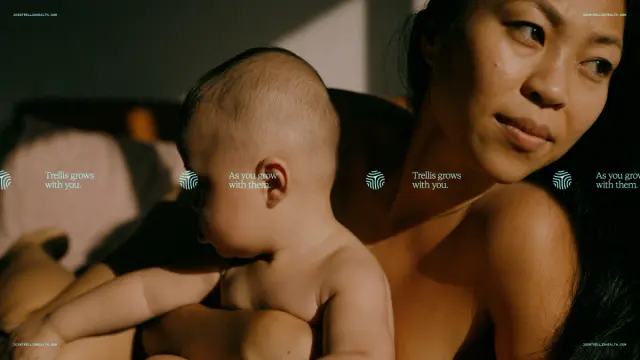
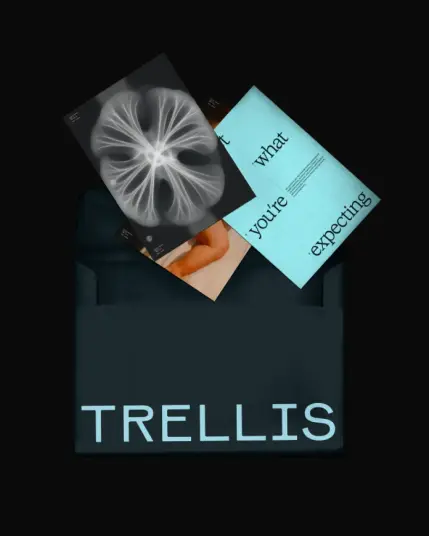
Rebrand design by How&How studio for Trellis – the mother of all US healthcare apps

The Challenge: A Powerful App with a Muted Voice

Before its rebrand, Trellis faced a classic challenge. The app was an intelligent, forward-thinking platform for mothers and future generations, yet it was perceived as just another temporary fix. The company felt it was selling itself short. Its purpose was not just to address immediate pregnancy and post-partum needs but to build a foundation for lifelong “Generational Health.” The original brand identity lacked the strength and clarity to communicate this deeper value. Therefore, it needed a new voice and visual language. The goal was to build a brand that could confidently back up the app’s revolutionary promises.

Rebrand design by How&How studio for Trellis – the mother of all US healthcare apps

Developing a Living Blueprint: How&How’s Solution for Trellis

How&How, a branding agency, took on the task of reshaping the Trellis identity. Their approach was holistic, aiming to build a brand that felt both deeply human and technologically advanced. They started with the core function of the app: compiling decades of medical history into a single, seamless record. This “living blueprint” helps organize a user’s life and ensures that crucial health information can be passed down through the family.

A Foundation Built on Life

The new brand identity for Trellis is built on a flexible grid system. This structure provides a consistent yet adaptable framework for all brand assets. Furthermore, a key element is a library of natural, sunlit photography. These images celebrate life through pregnancy and beyond. They feature a diverse range of people, ages, and families, reflecting every stage of Generational Health. This approach grounds the high-tech app in the real, emotional experiences of its users.

The Human Touch: A Fingerprint and a Hidden ‘T’

To add a layer of personal connection, How&How introduced an illustrative fingerprint texture. This texture humanizes otherwise technical charts and data visualizations within the Trellis app. Moreover, it serves as a constant reminder of the individual user at the heart of the technology. Zooming in, this fingerprint-inspired design also reveals the key brand icon. A subtle ‘T’ is cleverly hidden within its ridges. This detail elegantly connects the user’s unique identity to the Trellis brand.

The Voice of the Midwife: A Bold New Tone

Perhaps the most distinctive element of the rebrand is the new verbal identity: “the Voice of the Midwife.” This concept was inspired by the bold, courageous, and reassuring manner of midwives. It delivers what mothers need to know with clarity and “zero varnish.” This direct and empathetic tone builds trust and makes complex medical information feel manageable. Consequently, it transforms the user experience from merely transactional to genuinely supportive. Can a healthcare app truly speak with such a human voice? Trellis proves that it can.

Why This Rebrand Matters for Women’s Health Tech

This is more than just a successful rebrand; it is a statement about the future of women’s health tech. The Trellis project demonstrates a profound understanding of its target audience. It acknowledges that mothers are often the primary healthcare managers for their families. They need tools that are not only powerful but also intuitive and empathetic. The branding by How&How successfully aligns the app’s external perception with its internal mission to support families and build a legacy of health.

By moving beyond generic tech aesthetics and crafting a narrative-driven brand, Trellis sets a new standard. The focus on “Generational Health” positions the app as a long-term partner rather than a short-term tool. This thoughtful approach to brand identity is crucial for earning trust in the sensitive and personal space of healthcare. It shows that the most effective technology is that which feels deeply human.

Any footage © How&How. Feel free to browse WE AND THE COLOR’s Graphic Design, Branding, and Web Design categories for more.

Subscribe to our newsletter!

[newsletter_form type=”minimal”]

#app #branding #design #graphicDesign #HowHow #Trellis

Magritte-Inspired Rebrand by How&How Bends Reality for Jupi’s AI

A truly exceptional brand identity does more than just look good. It communicates a core truth so profoundly that it feels inevitable. For Jupi, an AI-powered decision-making OS, the challenge was immense: how do you visually represent an invisible, complex process? The answer, crafted by the brilliant minds at How&How, was a stunning Magritte-inspired rebrand that blends logic with the lyrical, turning corporate complexity into surrealist art. This project isn’t just a new logo and color palette; it’s a masterclass in strategic storytelling, proving that even the most advanced technology can have a human, poetic soul.

Scaling a business introduces a paradox. As leaders achieve more success, they must delegate more, deliberate more, and consequently, can feel their grip on the company’s direction loosen. This isn’t a failure of leadership. Instead, it’s a natural byproduct of growth. The very systems put in place to manage this growth can often add layers of bureaucracy and noise, leading to frustration and decision paralysis. So, how do you restore clarity without adding even more complexity?

Magritte-inspired rebrand by How&How for Jupi

The Challenge: Untangling Corporate Complexity

Imagine the immense pressure on a C-suite. Every decision carries weight, impacting teams, budgets, and the company’s future. In an effort to maintain control and steer the ship correctly, leaders often implement new processes or frameworks. Unfortunately, these well-intentioned choices can sometimes backfire, creating bottlenecks and slowing everything down. The result is a culture where decisions are either delayed or made in silos, disconnected from the overarching strategy. This is the precise friction point that Jupi, the brainchild of serial entrepreneur Nick Hernandez (founder of 360 Learning), was built to eliminate.

Magritte-inspired rebrand by How&How for Jupi

Enter Jupi: An OS for Surreally Simple Decisions

Jupi isn’t just another productivity tool. It’s an intelligent operating system built directly into your company’s workflow. Think of it as a central nervous system for your business. The AI learns from your team’s actions, understands your company culture, and analyzes your habits. Subsequently, it aligns every single choice—from minor tasks to major strategic pivots—with your ultimate goals. It’s similar to how a sales team uses a CRM to generate reliable forecasts. Jupi gives leaders that same level of control over their company’s decision-making fabric.

This system fosters trust, helps eliminate unconscious bias, and empowers every single person involved. Whether you are a decision-maker, a decision-taker, or a decision-shaper, Jupi creates a transparent, rapid-fire culture. The effect is transformative. It makes the complicated feel simple. Surreally simple, in fact. This very feeling of surreal simplicity gave the How&How branding agency a unique creative license. With the functional side of Jupi so elegantly handled, the brand could stop overthinking and just be.

The Creative Leap: A Magritte-Inspired Rebrand Takes Shape

So, how do you brand “surreal simplicity”? You embrace it. How&How leaned directly into the world of surrealism, particularly the thought-provoking work of René Magritte. Why Magritte? His art plays with perception, placing ordinary objects in extraordinary contexts to challenge our view of reality. Doesn’t that sound a lot like what Jupi does—taking the ordinary data of a business and revealing extraordinary clarity? This Magritte-inspired rebrand was not a stylistic whim; it was a deeply strategic choice. It positions Jupi not as a cold, robotic AI, but as a source of poetic, intuitive intelligence. It’s a bold move that separates Jupi from a sea of generic tech brands.

Deconstructing the Visuals: From Rodin to René Magritte

The genius of this identity lies in its interconnected elements, each telling a piece of the story.

The Logo: Intelligence in Motion
The creative team started by asking, What if Rodin’s “The Thinker” stood up and started moving? The result is the Jupi logo—a character that personifies active intelligence. It’s not just about contemplation; it’s about cerebral insight put into clear, intentional action. This figure literally and figuratively moves the brand forward.

The Illustrations: The Heart of the Brand
Here is where the Magritte-inspired rebrand truly comes to life. The illustrations are a collection of serene and strange metaphorical scenes. Each one is a playful yet profound reflection of the challenges Jupi solves daily. You might see a figure confidently walking a tightrope over a complex maze, symbolizing mastery over complexity. Another image might show a team effortlessly aligning giant celestial bodies, communicating collaboration and harmony. These visuals aren’t just decorative. They are the emotional core of the brand, communicating themes of trust, control, and clarity in a way that words alone cannot.

Typography, Iconography, and Motion
To ground the surreal visuals, the brand system uses a serious, highly legible typeface that still feels approachable and not overly “corporate.” The iconography is built from the rugged, strong forms of the logo character, ensuring visual consistency. Perhaps most cleverly, the motion design melts and morphs with a dreamlike quality, reminiscent of Salvador Dalí’s fluid clocks. It all comes together to form a brand system as powerfully effective as the decisions Jupi itself facilitates.

Magritte-inspired rebrand by How&How for Jupi

Why This Branding Works So Well for a Tech Startup

In a marketplace crowded with tech startups vying for attention, differentiation is everything. Jupi could have opted for a safe, minimalist aesthetic with blues and sans-serif fonts. Many do. Instead, the collaboration with How&How resulted in a brand that is memorable, emotionally resonant, and endlessly fascinating.

But how does a floating apple or a man walking on clouds help sell an AI platform? It works because it bypasses purely logical persuasion and connects on a deeper level. The surrealist approach perfectly mirrors Jupi’s value proposition: transforming the chaotic and complex into something clear, elegant, and almost magical. This branding case study for a tech startup demonstrates that the most powerful communication happens when logic and emotion are in perfect harmony. It inspires curiosity. It makes you stop and think. And in a world of endless scrolling, that is a monumental achievement.

This Magritte-inspired rebrand is more than just a success for Jupi and How&How. It’s a signpost for the future of branding, where creativity and strategy intertwine to tell stories that are not only seen but felt.

Any footage © How&How. Feel free to find other inspiring projects from around the globe in the Graphic Design, Branding, and Illustration categories here at WE AND THE COLOR.

#branding #catHow #design #graphicDesign #HowHow #Jupi #Magritte

The Big Cartel Rebranding: How&How Ignites a “Scrapper” Vibe for Creative Entrepreneurs

Big Cartel, a champion for independent artists and small businesses using its online store platform since 2005, recently faced a similar moment of reflection. This led to a significant transformation: the Big Cartel rebranding, expertly handled by the creative agency How&How. This wasn’t just a fresh coat of paint; it’s a strategic Big Cartel rebranding designed to recenter Big Cartel’s core mission – helping creators sell themselves and their unique work. Let’s explore how this exciting Big Cartel rebranding is set to redefine the platform for a new era of independent artist e-commerce.

Big Cartel – Custom Wordmark

Goodbye, Caution: The “Why” Behind the Big Cartel Rebranding

Big Cartel has always been about serious business for creatives. Since 2005, everyone from woodworkers to niche medieval tapestry artists has used its online store platform. They’ve collectively invoiced a staggering $2.5 billion! That’s a lot of passion turned into profit. However, the online world of portfolios, resale sites, and handmade stationery has become incredibly bustling. Think of it as a vibrant, but sometimes overwhelming, bazaar. In this lively market, Big Cartel realized its voice needed a bit of a boost. This is where the How&How design agency stepped in. Their mission? To help Big Cartel do for itself what it does so well for others: stand out and sell its unique value. This Big Cartel rebranding was born out of a need to cut through the noise and clearly communicate its enduring value.

From “The Was” to “The How”: A New Vision Ushered in by the Big Cartel Rebranding

There’s a common belief in business, isn’t there? That a perfect plan is the ultimate key to success. A plan to dissolve fear, pave the way to glory, and guarantee triumph. But after two decades, Big Cartel learned that reality is far more nuanced. The truth, they found, is “anything but” simple adherence to a rigid plan. So, with an expanding array of affordable plans and intuitive tools, Big Cartel was already giving founders a genuine head start, not just a run for their money. What was missing? A brand identity design that could shout from the rooftops: “Yes, it really IS this simple to get started!” The recent Big Cartel rebranding aimed to create exactly that.

How&How’s approach to this significant project wasn’t just about a new look but about breathing new life into the platform. They focused on dismantling the barriers that often stop entrepreneurs from taking that first big leap. The goal of the Big Cartel rebranding was to position Big Cartel as the undeniable go-to for anyone daring to launch their dream, making it clear how How&How rebranded Big Cartel for artists with such precision. Now, no idea is too quirky, too ambitious, too grand, or too modest. The brand emphatically supports this.

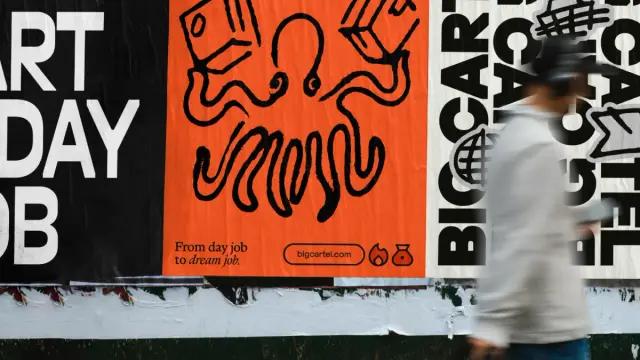
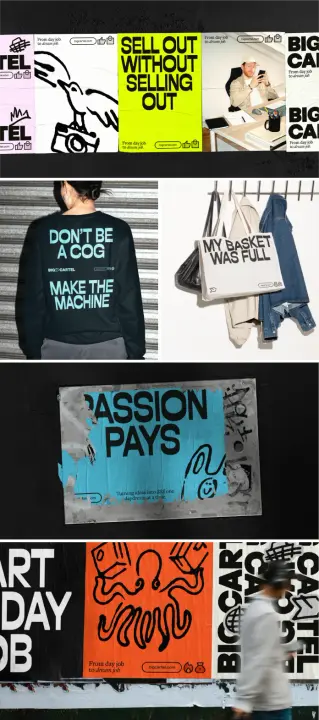
Big Cartel Rebrand by How&How

Deconstructing the “Scrapper” Identity: The New Big Cartel Rebranding Elements

So, what does this revitalized Big Cartel look and feel like after the Big Cartel rebranding? The team at How&How design agency describes the new identity as a “real scrapper.” This term perfectly captures its energetic, determined, and slightly unconventional spirit. The core of the visual aspect of the Big Cartel rebranding is a central illustration style. Are you someone who scribbles ideas in notebooks? This style is inspired directly by those raw, authentic moments of creation. It hits the mark perfectly, establishing a free-spirited tone that influences every other element of this brand identity design.

Think about the voice. It’s punchy. It motivates members to get out there and market their wares. The headline style? It’s designed to cut through any doubt, making a clear and confident statement. You’ll also notice risograph textures. These speak to Big Cartel’s indie roots, giving a nod to DIY and independent publishing aesthetics. This is a clever touch, grounding it in authenticity. And the color palette? It’s a rich bank of colors, heralding Big Cartel’s new point of difference and adding vibrancy. Every piece of this new identity works together. It creates a world that feels as self-made and unique as the artists and entrepreneurs it champions.

The Cherry on Top: A Re-Thought Logo within the Big Cartel Rebranding

And what about the logo, the very face of the brand, following the Big Cartel rebranding? How&How delivered a “rabble-rousing, re-thought logo.” The new logo and branding skillfully carry 20 years of noughties goodwill into the present day. It’s a testament to the idea that you don’t need to be “picture-perfect” to get your creations online. This part of the Big Cartel rebranding is crucial. It proves that authenticity and a bit of grit are valuable assets in the digital space. This approach makes the online store platform feel more accessible and less intimidating, doesn’t it? The message is clear: come as you are, and Big Cartel will help you shine. The new identity thoughtfully preserves its heritage while boldly stepping forward.

More Than Just a Makeover: The Impact of the Big Cartel Rebranding for Artists

Callum Richards, Senior Designer at How&How design agency, shared his thoughts on the collaboration: “Working with the Big Cartel team has been an incredible experience. From day one, we were empowered to take bold risks and think beyond the limits. Together, we built something that not only propels Big Cartel into a new era but also stays true to its indie roots. This brand is the product of true collaboration.” This sentiment underscores the depth of the Big Cartel rebranding. It’s not merely a cosmetic update. It’s about empowering the platform itself to better empower its users.

The strategic intent behind the transformation is to attract more creatives to independent artist e-commerce who resonate with this “scrapper” spirit. It’s about making the tools feel even more intuitive and the community even more supportive. For existing users, this change likely feels like a fresh wave of energy and renewed commitment from the platform they trust. For new users, it’s an invitation to join a platform that truly gets the creative journey, showcasing the benefits of Big Cartel’s rebranding for small businesses.

Are You Ready to Stop Dreaming and Start Doing?

The press release ends with a powerful call to action: “So, go on, what’s holding you back? Stop dreaming. Start doing.” This perfectly encapsulates the revitalized spirit of Big Cartel, fueled by the Big Cartel rebranding. It asks a direct question, urging you, the reader, the potential entrepreneur, the artist with a vision, to take that step. Does this resonate with you? The entire effort is designed to make that “start doing” part feel simpler, more exciting, and fully supported. It’s about turning those notebook scribbles into real, thriving online stores.

Conclusion: A Bold New Chapter Shaped by the Big Cartel Rebranding

The Big Cartel rebranding by How&How design agency is more than just a successful design project; it’s a strategic masterstroke. It’s a repositioning that reaffirms Big Cartel’s commitment to independent creators. By embracing a “scrapper” identity, simplifying its message, and staying true to its indie roots through this comprehensive Big Cartel rebranding, Big Cartel is poised to inspire a new generation of entrepreneurs. This transformation demonstrates a keen understanding of its audience and the evolving digital landscape of independent artist e-commerce. What do you think of the new direction established by Big Cartel’s new logo and branding? One thing is certain: this significant update has set the stage for an exciting future for both the online store platform and the countless artists it serves. If you want to explore the new branding further, check out How&How’s work at www.how.studio or specifically at www.how.studio/branding/big-cartel.

All images © How&How. Feel free to browse WE AND THE COLOR’s Graphic Design and Branding categories for more creative inspiration.

Subscribe to our newsletter!

By continuing, you accept the privacy policy
Branding Agency London & Los Angeles | How&How

A Branding Agency in London & Los Angeles liberating ideas the world deserves. Strategy, design and digital that turn the best businesses into iconic brands.

師大附中校歌 - 無伴奏合唱版 [feat. How哥 (How音未來)]

https://wiwi.video/w/2UDNKuSqJVuMmHCxLtwuMs

師大附中校歌 - 無伴奏合唱版 [feat. How哥 (How音未來)]

PeerTube