I've seen recipes for #ChamisaAsh (#CulinaryAsh) that involve wood chips, mountain sage, #juniper, and epazote herbs, burned to fine white ashes. I also found this from a #Navajo recipe for Corn Ice (Da’yis tiin).

"A Note on Culinary Ash

Culinary ash dates back thousands of years and has been used by Native communities throughout the Americas for millennia. It is primarily made from shrubs and trees growing near or around the Native communities that use it. The Navajo primarily use juniper ash. Chef Walter Whitewater and his family have been using juniper ash in their traditional dishes since he was a little boy.

"Juanita Tiger Kavena, author of Hopi Cookery, who has since passed, talks in her cookbook about the #Hopi using the ash from #corncobs, #CornSilk, and #CornHusks, as well as the #FourWingSaltbush (#AtriplexCanescens), which is also called #chamisa. Her son, Wilmer Kavena Jr., whom I know as Chibbon (which is Creek for 'little boy'), says that the four-wing saltbush is the preferred bush for the Hopi but that ash can be made from burning any bushes. He prefers to make ash from the four-wing saltbush since these bushes are more #alkaline and work better with the #corn. And Brandon Baugh from San Felipe Pueblo, my student from the Indigenous Concepts of Native American Food class at the Institute of American Indian Arts, researched the use of ash in his community and at San Felipe Pueblo for his final paper and presentation, and found that in his community they use juniper, four-wing saltbush, and onion ash. Other Native communities all over the United States use various materials, including the ash from certain types of #wood.

Culinary ash can be sourced from Shimà of Navajoland and Blue Corn Custom Designs, among others."

https://www.ediblenm.com/graces-corn-ice-dayis-tiin/

#SolarPunkSunday #TraditionalFoods
#TraditionalRecipes #HopiRecipes
#NavajoRecipes #PlantAshes
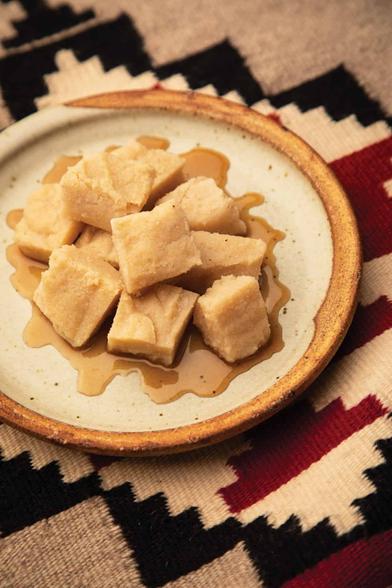
Grace’s Corn Ice (Da’yis tiin)

Plant-based Navajo cook Grace Tracy shared her version of this corn dish with me and said that it was a variation of a popsicle she likes.

Edible New Mexico

Hopi recipes

by Ordinary Spring, from 2018

I stumbled across this gallery about a month ago with some Hopi recipes and saved the link. I can't assert anything about them myself, just thought it worth sharing:
https://imgur.com/gallery/V4mUAl4

I've copied the text of the recipes below for search and just in case the gallery vanishes.

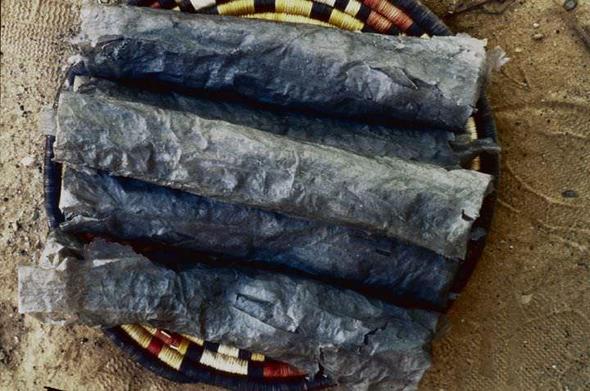
#PikiBread

Piki bread is on the list of endangered food traditions.

The first step to making piki is to grind up the blue corn. Then, you must add the ashes and some water until it is smooth. Next, the Hopi people would layer the
creamy mixture onto a hot rock. Then the bread looked almost overcooked, they would remove this thin sheet from the stone. They would repeat this six or seven times and then roll all the pieces together. Then, the delicate corn smell would gather nearby people it was so good.

• 3 Tablespoon #ChamisaAsh (Chamisa cooking ash results from the burning of various native plants)
• 1/2 Cup Cold Water
• 6 Cups Finely Ground #BlueCornmeal
• 8 Cups Boiling Water
• 6-8 Cups Cold Water

• Mix chamisa ash with 1/2 cup cold water and set aside
• Put cornmeal in piki bowl, push 1/3 of the meal to the back of the bowl
• Pour 4 cups boiling water into the 2/3 amount of cornmeal and stir until well blended
• Add remaining boiling water and stir until moist and stiff
• Gradually strain ash water through cheesecloth into the dough just until it turns blue
• When dough has cooled enough to touch knead until smooth
• Add the dry meal gradually
• Set dough aside and build fire under the piki stone and allow to heat up
• Meanwhile, gradually knead cold water into the dough until it is a thin consistency smooth batter, add more water during making process if necessary
• Wipe off hot stone and oil with bone marrow or cooked brains, repeat as necessary during making process
• Scoop small amount of batter from bowl with fingers and spread tissue paper thin across stone from left to right, eliminating any lumps
• Dip fingers into batter again to cool them and bring out another scoop
• Continue to spread and layer batter across stone until completely covered
• When piki is done it will seperate from the stone, gently lift away and place it on the piki tray
• The first piece should be fed to the fire
• Spread more batter onto the stone and let cook, then place the prepared piki back onto the stone to soften
• Fold two ends of the piki 1/4 way toward center, then gently roll piki away from you
• Place back on Piki Tray
• Remove Piki sheet from stone and spread with more batter to repeat process until all batter is used
• If Piki tears simply return it to the batter to dissolve and reuse.

Source:
https://bushcraftusa.com/threads/hopi-recipes.230103/

#SolarPunkSunday #TraditionalFoods #TraditionalRecipes #HopiRecipes #BlueCorn #PlantAshes