Watch Hagfish Slime Unfurl
The eel-like hagfish has one of the best defenses in the ocean. When threatened, it releases a slime that clogs the gills of its predator but allows the hagfish itself to slough off the slime and escape. The hagfish slime’s secret weapon is long protein threads, which are initially rolled into bundles called skeins. Seen above, these skeins resemble the yarn skeins knitters and crocheters buy, but a hagfish’s skeins are only as big as the width of a human hair.
When water flows by quickly enough, the thread in a skein begins to unwind and stretch out. With enough threads unwound, the slime gets stretchy and viscous. Researchers found that it takes relatively little flow to begin this unwinding because the adhesion between threads and the surrounding fluid is higher than the thread-to-thread sticking power. (Research and image credit: M. Hossain et al., video)
#biology #fluidDynamics #hagfish #physics #rheology #science #viscoelasticity
 TKSST • seethis.tv 🌈🪐✨
 That Hopens Guy!

 coyote witch
 Nicole Sharp
 Ann-Mi
 Benjamin Carr, Ph.D. 👨🏻💻🧬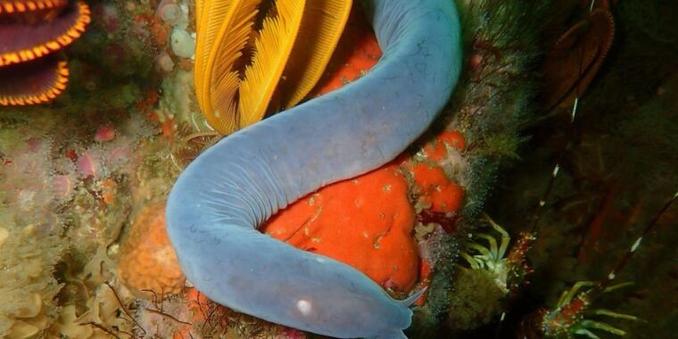

 Peter Kisner ≈
 Lukas VFN 🇪🇺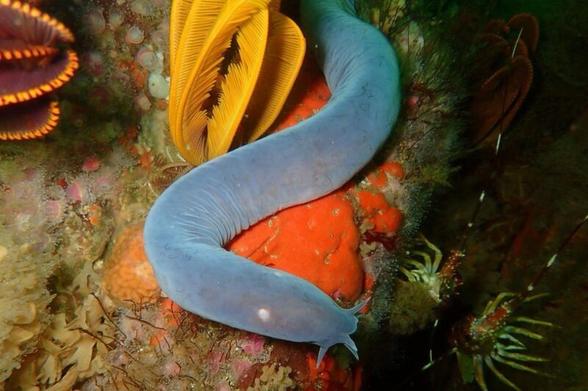
 Matt Willemsen