 Cooking Korean food with Maangchi [Unofficial]
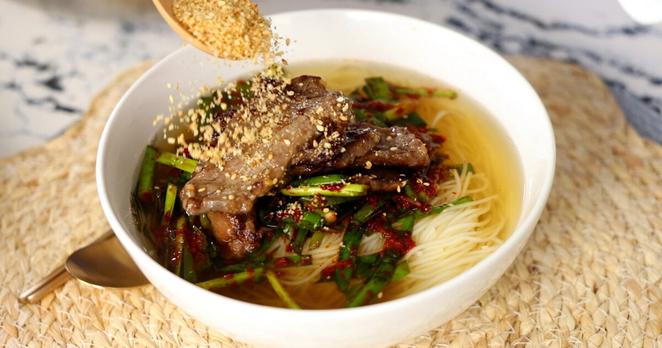
Beef Noodle Soup with Buchu
https://fed.brid.gy/r/https://www.maangchi.com/recipe/beef-noodle-soup
Beef Noodle Soup with Buchu
https://fed.brid.gy/r/https://www.maangchi.com/recipe/beef-noodle-soup
Diez picadas coreanas en Santiago: el boom de la k-food | vía #FastCheckCL
https://www.fastcheck.cl/2024/11/15/diez-picadas-coreanas-en-santiago-el-boom-de-la-k-food/
#actualidad #chile #comidacoreana #daemo #fastcheckcl #gastronomíacoreana #guksi #guksu #país #reportajes
(3/3) You can also add the dish type, for example, instead of the regular “mami”, you probably want to try “pares mami”. If you have a preference of meat, you can also say, “chicken spaghetti” or “beef pares mami” or “pork sotanghon”.
How about instant noodles? We just add the word “instant”. Like so, “instant pancit canton” (which is as popular as the Korean “ramyeon”). Or, “instant mami”.
There are also pancit (noodle) types like:
* buko (coconut)
* kilawin (unripe papaya fruit)
* molo (wonton)
* papaya
* seaweed
Going back. If in Japan the umbrella term is “ramen” and in Korea it's “guksu” (or “myeon”), in the Philippines it is “pancit” (or “pansít”). So, when you hear “pancit” outside the Philippines, it means a Philippine noodle type or Filipino noodle dish.
#Food #Culture #Noodles #Ramen #Ramyeon #Pansit #Pancit #Guksu #국수 #라멘 #ᜉᜈ᜔ᜐᜒᜆ᜕ #Korea #Japan #Philippines #t2pub
---
Image attributions:
* Pancit canton image by pulaw under CC-By 2.0 Generic License. (https://commons.wikimedia.org/wiki/File:Pancit_Ilonggo_Style_-_12110747826.jpg)
* La Paz Batchoy image by Heidigutierrez under CC-By 3.0 Unported License. (https://commons.wikimedia.org/wiki/File:LaPazBatchoy.jpg)
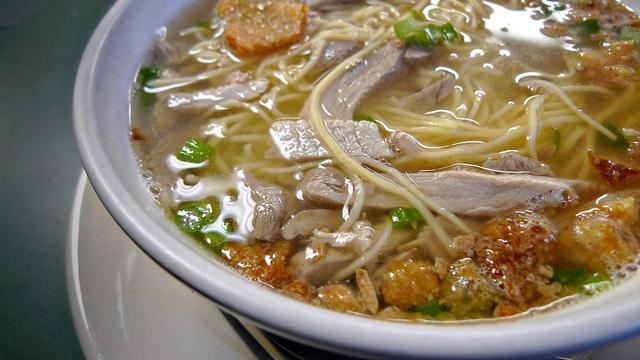
(2/3) How about Philippine noodles?
* Filipino language: pancit
* Tagalog language: pansít (ᜉᜈ᜔ᜐᜒᜆ᜕)
* Binisaya: bam-i
* and so on.
It is an umbrella term for everything Philippine noodles, be it instant or non-instant.
There are a lot of noodle types in the Philippines, the most common ones are:
1. bihon
2. canton
3. lomi
4. mami
5. miki
6. miswa (sometimes spelt as ‘misua’)
7. odong
8. palabok
9. sotanghon
These type of noodles are also used to categorised the dishes made from it; sometimes the dish name contains the noodle used. For example, “bihon guisado”.
It is also sometimes used as the name of the dish itself, for example, the noodle used for “palabok” can either be the palabok noodle or the bihon noodle. And then, there are the regional variations.
Confused? Don't. We use the name of the noodle type to refer to the different pancit. If we want to look for a specific taste, that is the only time we add a “modifier” (if you will).
#Food #Culture #Noodles #Ramen #Ramyeon #Pansit #Pancit #Guksu #국수 #라멘 #ᜉᜈ᜔ᜐᜒᜆ᜕ #Korea #Japan #Philippines #t2pub
(1/2) "Ramen" and "ramyeon" are popular words in the Philippines with slightly different meaning.
* "Ramen" is Japanese noodles.
* "Ramyeon" is Korean noodles.
This was exported. In Korea, "instant ramen" became simply as 라면 (ramyeon). While the non-instant ramen is called either as 라멘 (ramen) or 일본 라면 (Ilbon (Japanese) ramyeon). There are a lot of Korean noodles but they are not called "ramyeon", these are called 국수 (guksu) or 면 (myeon). Example, 짜장면 (jjajangmyeon).
However, in the Philippines, both "ramen" and "ramyeon" are used as an umbrella term for everything "Japanese noodles" and "Korean noodles" respectively. You'll sometimes hear "instant ramen" (which is accurate) and "instant ramyeon" (which is redundant, since 'ramyeon' already means 'instant').
#Food #Culture #Noodles #Ramen #Ramyeon #Pansit #Pancit #Guksu #국수 #라멘 #ᜉᜈ᜔ᜐᜒᜆ᜕ #Korea #Japan #Philippines #t2pub
 Noticias Ind. Chile
 Yohan Yukiya Sese Cuneta 사요한🦣