#Higraph progress!
Still got lots to do, but hyperEdges can now be saved & loaded in modified #graphml files. The "model tree" on the left highlights items in the graph on the right.
I can see "minimum viable product"!
The #hyperedge structure is both graphically and algebraically accessible. I'm not aware of anything else that does this, pretty certainly not in #Python
#graphTheory #VisualFormalism
Makes my day🙂 Graph ML identifies promising additional drug indications for diseases such as acute lymphoblastic leukemia and Alzheimer’s disease.
https://www.nature.com/articles/s41551-025-01598-z#KnowledgeGraphs #GraphML #DrugRepurposingLOGOS-κ: Новый язык программирования для моделирования сложных систем
6 января 2026 года Российская компания DST Global и проект Λ-Универсум представили LOGOS-κ — не просто новый язык программирования...
#LOGOS-κ #LOGOSκ #языкпрограммирования #Логос #GraphML #NIGC #DomainSpecificLanguage #DSL #Lambda #Omega #Универсум #Universum #ΛУниверсум #AUniversum #АУниверсум #Искусственныйинтеллект
Ссылки:
Репозиторий: https://github.com/A-Universum/logos-k
Исходный манифест Λ-Универсума: https://github.com/a-universum
Node and graph embeddings are a bit of a burden if you want to do simple experiments: PyG (aka Torch Geometric) comes with a steep learning curve. This NEExT package is a lot easier and supports NetworkX and iGraph, Wasserstein and more.
https://github.com/ashdehghan/NEExThttps://skolouri.github.io/wegl/ #GraphML #GraphAIThis article tests how degree, clustering, and topology–feature ties sway GNN and feature-only models using HypNF synthetic graphs.
https://hackernoon.com/choose-the-right-graph-model-faster-with-hypnfs-parameter-knobs #graphml
Choose the Right Graph Model Faster with HypNF’s Parameter Knobs | HackerNoon
This article tests how degree, clustering, and topology–feature ties sway GNN and feature-only models using HypNF synthetic graphs.
Synthetic HypNF graphs reveal GNN fragilities: HGCN beats GCN on dense, homogeneous nets but falters on sparse power-law ones.
https://hackernoon.com/a-hyperbolic-benchmark-for-stress-testing-gnns-across-degree-clustering-and-homophily #graphml
A Hyperbolic Benchmark for Stress-Testing GNNs Across Degree, Clustering, and Homophily | HackerNoon
Synthetic HypNF graphs reveal GNN fragilities: HGCN beats GCN on dense, homogeneous nets but falters on sparse power-law ones.
🚨Preprint Alert🚨 Benchmarks guide
#MachineLearning, but is the core benchmark for
#GraphML, the link prediction task, guiding us correctly? Our latest preprint questions its validity, reveals a bias that substantially skews the evaluation, and proposes a degree-corrected link prediction benchmark. Let's dive in!
https://arxiv.org/abs/2405.14985 More on 👉
https://twitter.com/skojaku/status/1795413358818013431
Implicit degree bias in the link prediction task
Link prediction -- a task of distinguishing actual hidden edges from random unconnected node pairs -- is one of the quintessential tasks in graph machine learning. Despite being widely accepted as a universal benchmark and a downstream task for representation learning, the validity of the link prediction benchmark itself has been rarely questioned. Here, we show that the common edge sampling procedure in the link prediction task has an implicit bias toward high-degree nodes and produces a highly skewed evaluation that favors methods overly dependent on node degree, to the extent that a ``null'' link prediction method based solely on node degree can yield nearly optimal performance. We propose a degree-corrected link prediction task that offers a more reasonable assessment that aligns better with the performance in the recommendation task. Finally, we demonstrate that the degree-corrected benchmark can more effectively train graph machine-learning models by reducing overfitting to node degrees and facilitating the learning of relevant structures in graphs.
@tml @Sweetshark @boris used yEd couple times. Very flexible and export functions.
Liked their layout algorithms for objects en connector routing styles.
https://www.yworks.com/products/yed#yed #graph #graphml 
yEd Graph Editor
yEd is a free desktop application to quickly create, import, edit, and automatically arrange diagrams. It runs on Windows, macOS, and Unix/Linux.
Following some requests, the deadline for #AIMLAI at ECML-PKDD'23 has been extended until 30/06.
Looking forward to receive your submissions.
Call for papers: https://lnkd.in/eWvp74t8
Website: https://lnkd.in/eeZNFSZG
#xai #ai #ml #graphml #machinelearning #artificialintelligence #intepretability
AIMLAI@ECML/PKDD 2023 : Joint Tutorial on Explainable GraphML and International Workshop on Advances in Interpretable Machine Learning and Artificial Intelligence
AIMLAI@ECML/PKDD 2023 : Joint Tutorial on Explainable GraphML and International Workshop on Advances in Interpretable Machine Learning and Artificial Intelligence
Less than one week for the submission deadline of #AIMLAI at ECML-PKDD'23. Looking forward to receive your short and long papers.
The workshop will be complemented by a great keynote speaker and a tutorial on Explainable GraphML.
Call for papers: https://lnkd.in/eWvp74t8
Website: https://lnkd.in/eeZNFSZG
#xai #ai #ml #graphml #machinelearning #artificialintelligence #intepretability
AIMLAI@ECML/PKDD 2023 : Joint Tutorial on Explainable GraphML and International Workshop on Advances in Interpretable Machine Learning and Artificial Intelligence
AIMLAI@ECML/PKDD 2023 : Joint Tutorial on Explainable GraphML and International Workshop on Advances in Interpretable Machine Learning and Artificial Intelligence
 Grant_H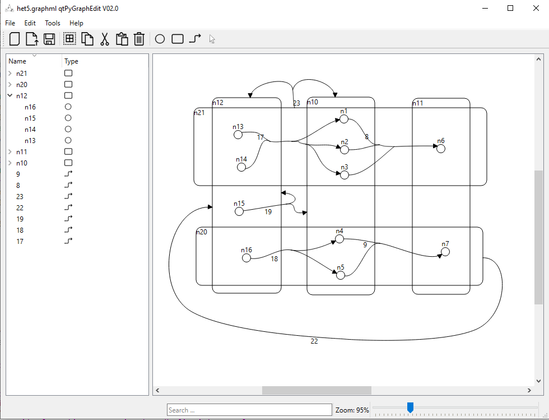
 Orbifold Consulting
 DST Global
 HackerNoon
 Sadamori
 me
me José Oramas