@qgustavor @fluffykittycat @eff Yes, the problem is a society-wide one and I think #individualizing #GlobalProblems is inherently bad, because it absolves political decisionmakers and economically powerful individuals whilst guilt-tripping #WageWorkers.

#SocialMediaBans are bullshit, but criminalizing certain patterns that are specifically designed to maximize screentime and exploit minors and other vulnerable individuals are absolutely possible!

@threetails EXACTLY!

#Nationalism is what caused so many death in multiple genocides and so much suffering to everyone that it needs to be as illegal as distributing fentanyl-laced candy to children in a Kindergarten!

  • Because #GlobalProblems require #global solutions and single nation states on their own can't fix systemic issues just like individualizing structural issues is just a bad excuse to not actually tackling these, regardless of what these are!

https://infosec.space/@kkarhan/115692990899466892

Kevin Karhan :verified: (@kkarhan@infosec.space)

Content warning: EUpol

Infosec.Space

I can’t do this, but I can do that

I can’t do everything, but I can do one thing. I can’t solve a humanitarian problem, but perhaps I can solve one person’s problem.

I am reflecting this week on the ways in which huge issues can reduce me to inertia. The problems seem too big, too global, too significant for ordinary people to be able to change. Climate change needs governments to take decisive action. Historical injustices need recognition and apologies from the powerful. The homeless need changes in the affordability of housing, worldwide.

All of that is true, but that does not absolve me of involvement. That is what became clearer to me this week. If I focus on the big issue, I feel powerless, but if I focus on individuals, I feel empowered to make a small change.

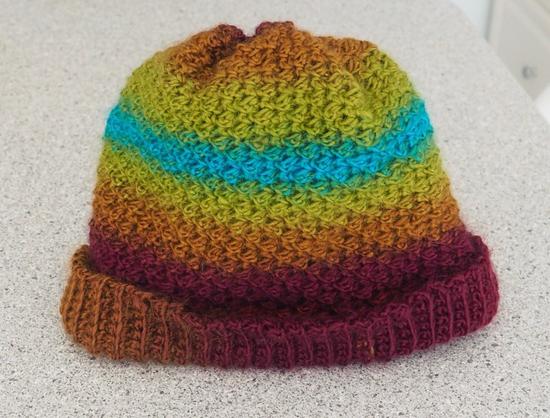
This train of thoughts began with a conversation about hats. A fellow hiker on one of my Monday morning hikes asked about the hat I was wearing. I explained that I had made it myself and went to say that I had been inspired by my daughter-in-law. She works for an organization that provides services and connections to housing for the homeless. I can’t do what she does, but I can make hats. So, for many years now, I have been crocheting hats for the homeless. I can’t solve all their problems, but I can make a few heads warm.

Then, a few days ago, I was re-awakened to an awareness of the effects of colonialism. After I had recently volunteered to be an English tutor, I attended a workshop provided by someone who leads a program for indigenous students. I was born in the UK and, being of a certain age, I had grown up seeing world maps on the walls of my classrooms with some nations identified in pink. The pink countries were British colonies and, I was led to believe, this was a glorious thing.

It wasn’t until I immigrated to Canada in 1975 that I began to realize the extent to which I had been misled. Colonialism has caused great harm in many ways, not least of which has been the attempted genocide and/or cultural indoctrination of indigenous peoples, and it was not glorious at all.

The workshop for tutors was both understated and powerful. I came away being more aware of my accent and more conflicted in my motivations. Ultimately, though, I decided that I could not solve all the problems of colonialism, but I could tutor students in English if they could overlook my origins.

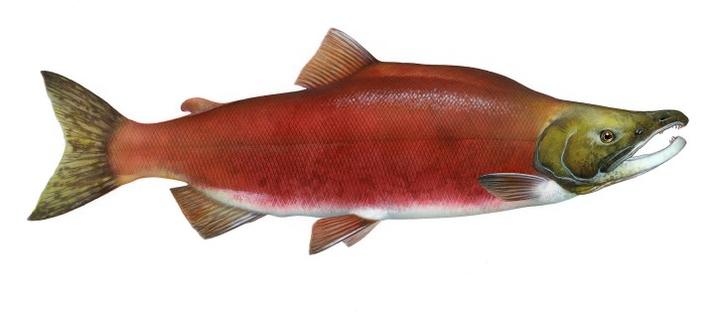
This week I also completed a four-week course in the future of Pacific Salmon. I am not a fisher and I know nothing about salmon, but I wanted to understand better my new environment. The course was fascinating and instructor engaging, and so I learned a lot. Not least of which is the understanding that climate change is affecting the temperature of the oceans and hence the availability of food for fish. As a consequence, the fish are moving to cooler climes. That is a terrible abbreviation of a complex issue, but I am editing for clarity here.

Sockeye salmon (Oncorhynchus nerka) from the Northern Pacific Ocean.More: Original public domain image from Wikimedia Commons

The bottom line is that, even though I have always reduced, reused, and recycled, now I am doing more. I can’t fix climate change, but I can use less plastic by using laundry strips instead of big jugs of liquid detergent. I can recycle soft plastics. I can reduce my contribution to the landfill by composting kitchen scraps.

The bigger issues of climate, colonialism, and homelessness are too big for me. But individual, local actions are within reach, and so I will do what little I can and hope it helps.

#actLocal #climateChange #colonization #globalProblems #homelessness #humanity #socialIssues
"How We Could Build a Moon Base Today" - a Kurzgesagt animated video-essay from 2019.

https://www.youtube.com/watch?v=NtQkz0aRDe8

——

(the following are MY OWN PERSONAL OPINION; not in any way reflected in the video-essay attached above.)

Does humanity have the will to become an interplanetary species? Or are we just simply too caught up in the troubles of today to even consider to just attempt today, or ever?

Europeans took almost a millenia to fully colonize the "New World", and even then it took them to murdering local natives directly & indirectly, through actual warfare and introduced diseases. There supposedly are no alien natives nor fauna though on the moon or Mars.

Are we too eager though to kill each other, through various ultimately petty disagreements, to even be able to establish a foothold on the moon? Ever?

——

"Solve the problems of Earth first before we go to other worlds!"

Congratulations you have an opinion. It is not an invalid opinion either.

Frankly though, it neither gets humanity back permanently to the moon, nor does it solve for world hunger, climate change, nor world peace. Not today.

Do not stop having an opinion though. No.

——

#fzThinkingOutLoud #SpaceExploration #GlobalProblems #whataboutism #sarcasm #luddism

How We Could Build a Moon Base TODAY – Space Colonization 1

YouTube
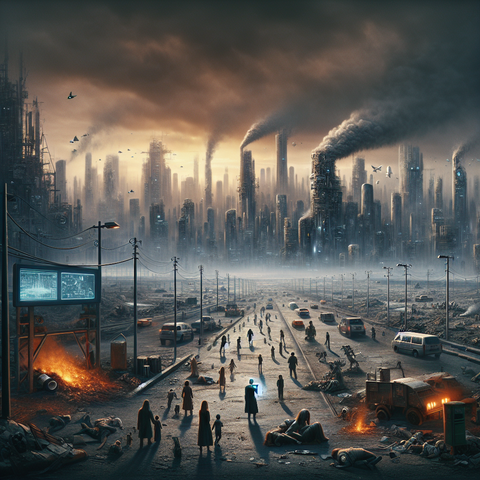
Envision a grim future for humanity in 2030. In this dystopian scenario, remember the ongoing global problems. Visualize how the technology we are currently developing may not have had the desired effect. Picture pollution-filled skies, a stark and deteriorated environment, intelligent machines not serving their purpose, and people huddled together for safety. Despite our desire to advance, we find ourselves in a world of chaos and instability, a stark cautionary tale to our constant strive for technological progress.

#aYearForArt #Generated #AI #future #humans #2030 #realistic #globalproblems #technology #worstscenario #dark
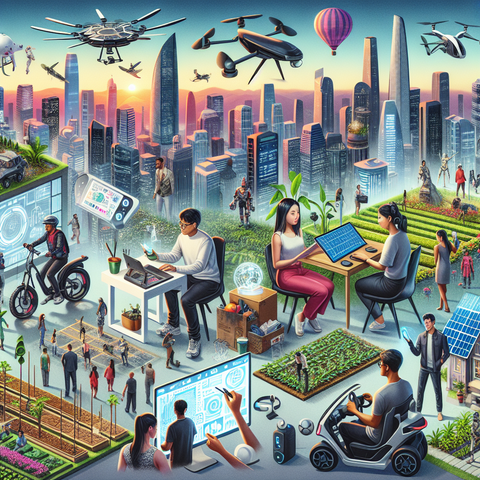
Depict a realistic portrayal of human life in 2030. Keep in mind contemporary global issues such as climate change, social inequality, and the ongoing technological advancements. Include imagery of metropolises with eco-friendly architecture, electric vehicles and individuals utilizing advanced tech gadgets. People of diverse genders and descents should be included - an Asian woman operating a drone delivery system, a Middle Eastern man using a renewable energy device, a Hispanic woman working with AI technology, a Black man in a vertical garden urban farm, and a Caucasian male using virtual reality technology.

#aYearForArt #Generated #AI #future #humans #2030 #realistic #globalproblems #technology #developing

In David Karpf's article "It's Time to Stop Taking Sam Altman at His Word," the public rhetoric of OpenAI's CEO, Sam Altman, regarding the prospects of artificial intelligence (AI) is analyzed.

Altman promotes the idea that AI can solve global problems such as climate change and space exploration if sufficient resources are allocated to its development. However, Karpf argues that such statements are typical of Silicon Valley's "technological mythmaking," where promises of revolutionary technologies are rarely fulfilled. Current AI achievements, such as ChatGPT and DALL-E, are only impressive at first glance and face many limitations in practice, failing to solve global problems. The author emphasizes that instead of endless promises, it is more important to evaluate the actual results of these technologies and their impact on society.

https://www.theatlantic.com/technology/archive/2024/10/sam-altman-mythmaking/680152/

#ArtificialIntelligence #SamAltman #OpenAI #Technology #SiliconValley #GlobalProblems #Innovation

It’s Time to Stop Taking Sam Altman at His Word

Understand AI for what it is, not what it might become.

The Atlantic
#Call for papers📣 Fresh research approaches and interdisciplinary exchange are needed to promote sustainable #development and tackle #GlobalProblems. Submit your papers for the Leibniz Environment and Development Symposium (LEADS) at RWI – Leibniz Institute for Economic Research by 30 September: https://www.giga-hamburg.de/en/press/call-for-papers-leibniz-environment-and-development-symposium-leads-2023/
Call for Papers: Leibniz Environment and Development Symposium (LEADS) 2023

The Leibniz Environment and Development Symposium (LEADS) aims to foster interdisciplinary exchange on global societal. This year’s LEADS will be hosted by the Economic Policy Lab “Climate Change, Development and Migration” in Essen on 27–28 November 2023. We invite you to submit your paper by 30 September 2023.

What a terrible trend!
https://www.youtube.com/watch?v=goJVvDmswAk
I think we should keep thinking about 3 important global prolems:
Negative Aspects of Social Media, Social Instability, and Student Debt.
#socialproblem #socialmediaproblem #socialinstability #globalproblems
女生在健身房被器械压住|男人拒绝进行帮助|美国健身房现状

YouTube

Just a reminder:
Don’t complain about “Global” problems if you don’t know wtaf the globe looks like. If you can’t place Taiwan, Serbia, Myanmar, Rwanda (etc etc) on a map - do some reading.

How can we bitch about #GlobalProblems or #globalism if we can’t quasi define our planet?

#History is bloody important (as is just a basic definition of what #global actually means) 🌏🌍🌎