 NAMRATAA GIRII
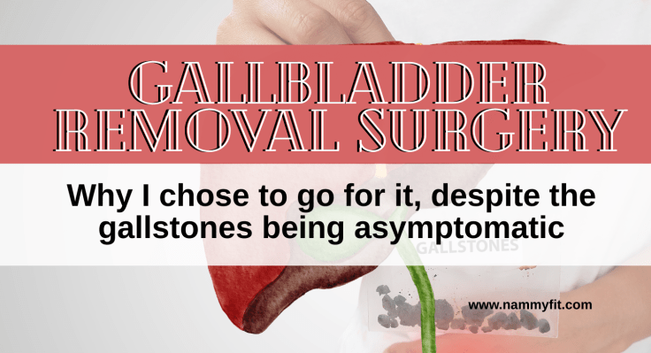
Gallbladder removal surgery: Why I chose to go for it, despite the gallstones being asymptomatic
I’m writing this blog from my hospital room (writing is both cathartic and rejuvenating) as I recover from gallbladder removal surgery. As I look out of my window, I feel an overwhelming sense of gratitude, and I’m more grateful than ever. But this blog is not about gratitude. It’s about something else: awareness, education, and guidance. If it helps even one person make a clearer decision about their health, it will have been worth it.
I’ll break it all down here.
How I discovered my gallstones
I discovered my gallstones rather randomly during a routine test. I didn’t have the stabbing pain most people describe. No sleepless nights, no indigestion, bloating, or gassiness bad enough to complain about.
I had multiple pea-sized gallstones but felt no pain till about a week back, when the discomfort (not grinding pain) became noticeable.
This is what doctors call asymptomatic gallstones, stones that exist silently until either an ultrasound finds them or one day, suddenly, they don’t stay silent anymore.
So why did I still choose gallbladder removal surgery despite not having unbearable pain? Because health is not just about what hurts today, it’s about what you’re willing to risk tomorrow.
Let’s understand the basics so that my decision becomes clearer and more understandable, and may help you make an informed decision, if need be.
Why do gallstones form
The gallbladder is a small organ tucked under your liver. Its job is to store bile, a fluid that helps digest fats. Gallstones form when bile becomes imbalanced due to excess cholesterol, insufficient bile salts, or sluggish emptying. Over time, crystals harden into stones.
- Some people carry gallstones silently for life.
- Others face sudden, severe pain when the crystallized stones block bile flow.
- Risk factors include being female, age over 40, family history, rapid weight loss, and diet.
Does any specific diet/food type cause gallstones?
Though no specific foods directly cause gallstones, diets high in fat (fried, fatty means, full fat dairy, processed and refined food), carbohydrates (bread, bakery products, sweets and certain packaged and frozen meals could increase the risk. Diets lacking fiber and sufficient vitamin C are also associated with increased risk of developing gallstones.
A ketogenic (keto) diet can be associated with gallstone formation and symptoms, especially with prolonged use, as it can alter liver and bile function and lead to rapid weight loss.
Early signs of gallstones
Like me, many people don’t know they have gallstones until they show up on an ultrasound or CT scan. But when symptoms do appear, they usually follow a pattern.
Common early signs to look out for:
- Bloating or fullness after meals – especially after fatty or greasy food.
- Indigestion or heartburn that doesn’t fully resolve with usual remedies.
- Mild abdominal discomfort in the upper right side, under the ribs, that comes and goes.
- Nausea or queasiness without an obvious reason.
- Burping or gas that feels more frequent or uncomfortable than usual.
The tricky part? You might never feel any of these until the first sign is a full-blown gallbladder attack.
Should you operate if you have asymptomatic gallstones?
This is the real dilemma. If gallstones aren’t bothering you much, do you need surgery?
For small, symptom-free stones, doctors often recommend watchful waiting. If stones are large, numerous, or have a higher risk of blocking ducts, surgery may be advised even without symptoms. Preventive surgery is often considered for people with diabetes, weakened immunity, or other risk factors.
In short: not everyone needs immediate surgery. But ignoring the condition entirely is risky.
Every person around you will play doctor, offering opinions and examples with conviction. My two cents: smile and ignore them. Turn to your doctor for advice and guidance.
What happens if you don’t remove the gallbladder
Living with gallstones has many possibilities:
Gallbladder removal surgery and recovery
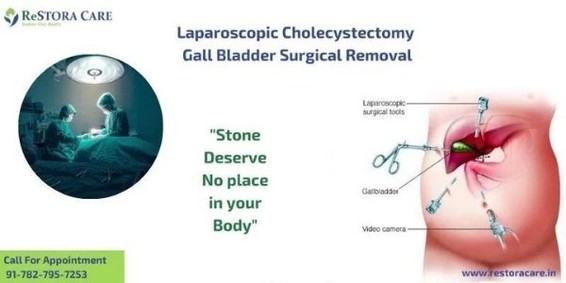
Gallbladder removal (cholecystectomy) is one of the most common surgeries worldwide. It’s usually laparoscopic, with small incisions and quicker recovery.
What recovery looks like:
- Diet: Start with light meals, avoid heavy fats until digestion adapts.
- Activity: Gentle walking helps healing; avoid lifting heavy weights for 2-4 weeks. This part kills me.
- Care: Keep the incision clean and watch for infection.
- Patience: Digestion rebalances in 3-6 weeks; most people return to normal life without issues.
Long term, you can live a healthy, unrestricted life without a gallbladder.
Cost: Gallbladder/gallstones removal surgery could cost anything between Rs. 50K-80K in a good private hospital. For insured patients, like me, the cost could be inflated.
Why I chose surgery over wait and watch
It’s tempting to wait. But gallstones don’t dissolve or disappear on their own. Don’t believe any self-proclaimed medical genius who says otherwise. Gallstones stay, and the risk of complications only grows with time.
I asked myself: would I rather go through a planned, controlled surgery now, or gamble with the chance of a midnight emergency later?
Another critical part of decision-making was my circle of support. Having friends who put logic before rigid ideas, who reminded me to look at risks, facts, and long-term health, made a huge difference. Their voices gave me clarity when fear and hesitation could have stalled me. A supportive group helps you process the “what ifs”. This support group is something I take immense pride in and am ever grateful for.
Also, as a functionally single woman, I also see health through a sharper lens.
Health emergencies don’t just test the patient; they weigh heavily on the people who love you. It isn’t fair to ask parents in their seventies, teenage children, or friends who care deeply about me to make urgent, high-stakes medical calls they aren’t emotionally prepared for.
Not to forget, there’s also the psychological weight of late decisions, the kind made under pressure, fear, and pain. That weight is heavy for anyone to lift, and I didn’t want to leave it on the shoulders of my loved ones.
My independence depends on my health. Choosing surgery was not just a medical decision; it was an act of self-preservation.
The philosophy of timely decisions
Gallstones taught me a larger truth: life gives us signals long before it gives us the real pain. We often ignore them because nothing feels urgent yet.
But the cost of waiting is often much higher than the cost of acting early. Timely decisions, whether in health, work, or relationships, are rarely celebrated, but they prevent chaos, crisis, and regret.
My takeaway
Gallbladder removal surgery wasn’t just about stones. It was about clarity, control, and independence.
I could have waited, but I chose to remove the uncertainty. I chose health over hesitation.
For anyone facing the same decision, remember: asymptomatic doesn’t mean risk-free. Talk to your doctor, weigh your risks, and act with foresight.
Health is the one place where delay can cost more than decisiveness.
 generalsurgery