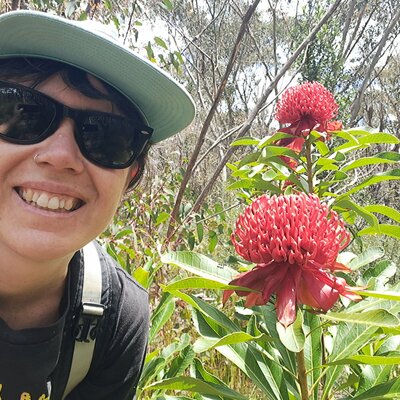
Really enjoyed this study from Ruby Paroissien at UNSW and the Australian Plantbank, looking at seed dispersal in the wet sclerophyll forests of SE Aus following the 2019/20 disaster fire season.

They found that post-fire seed dispersal from rainforest species was almost entirely absent 😟 hugely concerning when we have begun to see some of our oldest rainforests burn.

A highlight of the paper is Ruby's hand-drawn seed illustrations!

https://doi.org/10.1071/BT25061

#FireEcology #FireScience #Wildfire #SeedBank #Australia

What actually is fire? A physicist explains | The-14

Fire is not matter but a chemical process. From ancient hearths to bushfires, explore what fire really is and why it’s unique to Earth.

The-14 Pictures

the July-August 2025 newsletter from the California Fire Science Consortium is out

#firefighters #firefighting #wildland_fire #fireScience

https://us2.campaign-archive.com/?u=934b7746792f1dee6f60ea043&id=684bb18b07

July-August 2025 Newsletter

How the Critical Zone responds to wildfires is one of the areas members of the Big Data Cluster have been exploring. Read more in these papers:

🧪: https://bit.ly/48ZxLb4

🌱: https://bit.ly/3Oqn5L8

🛰️: https://bit.ly/CZNBDyr0307

More in our Publications library: https://bit.ly/CZNBDPubLibrary

#science #research #ClimateChange #FireScience

Megafire affects stream sediment flux and dissolved organic matter reactivity, but land use dominates nutrient dynamics in semiarid watersheds

Climate change is causing larger wildfires and more extreme precipitation events in many regions. As these ecological disturbances increasingly coincide, they alter lateral fluxes of sediment, organic matter, and nutrients. Here, we report the stream chemistry response of watersheds in a semiarid region of Utah (USA) that were affected by a megafire followed by an extreme precipitation event in October 2018. We analyzed daily to hourly water samples at 10 stream locations from before the storm event until three weeks after its conclusion for suspended sediment, solute and nutrient concentrations, water isotopes, and dissolved organic matter concentration, optical properties, and reactivity. The megafire caused a ~2,000-fold increase in sediment flux and a ~6,000-fold increase in particulate carbon and nitrogen flux over the course of the storm. Unexpectedly, dissolved organic carbon (DOC) concentration was 2.1-fold higher in burned watersheds, despite the decreased organic matter from the fire. DOC from burned watersheds was 1.3-fold more biodegradable and 2.0-fold more photodegradable than in unburned watersheds based on 28-day dark and light incubations. Regardless of burn status, nutrient concentrations were higher in watersheds with greater urban and agricultural land use. Likewise, human land use had a greater effect than megafire on apparent hydrological residence time, with rapid stormwater signals in urban and agricultural areas but a gradual stormwater pulse in areas without direct human influence. These findings highlight how megafires and intense rainfall increase short-term particulate flux and alter organic matter concentration and characteristics. However, in contrast with previous research, which has largely focused on burned-unburned comparisons in pristine watersheds, we found that direct human influence exerted a primary control on nutrient status. Reducing anthropogenic nutrient sources could therefore increase socioecological resilience of surface water networks to changing wildfire regimes.

"Advanced degree in a wildfire-related discipline (e.g., fire science, fire ecology, environmental science with a focus on wildfire, forestry, geography with fuels modeling experience)

Direct experience in wildfire behavior modeling, vegetation fuels mapping, or wildfire hazard assessment.

Experience with wildfire modeling systems (e.g., FARSITE, FlamMap, FSim, Phoenix RapidFire, Vesta Mk2)

Experience with cloud computing environments (e.g., AWS, GCP, Azure) and their associated data processing and machine learning services."

https://hachyderm.io/@kajord/114733390875237959

#FireScience #wildfires

Kelsey Jordahl (@[email protected])

Planet is hiring a Wildfire Data Scientist, based in San Francisco. Do you use remote sensing data to model and understand wildfire behavior? This is a great opportunity to work with cutting edge satellite imagery at global scale. https://www.planet.com/company/careers/?jobid=6967679 #jobs #hiring #xp #wildfire

Hachyderm.io

Talking wildfires and ecosystem resilience with Desert Research Institute-based Cluster member Gabrielle Boisrame.

📺: https://www.youtube.com/watch?v=PXLOoflq16M

Papers mentioned in this video:

Tracking Vegetation Recovery Following Mixed Severity Wildfires in the Sierra Nevada: https://bit.ly/40k2yx1

Trends in western USA fire fuels using historical data and modeling: https://bit.ly/3PLMdw9

Scientists' warning on extreme wildfire risks to water supply: https://bit.ly/4bNffpb

#CriticalZone #ClimateChange #FireScience

Cluster Chat 22: Gabrielle Boisrame | Desert Research Institute

YouTube

Cluster member Gabrielle Boisramé is based at the Desert Research Institute and has been studying the transformative impact of Yosemite’s natural fire experiment for over a decade.

“Our results hopefully give forest managers an extra reason to try this approach in more areas,” Boisramé says. “And that can give us a better idea of where the strategy works well and where it may have less of an impact. This project is a great example of scientists and managers working together in a place that the public cares a lot about.”

📖🔗: https://bit.ly/4hexA0o

#CriticalZone #FireScience #ClimateChange #science #research #California

Tracking the Restorative Effects of Good Fire

A few miles south of Yosemite’s famed Glacier Point, ringed by striking granite domes, lies the Illilouette Basin. This small stretch of the Sierra Nevada Mountains has become a sort of fire laboratory, a place where natural wildfires have been allowed to burn since 1972. In contrast with the long-supported program of fire suppression that has dominated American forests since the late 19th century, resulting in dense and unhealthy forests, the Illilouette Basin’s story is about the benefits that natural fire can bring to the landscape.

DRI

First aired in 2021.

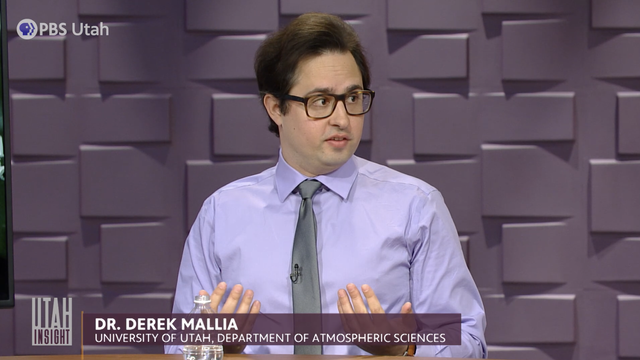
University of #Utah based Cluster member Derek Mallia participating as a panelist on an episode of Utah Insight talking about #wildfire causes and prevention in arid landscapes.

📺🔗: https://bit.ly/3DUz2ql

#FireScience #science #CriticalZone #research

Utah Insight | Weather, Wildfires and Climate Change | Season 2 | Episode 8

After a record wildfire season in 2020, what can be done to protect Utah’s wilderness?

Every moment counts when pushing back against #wildfire.

In this 2024 paper University of Utah based Cluster member Derek Mallia and collaborators write about how #GenerativeAI tools can support predicting fire behavior.

Read "Generative Algorithms for Fusion of Physics-Based Wildfire Spread Models with Satellite Data for Initializing Wildfire Forecasts": https://bit.ly/4gUCfou

#CriticalZone #FireScience #EarthScience #science #research #ClimateChange

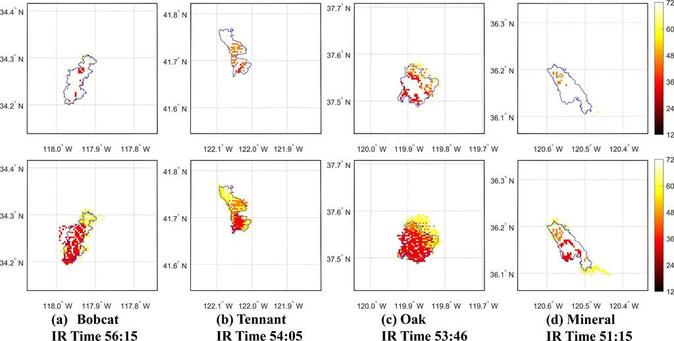
Generative Algorithms for Fusion of Physics-Based Wildfire Spread Models with Satellite Data for Initializing Wildfire Forecasts

Abstract Increases in wildfire activity and the resulting impacts have prompted the development of high-resolution wildfire behavior models for forecasting fire spread. Recent progress in using satellites to detect fire locations further provides the opportunity to use measurements toward improving fire spread forecasts from numerical models through data assimilation. This work develops a physics-informed approach for inferring the history of a wildfire from satellite measurements, providing the necessary information to initialize coupled atmosphere–wildfire models from a measured wildfire state. The fire arrival time, which is the time the fire reaches a given spatial location, acts as a succinct representation of the history of a wildfire. In this work, a conditional Wasserstein generative adversarial network (cWGAN), trained with WRF–SFIRE simulations, is used to infer the fire arrival time from satellite active fire data. The cWGAN is used to produce samples of likely fire arrival times from the conditional distribution of arrival times given satellite active fire detections. Samples produced by the cWGAN are further used to assess the uncertainty of predictions. The cWGAN is tested on four California wildfires occurring between 2020 and 2022, and predictions for fire extent are compared against high-resolution airborne infrared measurements. Further, the predicted ignition times are compared with reported ignition times. An average Sørensen’s coefficient of 0.81 for the fire perimeters and an average ignition time difference of 32 min suggest that the method is highly accurate. Significance Statement To initialize coupled atmosphere–wildfire simulations in a physically consistent way based on satellite measurements of active fire locations, it is critical to ensure the state of the fire and atmosphere aligns at the start of the forecast. If known, the history of a wildfire may be used to develop an atmospheric state matching the wildfire state determined from satellite data in a process known as spinup. In this paper, we present a novel method for inferring the early stage history of a wildfire based on satellite active fire measurements. Here, inference of the fire history is performed in a probabilistic sense and physics is further incorporated through the use of training data derived from a coupled atmosphere–wildfire model.

AMETSOC

#Fire-releated papers with collaborations from Cluster members in our online #library.

1: https://bit.ly/48ZxLb4

2: https://bit.ly/3Oqn5L8

3: https://bit.ly/4bNffpb

These and more accessible from our library page 📚🔗: https://bit.ly/CZNBDPubLibrary

#FireScience #wildfire #SciComm #CriticalZone #science #research

Megafire affects stream sediment flux and dissolved organic matter reactivity, but land use dominates nutrient dynamics in semiarid watersheds

Climate change is causing larger wildfires and more extreme precipitation events in many regions. As these ecological disturbances increasingly coincide, they alter lateral fluxes of sediment, organic matter, and nutrients. Here, we report the stream chemistry response of watersheds in a semiarid region of Utah (USA) that were affected by a megafire followed by an extreme precipitation event in October 2018. We analyzed daily to hourly water samples at 10 stream locations from before the storm event until three weeks after its conclusion for suspended sediment, solute and nutrient concentrations, water isotopes, and dissolved organic matter concentration, optical properties, and reactivity. The megafire caused a ~2,000-fold increase in sediment flux and a ~6,000-fold increase in particulate carbon and nitrogen flux over the course of the storm. Unexpectedly, dissolved organic carbon (DOC) concentration was 2.1-fold higher in burned watersheds, despite the decreased organic matter from the fire. DOC from burned watersheds was 1.3-fold more biodegradable and 2.0-fold more photodegradable than in unburned watersheds based on 28-day dark and light incubations. Regardless of burn status, nutrient concentrations were higher in watersheds with greater urban and agricultural land use. Likewise, human land use had a greater effect than megafire on apparent hydrological residence time, with rapid stormwater signals in urban and agricultural areas but a gradual stormwater pulse in areas without direct human influence. These findings highlight how megafires and intense rainfall increase short-term particulate flux and alter organic matter concentration and characteristics. However, in contrast with previous research, which has largely focused on burned-unburned comparisons in pristine watersheds, we found that direct human influence exerted a primary control on nutrient status. Reducing anthropogenic nutrient sources could therefore increase socioecological resilience of surface water networks to changing wildfire regimes.