Lobbying pour Shein : les aveux tardifs de Christophe Castaner - Observatoire des multinationales

> Après avoir dénié dans tous les médias avoir été embauché par Shein pour faire du lobbying sur la loi « fast-fashion », l’ex ministre macroniste a fini par passer aux aveux dans ses récentes déclarations à la Haute autorité pour la transparence de la vie publique. Mais il reste…
https://multinationales.org/fr/enquetes/l-offensive-de-shein-en-france/lobbying-pour-shein-les-aveux-tardif-de-christophe-castaner

#Shein #Fast_Fashion #Lobbies #Christophe_Castaner #FdC #RevueDePresse

Lobbying pour Shein : les aveux tardifs de Christophe Castaner

Après avoir dénié dans tous les médias avoir été embauché par Shein pour faire du lobbying sur la loi « fast-fashion », l'ex ministre macroniste a fini par passer aux aveux dans ses récentes déclarations à (…)

Observatoire des multinationales

"In 1995, the textiles industry produced 7.6 kilograms of fibre per person on the planet. By 2018, this had nearly doubled to 13.8 kilograms per person — during which time the world’s population also increased, from 5.7 billion to 7.6 billion people. More than 60 million tonnes of clothing is now bought every year, a figure that is expected to rise still further, to around 100 million tonnes, by 2030.

‘Fast fashion’ is so called partly because the fashion industry now releases new lines every week, when historically this happened four times a year. Today, fashion brands produce almost twice the amount of clothing that they did in 2000, most of it made in China and other middle-income countries such as Turkey, Vietnam and Bangladesh. Worldwide, 300 million people are employed by the industry.

But incredibly, more than 50 billion garments are discarded within a year of being made, according to a report from an expert workshop convened by the US National Institute of Standards and Technology, published in May. [2022]"—Nature

How fast fashion can cut its staggering environmental impact >

https://www.nature.com/articles/d41586-022-02914-2

#fast_fashion #consumerism #textiles #fashion_industry #pollution #clothing #ecology #waste #oceans #sea #water #textiles_industry #recycling #fibres #chemicals #circular_economy

How fast fashion can cut its staggering environmental impact

The textiles industry urgently needs input from researchers to help it to embrace the circular economy.

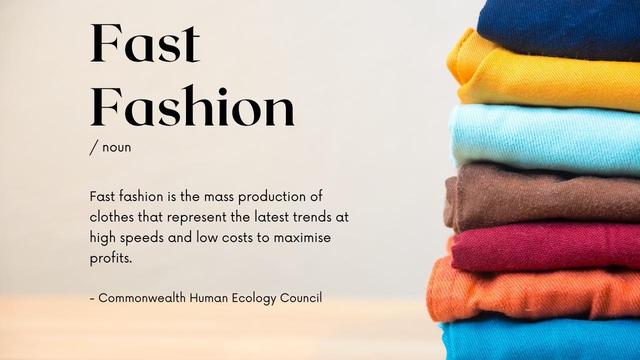
"Fast fashion refers to trendy clothes that are mass produced and made and sold quickly and cheaply, enabling people to buy new clothes often. In order for the clothes to be sold cheaply, the workers who make these clothes are often paid very low wages and the materials are poor quality.

In the past, the fashion industry released new designs on a seasonal basis – four times a year. Nowadays some big fashion houses release a new line every week, producing almost twice the amount of clothing today than they did in 2000. Alarmingly, many of these garments are hardly worn at all and up to 85% go into landfill each year. In Australia that is thought to be enough to fill an area the size of Sydney Harbour. So, this is obviously a big issue."—Ocean Life Education

Why Fast Fashion is a Problem for the Ocean >

https://www.oceanlifeeducation.com.au/why-fast-fashion-is-a-problem-for-the-ocean/

#fast_fashion #clothing #waste #toxicity #fashion_industry #alarming #oceans #education #profits #capitalism #consumerism #boycott_#fast_fashion #pollution #cheap_clothes #low_wages_workers #exploitation #ocean #ecology #environment #water #sea

Why Fast Fashion is a Problem for the Ocean - Ocean Life Education

  Australians are considered to be the second highest consumers of textiles in the world. Clothing prices are often relatively low and many of us get a buzz from frequently wearing new clothes. But does striving to have the latest designs come at too high a cost to the environment? Read on to as we […]

Ocean Life Education

Surproduction, toxicité et pollution : les soldes sous l’emprise de la fast-fashion

> Avec le lancement des soldes revient la tentation de surconsommer à foison. Pourtant, entre manipulation, exploitation des ouvriers, toxicité et pollutions, les raisons de s’abstenir, que vous récapitule Reporterre, sont légion.
https://reporterre.net/Surproduction-toxicite-et-pollution-les-soldes-sous-l-emprise-de-la-fast-fashion

#SurProduction #Surconsommation #Fast_Fashion #Industrie_Textile #Emissions_GES #Urgence_climatique #FdC #RevueDePresse

"The fast fashion industry is responsible for over 20% of global industrial water pollution due to the toxic chemicals used in dyeing and finishing fabrics. These substances don’t just fade from clothes; they leach into our rivers and, eventually, into our bodies. Studies have linked these chemicals to cancer, infertility, and a range of developmental disorders. Simply washing fast fashion garments adds to the crisis. Every year, an estimated 500,000 tons of microfibers, equivalent to 50 billion plastic bottles, are released into our oceans from synthetic fabrics like polyester and nylon. The International Union for Conservation of Nature (IUCN) reports that a staggering 35% of all microplastics in the ocean come from laundering synthetic textiles. These tiny particles don’t break down. Instead, they enter the food chain, making their way into the seafood we eat and the water we drink."—James Lam

The Devastating Effects of Fast Fashion on Water Pollution >

https://www.seasidesustainability.org/post/microbial-bioremediation-techniques-for-oil-spills-addressing-oil-contamination-1-1-3

#fast_fashion #laundering #microplastics #sea #pollution #oceans #synthetic_fabrics #seafood #drinks #water #industries #profit #capitalism

The Devastating Effects of Fast Fashion on Water Pollution

James LamFast fashion is poisoning our planet, one cheap garment at a time. Behind the glossy storefronts and online deals lies an industry that is draining our water resources, polluting our rivers, and threatening the health of millions. The UN Environment Programme (UNEP) warns that fast fashion is the second-largest consumer of water globally-outpacing even industries like energy and construction. Every trend, every impulse buy, and every discarded outfit carries an environmental cost that wJames LamJames Lam

Seaside
Storytelling Is America’s Real Superpower

YouTube

"Près de 11 millions de colis de petite taille venant de Chine inondent chaque jour le marché européen. Bien souvent les produits qu'ils contiennent, proviennent de plateformes comme Temu, Shein ou AliExpress, et ne respectent pas les normes européennes. Forfait de deux euros, plainte pour pratiques litigieuses... la Commission européenne et les associations de consommateurs cherchent à freiner ce flot de marchandises low cost."—ARTE

Temu, Shein & co : un flot incontrôlable ? >

https://youtu.be/g30k2lgqYRY

#Chine #colis #hyper_fast_fashion #normes_européennes #fast_fashion #marché #Temu #Shein #AliExpress #ventes_en_ligne #litiges #low_cost #écologie #qualité #contrôle #consommation #marchandises #flots #UE #contrôle #Europe #économie #vidéo #documentaire

Temu, Shein & co : un flot incontrôlable ? | ARTE Europe l'Hebdo

YouTube
"On est face à une catastrophe écologique": pourquoi les bennes de collecte de vêtements sont en train de disparaître

Les bennes de récupération de vêtements se font de plus en plus rares. En cause, une quantité phénoménale de vêtement impossible à recycler. La fast fashion a déferlé comme un tsunami que personne ne semble avoir vu venir.

BFM BUSINESS
Contre la « fast fashion », les productions locales doivent être plus et mieux soutenues

Les alternatives à la « fast fashion » ne sont pas toujours suffisamment connues. Pour aider les consommateurs à choisir en connaissance de cause, il faudrait soutenir davantage les offres de proximité.

The Conversation