Cry Later: The Culture That Taught You Not to Grieve
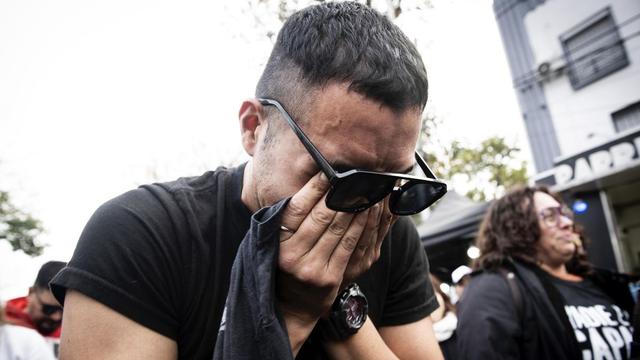
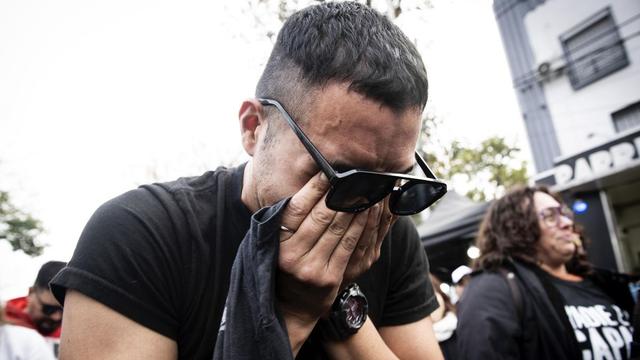
The commands arrive early. They arrive in childhood, in the voices of parents and teachers and coaches and older relatives, and they are delivered with the same authority as instructions about traffic and hot stoves. Cry later. Hold it in. Do not show your emotions. Do not embarrass us. Be strong. Be brave. Be a man. There will be time for that later. Not here. Not now. Not in front of people.
Content Note: This book contains accounts of suicide, suicidal crisis, and the deaths of family members, friends, and companion animals. Part Five includes detailed accounts of suicidal ideation and completed suicide. If you or someone you know is experiencing a mental health crisis, the 988 Suicide and Crisis Lifeline is available 24/7 by phone or text at 988. The Crisis Text Line is available by texting HOME to 741741.
These are grief suppressors. They are issued so routinely and across so many contexts that they have acquired the appearance of common sense. They are not common sense. They are commands to override a biological response that the body is producing for a reason. When a child is told not to cry at a funeral, the child is being told to suppress a neurochemical cascade that is already in progress. The cortisol is elevated, the amygdala has fired, and the body is doing what millions of years of evolution designed it to do when it registers the absence of an attachment figure. The command does not eliminate the response. It drives it underground, where it persists in forms the child cannot name and the adults will not recognize as grief when it resurfaces months or years later as insomnia, stomach pain, an inability to concentrate, a persistent anxiety with no identifiable source.
I have written a book about this. It is called “Go to Every Funeral: How Grief Defines the Living,” and it is published by David Boles Books Writing and Publishing, and the title comes from something I overheard in a cafe in Newark, New Jersey, about twenty-five years ago. A mother told her college-age daughter to go to every funeral, even if she did not want to, even if she did not know the dead person, because funerals are for the living and absence is remembered. I carried those six words for a quarter of a century, through the deaths of my grandmother, my grandfather, my mother, my mentor, two friends, and a cat who sat on my desk for fifteen years, and the book is the result of trying to understand why those words were true and why nobody else had ever said them to me.
The book covers a lot of ground: the neuroscience of grief, the mourning practices of elephants and crows, the history of funerals from the domestic parlor to the corporate funeral home, the economics of death as a market, the global range of mourning from the Torajan highlands to the jazz funerals of New Orleans. But the section I want to talk about here is Part Five, which is about permission. Specifically, about who gets to grieve and who gets told to stop.
The suppression commands are not distributed equally. They fall with particular weight on men, on children, on employees, and on anyone whose grief is judged to be inconvenient by the people around them. Boys are told not to cry with a frequency and an intensity that girls are not, and the instruction begins early enough that by adolescence many boys have internalized it so completely that they experience the suppression as personality rather than training. They do not cry because they are “not the kind of person who cries.” The self-description obscures the years of conditioning that produced it.
The consequences are visible in the data. Men die by suicide at rates roughly four times higher than women in the United States. They are less likely to seek mental health treatment, more likely to self-medicate with alcohol, more likely to convert emotional distress into physical aggression. These are not biological inevitabilities. They are the downstream effects of a culture that tells half its population to suppress the emotional responses the other half is permitted to express. The man who cannot cry at his father’s funeral because he was told, at age six, that men do not cry is not displaying strength. He is displaying the result of a training program that disconnected him from his own grief response, and the disconnection does not eliminate the grief. It makes the grief dangerous, because grief that cannot be expressed as grief will be expressed as something else.
The workplace runs on the same logic. The standard bereavement leave in the United States is three days for the death of an immediate family member. Three days. The body has not even begun to metabolize the cortisol surge in three days. The cognitive map has not begun to update. The neurological process of revising the brain’s internal model of the world, recognizing at the cellular level that the dead person is absent from every context in which they were expected, has barely started. And the employer expects you back at your desk, functioning, participating in meetings about quarterly targets while the fact that your mother is dead has not yet reached the parts of your brain that govern concentration.
Some companies offer five days. Some offer none. Some distinguish between the death of a spouse and the death of a parent and the death of a sibling, granting fewer days as the relationship moves outward from the nuclear center, as though the grief for a brother can be mathematically demonstrated to require less processing time than the grief for a child. The taxonomy of bereavement leave is a document written by human resources departments, and it tells the employee, in the plainest possible terms, how long their grief is permitted to inconvenience the organization.
Then there is the clinical manual. In 2022, prolonged grief disorder was added to the DSM-5-TR, giving clinicians a formal diagnostic category for grief that persists at debilitating intensity beyond twelve months. The addition was controversial among grief researchers, and the controversy is worth understanding, because it reveals how the medical establishment processes the same impulse that drives the workplace policy and the childhood command: the impulse to draw a line, to say that grief is acceptable on this side and pathological on the other, and to give the line the authority of science.
The proponents of the diagnosis argued that a subset of bereaved people, estimated at roughly ten percent, experience grief that does not follow the typical trajectory. The pain does not diminish over time. Functioning does not return. The preoccupation with the dead person remains so intense that it dominates waking life months and years after the death. These people need clinical help, and the diagnosis gives clinicians a framework for providing it, including the possibility of insurance reimbursement for treatment.
The opponents argued that pathologizing grief at twelve months imposes an arbitrary timeline on a process that has no natural expiration date. The twelve-month threshold was chosen because the clinical data showed it as a statistically significant inflection point, the point at which the probability of spontaneous recovery drops sharply. But statistical inflection points are not the same as biological boundaries. The griever at month thirteen is not clinically different from the griever at month eleven. The line exists because the diagnostic system requires lines, and the existence of the line communicates something to the broader culture: that grief beyond a year is officially a mental illness. The employer who was already impatient at three days now has clinical validation for the suspicion that the employee who is still struggling at fourteen months has something wrong with them.
The book argues that this entire apparatus, the childhood commands, the workplace policies, the diagnostic thresholds, is part of a single cultural project: the management of grief for the convenience of everyone except the griever. The child is told to stop because the adults are uncomfortable. The employee is expected back at the desk because the organization needs the labor. The patient receives a diagnosis because the clinical system requires categories. None of these interventions exists primarily to serve the person who is grieving. They exist to contain the grief, to keep it within boundaries that allow the surrounding systems to continue operating without interruption.
Meanwhile, the culture has produced a substitute for communal grief that is worse than the absence of communal grief. Social media has made performative mourning the default public response to death. When a public figure dies, the speed with which users post their condolences has become a measure of social attentiveness. The posts follow a formula: a photograph of the deceased, a statement of shock, a brief personal connection however thin, and a closing declaration of love and loss. The formula is so consistent it has been parodied, and the parodies have not slowed it down, because the function of the post is to perform belonging, to demonstrate that you are the kind of person who feels things, who notices when important people die, who participates in the rituals of the digital public square.
Some of the grief is sincere. The rest is performance, and the performance crowds out the reality. When the feeds are flooded with grief posts after a celebrity death, the person who is actually devastated, the person who had a real connection to the deceased and is not performing but drowning, finds their grief indistinguishable from the display. Their signal disappears into the noise. The communal mourning that is supposed to support the bereaved instead competes with them, reducing a specific and irreplaceable loss to one post among thousands, all using the same photographs, the same phrases, the same hashtags.
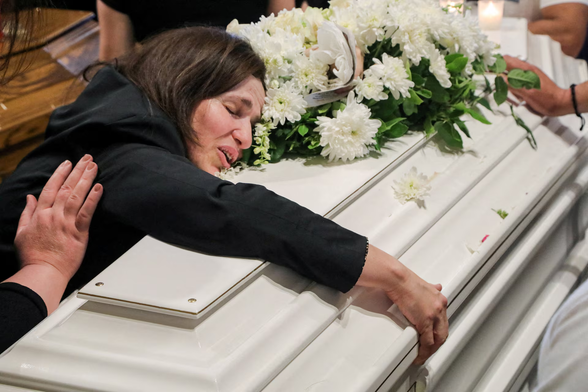
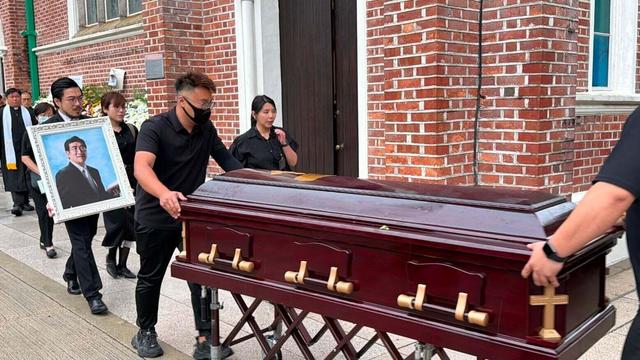
This is the inversion of what the mother in the Newark cafe was describing. She said you go to the funeral. You show up. You put your name in the book. You sit in the pew. You bring food to the house afterward. The obligation is physical: you move your body to the place where the grief is, and your presence there is the message. Social media offers the simulation of this presence without the physical fact of it. You post. You perform the gesture. You do not move your body anywhere. You do not sit in an uncomfortable chair in a room that smells like flowers and floor polish. You do not look at the face of the bereaved and allow them to see that you came. You post, and the post is seen or not seen, liked or not liked, and it scrolls away, and the next post is about something else, and the grief has been acknowledged in the same medium and at the same depth as a restaurant recommendation.
Kenneth Doka coined the term “disenfranchised grief” to describe losses the culture refuses to recognize. The death of an ex-spouse. The death of a pet. The death of a patient if you are a nurse. The death of a public figure you never met but whose work was woven into the structure of your daily life. These are real losses producing real grief, and the culture’s refusal to recognize them does not dissolve the grief. It isolates the griever, who cannot bring their loss into the social spaces where grief is processed because the spaces will not admit it. The colleague who lost a dog cannot mention it at work. The fan grieving a musician cannot break down at dinner. A nurse whose patient died that morning cannot ask for a day off. The grief has no approved venue, no sanctioned expression, no communal witness. It persists alone.
What the book asks, across all six of its parts and all seventeen of its chapters, is what happens when you add all of this up. The suppression that begins in childhood and hardens along gendered lines. The workplace that contains it in three days. The diagnostic manual that pathologizes it at twelve months. The industry that monetizes it. The digital platform that simulates it. The disenfranchisement of entire categories of loss. What you get is a culture in which millions of people grieve alone, in private, without the communal infrastructure that every human society in history built to distribute the weight of death across many shoulders. The weight did not get lighter because the infrastructure was removed. The shoulders carrying it just got fewer.
The mother in the cafe knew this. She did not use these words. She did not cite the neuroscience or the sociology or the economics. She tapped the table and told her daughter to go to every funeral, and the instruction contained everything: that grief is communal, that the community is constituted by the people who show up, that presence is the oldest technology of mourning and still the most effective, and that the dead have no needs left, and the living have every need there is.
Go to every funeral. The book is available at BolesBooks.com as a free download, and on Amazon in Kindle ($9.99) and paperback ($15.99) editions.
#bolesBooks #celebration #cremation #culture #davidBoles #funeral #grief #grieving #history #limits #midwest #timeOff #treatment