Liftmaster hates this one simple trick! Security+ 3.0? HACKED! (OK not really).

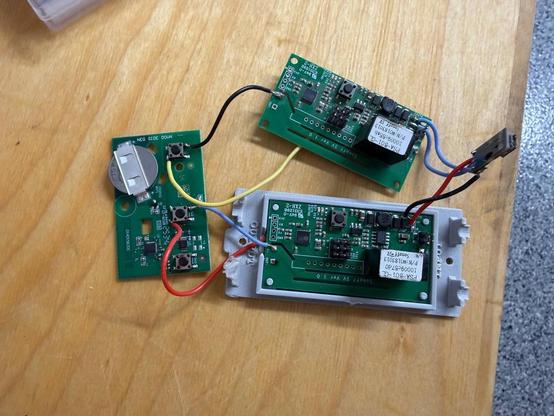
I had a spare remote and have wired it up to two relays powered by #esphome so I can open my garage doors in #homeassistant without the stupid myq cloud crap

My house. My hardware. My way! As it should be.

Also, yay. Go Artemis II !

I assume I could also use the new serial_proxy component from a custom home assistant integration for radpo. This would require no custom C code in the esphome firmware at all. 🤔

https://esphome.io/components/serial_proxy/

#esp32 #radpro #esphome #homeassistant

Serial Proxy

Instructions for setting up the Serial Proxy component in ESPHome.

ESPHome - Smart Home Made Simple

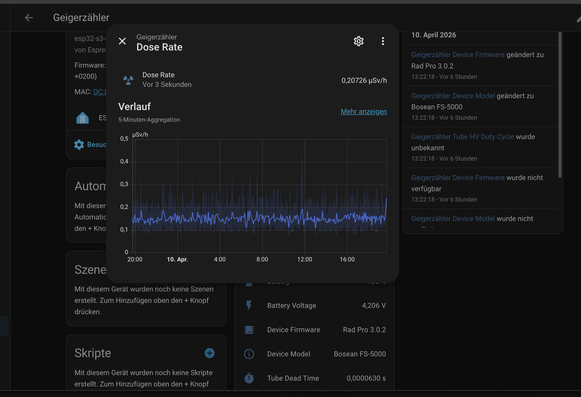
I have now hooked up my Geiger counter w/ Radpro firmware to home assistant using esphome on the esp32-s3 and esphome's usb_host / usb_uart components.

Just had to create a small custom esphome component that implements radpro's serial protocol to poll the geiger counter.

#esp32 #radpro #esphome #homeassistant

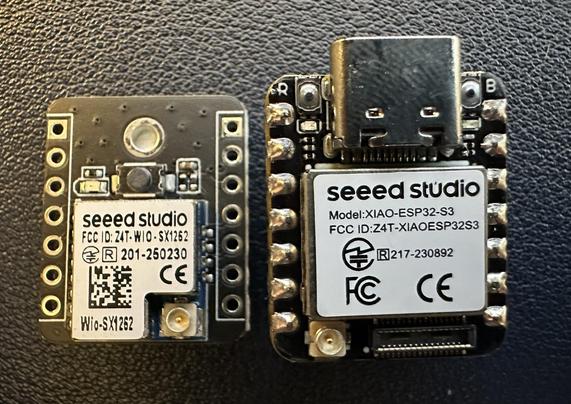
It's amazing by the way that you can buy an ESP32S3 with a LoRa (SX1262) shield for just €9, and it even comes with 2.4Ghz and 868Mhz antennas 🤩

#homeautomation #homeassistant #esphome #meshtastic #meshcore

Working on phase 3 of my Buurtmelder (“Neighbourhood Notifier") project, where I'll be rolling out the terminals to our neighbours.

In case you're interested in what it does: it intercepts RF signals emitted by alarm systems and broadcasts those signals across a group of terminals (using MQTT, with a LoRa backup in case the Internet connection is down). Those terminals could be installed at your neighbours’ homes. That way, an alarm (burglar, panic, SOS) can be shared with people that live close by and can respond quickly to an alarm situation in your home.

Firmware is based on ESPHome, so Home Assistant integration comes built-in. But the terminal will run completely standalone.

#homesecurity #homealarm #homeautomation #homeassistant #esphome

#lazyweb #homeassistant #esphome

Before I end up going down a confusing rabbit hole of contradictory forum posts*.....

Has anyone made an espHome based device for 3xDS18B20 probes?
All I want to do is read three temperature states with an entity for each that I can use to control things.

"Caveat is I'm dyslexic and not a coder, so something you've already made that I can simply edit names would be ideal.

Pretty damn impressed with #Claude doing #ESPhome config files.

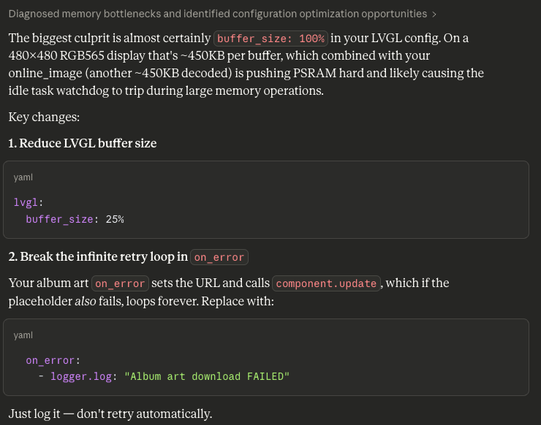
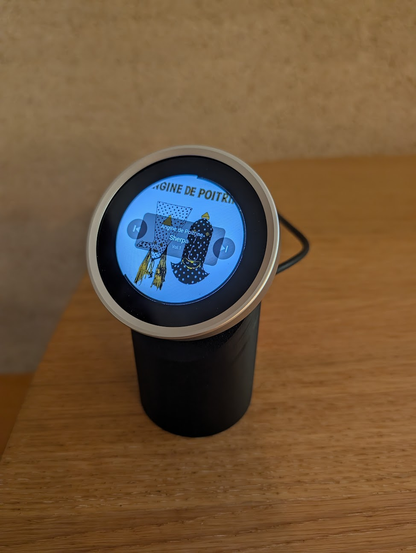
I had a pretty pernicious bug that was causing my screen device that I use to control music playback to crash randomly. I fed in some log output and the config file, and it gave me two suggestions that I put in and no crashes so far, pretty cool.

Given this stuff skirts the edge of YAML, C++, and weird embedded device limitations, it's pretty amazing how good it is at it.

(background: https://blog.simonrumble.com/music-and-ac-control )

#homeassistant

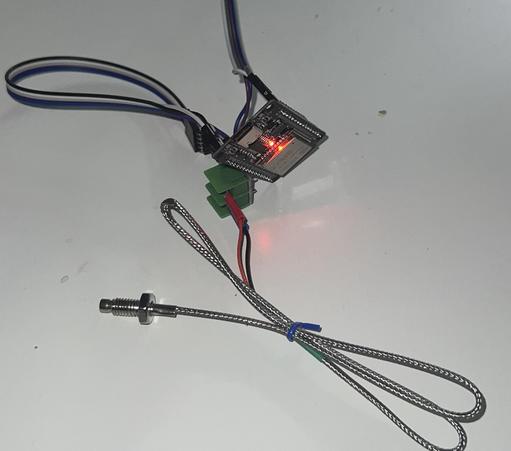
Thanks to some makers on here, I got an #ESP32 with a max6675 K-type thermocouple temperature sensor running #ESPHome

This stuff is getting entirely too easy.

I will say, though, I bought these ESP32s that were labeled ESP32 -32 Development Board TYPE-C CH340C and they seem like a pain. I couldn't get them to flash using USB-C to the USB-C port. I ended up pulling out a CP2102 USB UART Bridge to use with it. That seemed to make it work.

It just popped up in #HomeAssistant. I was expecting to arm wrestle it, be confused, swear at it a little, but no. Completely disappointed at not needing to yell at clouds.

This is basically the prototype on my desk. Eventually I want to hook it up to my fireplace temperature sensor.

Hab etwas gezaubert, ESP32 der sich zum #Marstek #B2500 Speicher verbindet und die Daten per #REST API bereit stellt, und oh wunder man kann mehr auslesen als in der App auch z.b. die BMS.

Dann muss ich nicht mit# MQTT rumfummeln, leider Stürzt der ESP noch ab denke das der RAM voll lauft da muss ich morgen noch mal dran.

Wundert mich total das es keinerlei Programme oder ähnliches dafür gibt nur ein #esphome gedönsel für homeassistant.

{
  "device": "Marstek B2500 DTU",
  "version": "1.0.0",
  "ble_mac": "18:CE:x:x:x:x",
  "ble_status": "Verbindung",
  "connected": true,
  "ip": "192.168.0.x",
  "uptime_s": 128,
  "poll_interval_s": 10,
  "total_requests": 0,
  "successful_polls": 0,
  "endpoints": {
    "data": "/data",
    "device": "/device",
    "runtime": "/runtime",
    "settings": "/settings",
    "cells": "/cells",
    "scan": "POST /scan"
  }
}

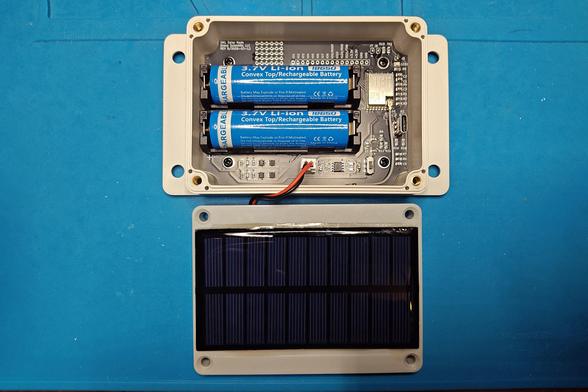
SN1 Solar Node – An ESP32-C3-based board with IP67 enclosure, solar charging, ESPHome firmware

Designed by Granz Scientific LLC, the SN1 Solar Node is an ESP32-C3-based IoT node/development board designed specifically for off-grid IoT projects. Development boards like Seeed Studio Wio Tracker, or industrial controllers like DFRobot LoRaWAN Control Terminal, allow you to handle your own battery management and weatherproofing, or on the other end, you have products like SenseCAP Solar Node P1 that come with everything integrated but do not allow adding custom hardware. This is where the SN1 Solar Node is different; it features an IP67-rated enclosure with an integrated solar panel on the lid, 18650 battery support, and prototyping strip-board areas for custom circuitry. It also includes a smart power switch that allows the battery to continue charging from the solar panel even when the board is powered off. Additionally, it provides battery voltage monitoring, breaks out most GPIOs for easy access, and includes optional jumpers for an onboard LED and

CNX Software - Embedded Systems News