Behind the scenes of “beautiful scientific graphics”

If you think that clean, elegant visuals in scientific reports are produced in a couple of clicks — I’m here to disappoint you. 🙂

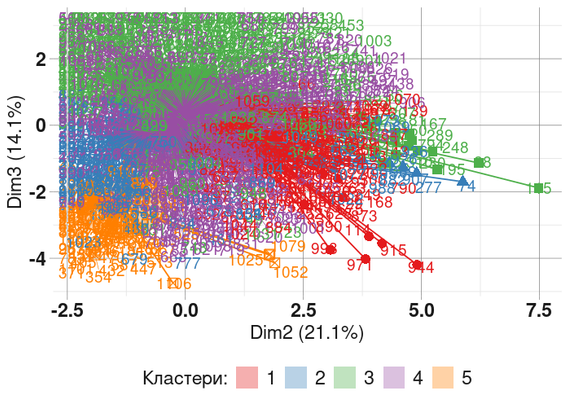
Here’s one of many failed attempts to visualize results based on thermodynamic modeling of geochemical processes.

Turning raw multidimensional data into something that a human reader can intuitively grasp is a separate challenge — with dozens of input parameters and only a few truly useful outcomes.

Good science is not only about computation, but also about communication.

#Geochemistry #DataViz #Rstats #Clustering #EnvironmentalModelling #ScienceCommunication #PHREEQC #WaterPollution #SvystunovaGully #Contamimation #Groundwater #Infographics #PCA #Thermodynamics
Parsing PHREEQC output into a clean, structured dataset opens the door to far more than just looking at a few components.
Once everything is tidy, you can explore the whole chemical system at once — speciation, mineral phases, spatial trends, and more.

Here are a few examples from my zinc modeling workflow in R:
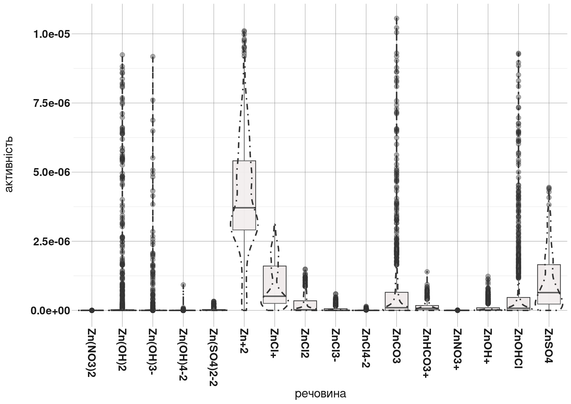
📌 1 — Speciation distribution
A violin/boxplot view of modeled zinc species across all samples.
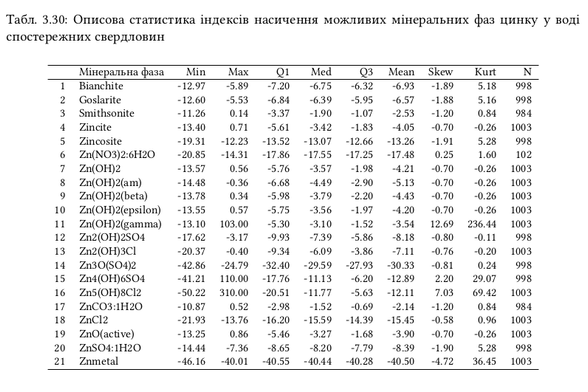
📌 2 — Saturation index statistics
Summary table showing how different mineral phases behave across the aquifer.
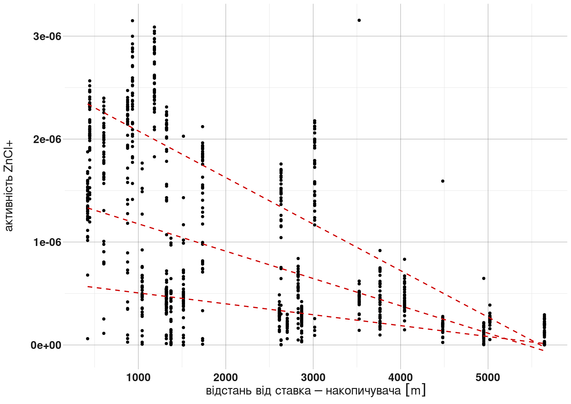
📌 3 — Spatial trends
Activity of ZnCl⁺ decreasing with distance from the impoundment.

This is only a small part of what becomes possible once PHREEQC results are organized properly.
A tidy dataset = full access to statistics, machine learning, and geospatial analysis.

Curious how others approach PHREEQC post-processing — do you parse everything, or focus only on a few components?

#PHREEQC #Geochemistry #Rstats #Groundwater #EnvironmentalModelling #OpenScience #SvystunovaGully

Reid's paradox of rapid plant migration (Paleontology 🦕)

Reid's Paradox of Rapid Plant Migration or Reid's Paradox, describes the observation from the paleoecological record that plant ranges shifted northward, after the last glacial maximum, at a faster rate than the seed dispersal rates commonly occur. Rare long...

https://en.wikipedia.org/wiki/Reid's_paradox_of_rapid_plant_migration

#ReidSParadoxOfRapidPlantMigration #Paleontology #ForestEcology #ConservationBiology #EnvironmentalModelling

Reid's paradox of rapid plant migration - Wikipedia

Reid's paradox of rapid plant migration (Paleontology 🦕)

Reid's Paradox of Rapid Plant Migration or Reid's Paradox, describes the observation from the paleoecological record that plant ranges shifted northward, after the last glacial maximum, at a faster rate than the seed dispersal rates commonly occur. Rare long...

https://en.wikipedia.org/wiki/Reid's_paradox_of_rapid_plant_migration

#ReidSParadoxOfRapidPlantMigration #Paleontology #ForestEcology #ConservationBiology #EnvironmentalModelling

Reid's paradox of rapid plant migration - Wikipedia

Hello! I am Dr Chris Skinner, aka FloodSkinner. I am a scientist, hydrologist, environmental modeller, and science communicator. I am about to launch a YouTube channel to tell stories about modelling water, working in modelling, and the links to gaming - check out my LinkTree: https://linktr.ee/floodskinner

#SciComm #Hydrology #YouTube #EnvironmentalModelling #Water #Careers #Gaming

@FloodSkinner | Twitter | Linktree

Creative flood learning

Linktree