 V Martín
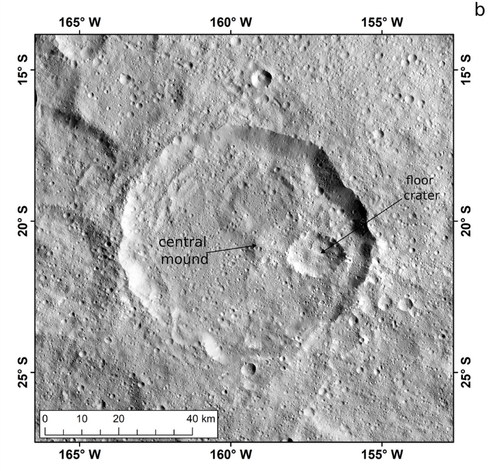
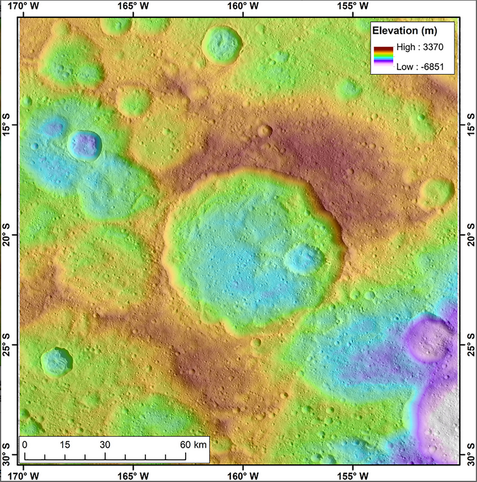
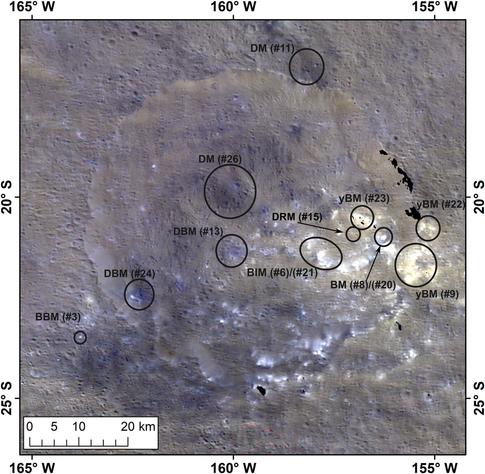
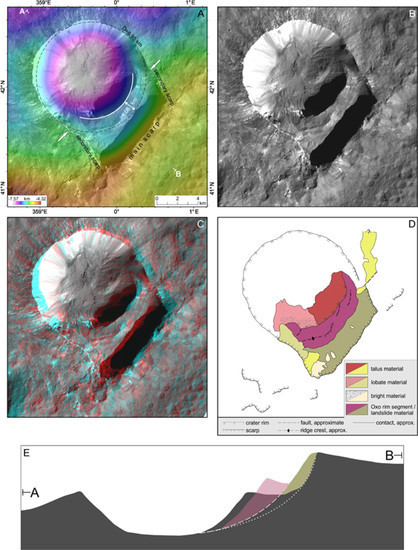
Nathues et al: "Consus Crater on Ceres: Ammonium-Enriched Brines in Exchange With Phyllosilicates?"
https://agupubs.onlinelibrary.wiley.com/doi/10.1029/2023JE008150
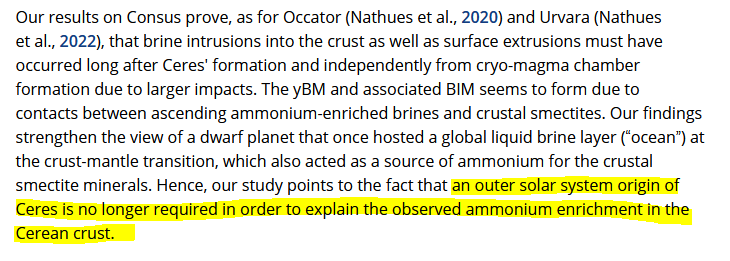
@Landru79 my fav part, around 40 seconds in, I had never seen that you could get a 3D effect on Ahuna Mons!
I took the liberty of cutting that part and slowing it down (original in the replied post)
NASA/JPL-Caltech/UCLA/MPS/DLR/IDA/j. Roger
Nathues et al: "Consus Crater on Ceres: Ammonium-Enriched Brines in Exchange With Phyllosilicates?"
https://agupubs.onlinelibrary.wiley.com/doi/10.1029/2023JE008150
More intrigue on the presence of water ice on #DwarfPlanetCeres , this paper looks at permanent shadowed regions in northern latitudes using different ways to model the topography. Quite interesting that these regions will still see sunlight in relative short timespans due to 15-20 deg changes in Ceres' obliquity.
https://www.psi.edu/blog/history-of-ceress-young-cold-traps/
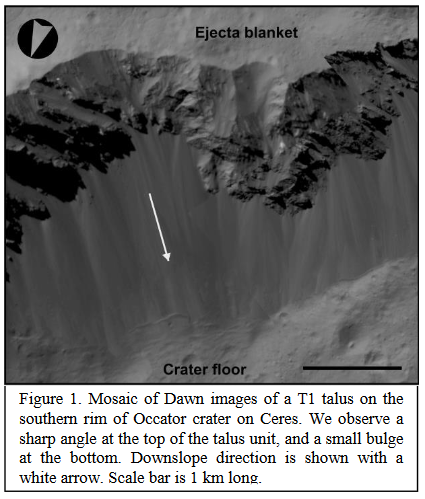
Another Le Becq's summary of this new model, now on "Planetary Geomorphology Image of the Month"
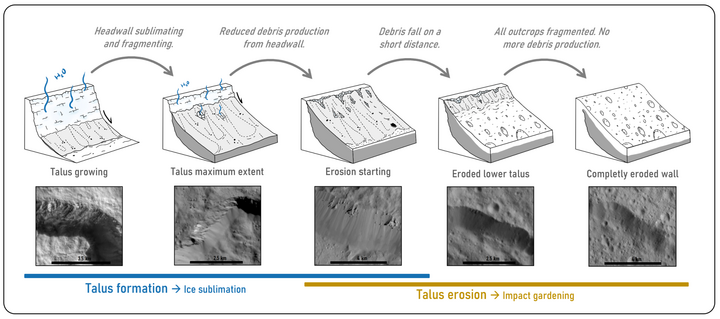

Post contributed by Noé Le Becq, PhD candidate, Laboratoire de Planétologie et Géosciences, Nantes (France) Ceres was discovered in 1801 by Giuseppe Piazzi and is located in the main asteroid belt …
From 2017, Nathues et al: https://iopscience.iop.org/article/10.3847/1538-3881/aa7a04
h/t @Landru79
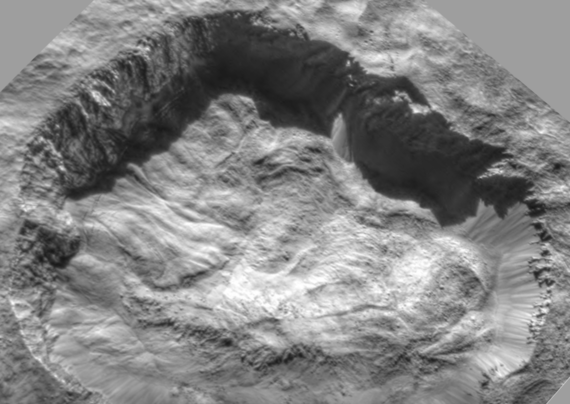
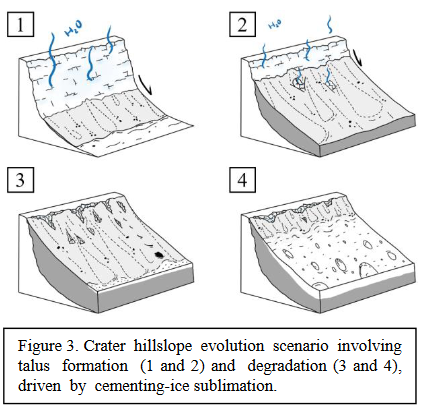
Let me finish this #LPSC2024 thread with a #DwarfPlanetCeres paper, covering features I always found amusing in #DawnMission photos. Attached is one of my favs, in Kupalo crater (right "besides" Juling) https://photojournal.jpl.nasa.gov/jpeg/PIA20944.jpg
Le Becq et al: "A new model of crater degradation on Ceres involving ice sublimation"
https://www.hou.usra.edu/meetings/lpsc2024/pdf/1195.pdf
Thread start: https://mastodon.social/@sharponlooker/111870153396426610
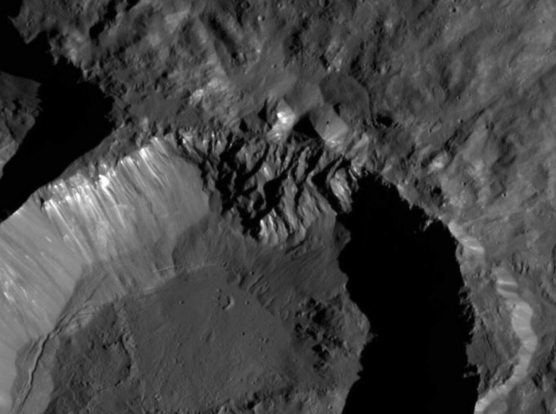
@nasapics_bot yet another throwback to the golden days of #DawnMission at #DwarfPlanetCeres and all those wacky craters and rims
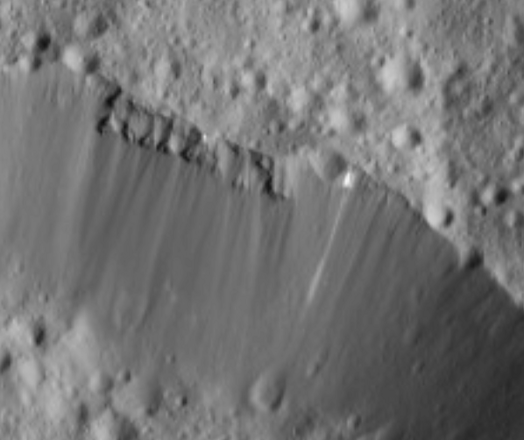
@nasapics_bot Exquisite display of crater relaxation processes on #DwarfPlanetCeres
https://solarsystem.nasa.gov/resources/1124/urvara-and-yalode-giant-craters-on-ceres/
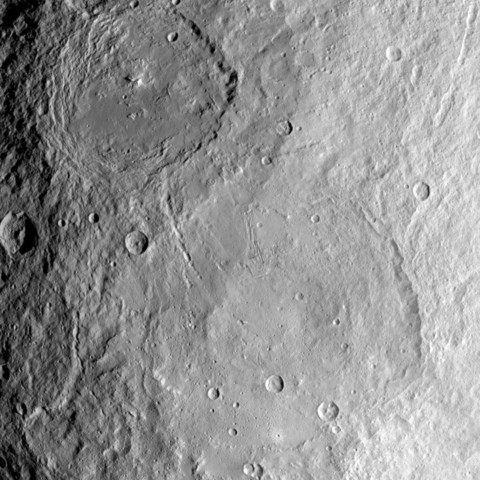

This image from NASA's Dawn spacecraft shows large craters Urvara (top) and Yalode (bottom) on dwarf planet Ceres. The two giant craters were formed at different times. Urvara is about 120-140 million years old and Yalode is almost 1 billion years older.
#TBT #JulingCrater on #DwarfPlanetCeres as imaged by #NASADawnMission
I took the liberty of stretching and distorting the original to cover more of the frame.
Original: https://www.jpl.nasa.gov/images/pia21920-juling-craters-floor
Credit: NASA/JPL-Caltech/UCLA/MPS/DLR/IDA/ASI/INAF
Science paper on the ice-rich northern wall (here upper left): https://www.science.org/doi/full/10.1126/sciadv.aao3757