 Virtual Domain-Driven Design
Balancing deep domain understanding with the broader strategic view of a system can be challenging. @trondhjort talk offered perspectives on how to effectively "see the forest for the trees" in our complex domains, helping connect the details to the overall architecture.
Watch or listen: https://virtualddd.com/sessions/see-the-forest-for-the-trees-trond-hjorteland/
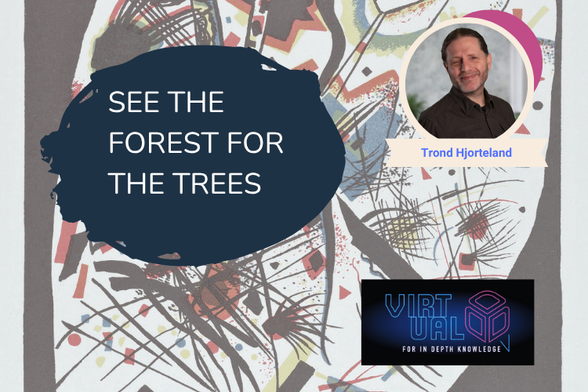
See the Forest for the Trees - Trond Hjorteland
When developing your software products, be it coding, testing, user experience, product management, or all the other elements required to solve a customer need, do you understand what the rest of the people do to make that happen? What about the other people in your organisation, maybe working on different products or even other legs of the customer journey like sales, customer service, billing, and operations? Do you see how you fit into the big picture, and what your contribution is to the company vision and strategy? I suspect most of us neither have the time nor the opportunity to get a wider view, focusing on our little part of the bigger system instead and making the best of that. We know that a system is supposed to be more than the sum of its parts, but how can we make sure that the sum is positive? That is hard when we cannot see the forest for the trees. Let us employ systems thinking to give us a holistic perspective, by adding synthesis to our analysis skills so that we can explore and understand emergence. We all know reductionism well, working on parts in isolation but holism is required to provide important insights and knowledge to handle the complexity in domains we normally work in – especially where people are involved. Only then can we build sustainable and adaptive software systems. This is an introduction to systems thinking and its importance when dealing with complexity. About Trond Senior IT Consultant and sociotechnical practitioner. Trond is an IT architect and open sociotechnical systems practitioner with extensive experience working with large, complex, and business-critical systems in industries such as telecom, media, TV, and the public sector. His main interests are service-orientation, domain-driven design, event-driven architectures, and open sociotechnical systems. His mantra: Great solutions emerge from collaborative sense-making and design.


 SoftwareArchitecture Gathering
 Codeminer42
 Larry Swanson
 Kerrick Long (code)
 Domain-Driven Design Barcelona
 Daniel Solé

 Fraktalio