Destination Moon

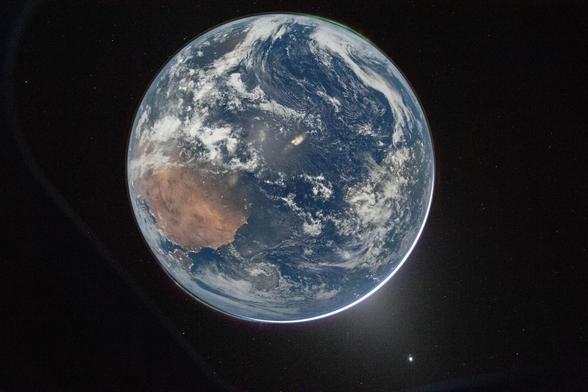
Earth from Artemis II.

Every week, I leave for the gym at 5 AM. But this week was different. This past week, Artemis II was on its way to the Moon. It’s a space mission NASA hasn’t performed since Apollo 17 in 1972. With the Moon visible in the night sky and generally favorable weather, I found myself looking up every morning, wondering about this historic mission. Somewhere between Earth and the Moon, four astronauts were in a space vehicle the size of two minivans combined, taking mankind farther into space than any previous mission. After an epic journey around the Moon, the Orion space capsule splashed down safely in the Pacific Ocean at 8:07 PM on April 10.

Earthset captured through the Orion spacecraft window at 6:41 p.m. EDT, April 6, 2026, during the Artemis II crew’s flyby of the Moon.

Ever since I watched the later Apollo missions in the early 1970s, I have been enraptured by the space program. From the sheer capabilities involved in launching a spacecraft to the technological advances civilization has enjoyed because they were either invented or perfected for the space program, NASA has been responsible for projecting what we, as a species, are truly capable of. Sending a human off the planet into space and returning them safely to Earth was enshrined in history by the late President Kennedy when he stated to a Joint Session of Congress in 1961, “I believe that this nation should commit itself to achieving the goal, before this decade is out, of landing a man on the moon and returning him safely to the earth.”

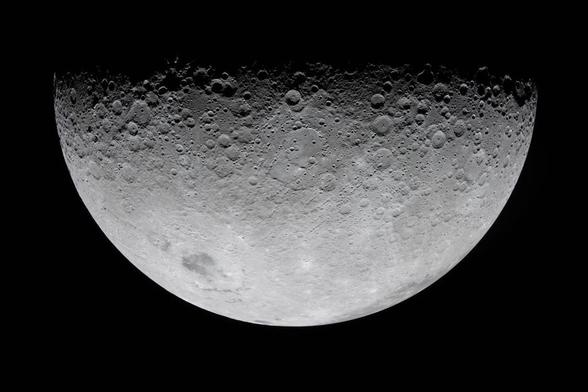
 As the Artemis II crew flew over the terminator, the astronauts described this boundary between day and night as “anything but a straight line.”

While I have seen the Space Shuttle land and have visited the Kennedy Space Center on two occasions, I have yet to witness a live rocket launch. It’s easy to understand what inspires people to pursue a career in the space program. When you see vehicles such as the shuttle or a Saturn V rocket (Apollo/Saturn V Center), you can’t help but appreciate the inspiration to accomplish such feats of engineering and the pride in one’s country that can harness the intelligence and willpower necessary to achieve what was only envisioned in science fiction movies (Destination Moon).

Captured by the Artemis II crew during their lunar flyby on April 6, 2026, this image shows the Moon fully eclipsing the Sun.

The Artemis missions will continue, with Artemis III scheduled for a mid-2027 launch, during which they will test two landers, one from SpaceX and the other from Blue Origin. From there, NASA plans to launch Artemis IV in early 2028, which will return humanity to the Moon’s surface. Artemis V is planned for the end of 2028, with annual missions thereafter, with the goal of building a Moon base. It would be grand if they called it Moon Base Alpha after the TV series Space: 1999!

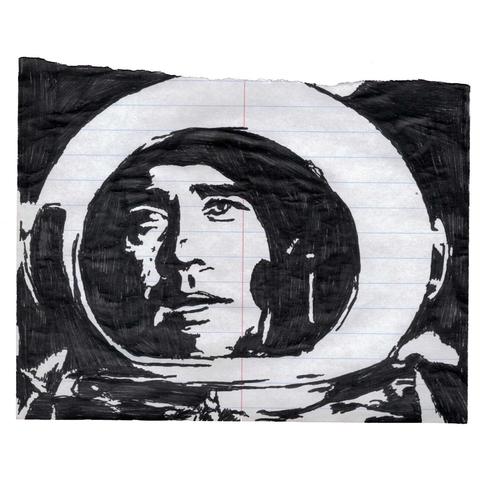
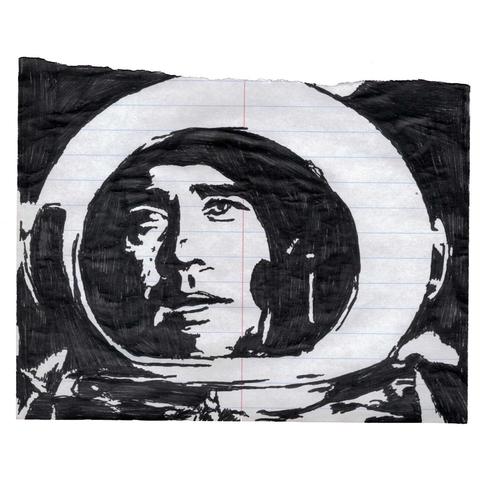
NASA astronaut and Artemis II Pilot Victor Glover pictured here in the Orion spacecraft during the Artemis II lunar flyby.

While I don’t foresee myself traveling into space (never say never!), I have channeled my fondness for the space program into fiction. When I created and launched the First World Universe with First World in 2007 and First Signal in 2021, I blended science fact with science fiction to tell a story that has now been watched by millions worldwide.

Earthrise captured through the Orion spacecraft window at 7:22 p.m. ET during the Artemis II crew’s flyby of the Moon’s far side.

Whether one is part of the science fact or fiction community, one thing I have realized over the years is that we all imagine the impossible and either accomplish it with an actual space launch or write about it in such a way that it becomes believable. For as long as mankind has imagined what’s on the other side, whether it’s Leif Erikson discovering North America or writer H.G. Wells theorizing the internet, there is virtually no limit to what’s possible.

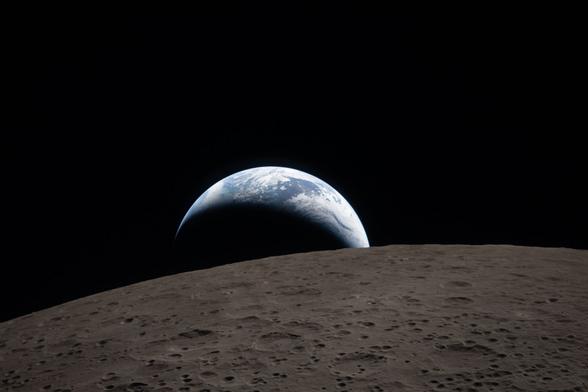
The Artemis II crew captures an image of a crescent Earth on their journey around the Moon.

Thank you to the Artemis II crew and to the thousands of ground crew and scientists who made such a mission possible. In a world of conflict and challenges, all of us can look to space with hope and be…

Inspired.

#Apollo #Artemis #BlueOrigin #DestinationMoon #FirstSignalMovie #FirstWorldMovie #HGWells #KennedySpaceCenter #LeifErikson #Moon #NASA #News #PresidentKennedy #SaturnV #Science #ScienceFiction #space #Space1999 #SpaceProgram #SpaceX
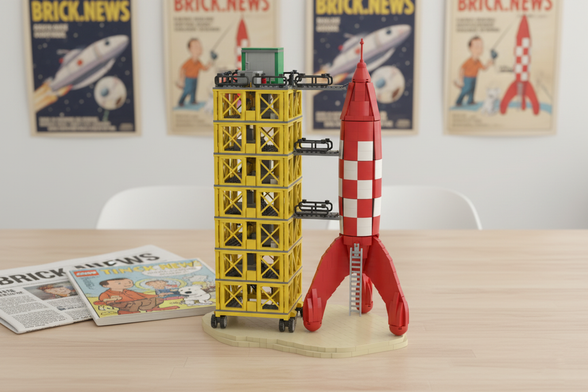
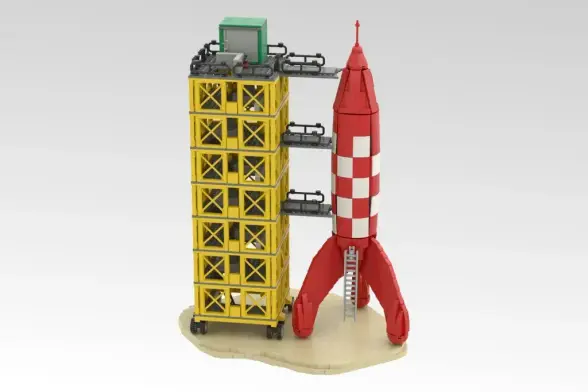
LEGO brings Tintin's iconic Moon rocket to life
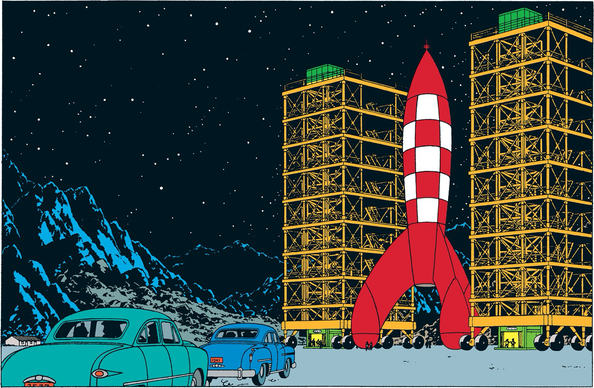
Hergé's Destination Moon inspired a red-and-white checkered rocket and launch tower. Fan designer Tkel86 turned that vision into a 1,665-piece LEGO set with a 1,022-piece rocket and 643-piece tower.

Read more in: https://brick.news/blog/tintin-blasts-off-in-brick-form-lego-to-release-the-iconic-moon-rocket

#LEGO #Tintin #DestinationMoon #BrickBuild #SpaceRocket #Herge

75 Years Ago, The Most Influential Filmmaker You Never Heard of Sparked The Golden Age of Sci-Fi

Short overview of George Pal and “Destination Moon,”1950–template for sci-fi epic films.

@bookstodon @books @religion #ChristianSciFi #ProfessorK #amwritingsf #secretscifinetwork #space #sciencefiction #1950sSciFiFilms #GeorgePal #DestinationMoon

https://www.inverse.com/entertainment/destination-moon-75-year-anniversary

75 Years Ago, The Most Influential Filmmaker You Never Heard Of Sparked The Golden Age of Sci-Fi

Released in 1950, 'Destination Moon' has a far greater legacy than you might expect.

Inverse

[#DestinationMoon] Next spring, #DORN, an instrument designed by teams from @IRAP and @cnes to measure radon on the surface of the #Moon, will leave Earth aboard China's Chang'E6 rocket.

King Wah Wong, #DORN project manager at @IRAP, reports on the Assembly, Integration and Test (AIT) phase with the Chang'E6 Lander on the CAST (Chinese Academy of Science and Technology) site : https://www.irap.omp.eu/en/2024/02/dorn-instrument-heads-for-the-moon/

DORN instrument heads for the Moon – Institut de Recherche en Astrophysique et Planétologie

I wonder, does anyone know how tall the Tintin Moon rocket was supposed to be? 80 meters? 90 meters? Was it ever mentioned anywhere?

#tintin #destinationmoon #rocket

John and Eugene look at George Pal’s 1950 Technicolor space extravaganza, Destination Moon. It’s the film about a plucky band of industrialists who shoot for the moon so they can save the U.S. Space Program by extracting massive government contracts.

Synopsis

At White Sands, Dr. Cargraves and General Thayer, Ret. are about to witness the culmination of two years of work.  Cargraves missile launches and then crashes.  Well, that’s the end of that project.  It was probably foreign sabotage, but this is peacetime, and the US Military hasn’t got enough money to fund weapons research – it looks like it was all for nothing.

Darn, that peacetime military austerity!

Cargraves may be resigned to returning to his much-neglected wife and kids, but General Thayer isn’t so easily dissuaded.  He’s already been run out of the military for his crusade for rockets, and no good crusaders quit till they’re dead.

He goes to Jim Barnes, head of Barnes Aviation. He convinces him that the conquest of space is absolutely critical for American security and prosperity, that the US  is incapable of pursuing a space program, and that only a conglomerate of forward-thinking, high-minded industrialists have the money, brains, and resources to launch a rocket to the moon.  Plus, they’ll be able to force the government to pay them for the technology when push comes to shove.

Forward-thinking, high-minded industrialists are hard to find unless you have a secret weapon to convince them, and Barnes has just that:  Woody Woodpecker!

The rocket is built in the desert, but a well-funded, concerted effort to foment anti-rocket hysteria among the public is casting doubt on the success of the project.  When they are denied permission even to test their atomic motor, Barnes realizes they’ll never be given permission to launch.  Following the principle that it’s better to ask forgiveness than to ask permission, they decide to launch the untested rocket to the moon in 17 hours’ time.

There are more snags, as the communications technician, Brown, gets appendicitis, and they must recruit Sweeney, a man who does not believe the rocket will ever leave the ground, to take his place.

As a process server shows up at the gates to serve them a court-ordered cease and desist, they hastily launch.

The flight is not without problems, for their antenna gets stuck, and they must spacewalk and make repairs.  Cargraves is separated from the ship and starts to float away, and Barnes must make a daring rescue to retrieve him.

They arrive at the moon, but the landing is rough, and they burn too much fuel.

Back on Earth, the world unites behind the heroes who took mankind to the stars, but on the moon, they must confront a horrifying truth: They must lighten their ship by over 3000 lbs. or they will never take off.  

Stripping away everything that isn’t bolted down, and even even lots of things that are bolted and welded down, plus most of their oxygen, food, water, and the car keys in their pockets, they get within 110 lbs. of their goal – the weight of one person.

Cargraves, Barnes, and Thayer all argue that they will be the person that stays behind, but Sweeny slips away and makes the sacrifice.

When Cargraves can’t be the Big Damned Hero and sacrifice his own life, he comes up with a way to save Sweeney by jettisoning Sweeney’s spacesuit.  They take off for Earth.

https://media.blubrry.com/fusionpatrol/content.blubrry.com/fusionpatrol/636-Destination_Moon.mp3

Podcast: Play in new window | Download () | Embed

Subscribe: RSS

https://staging-929c-gridman.wpcomstaging.com/2023/06/24/636-destination-moon/

#DestinationMoon #Movie #Podcast

@analgesicsleep I would have been intrigued enough by a question mark after The End ... mind blown ...
.
#TCMParty
#DestinationMoon