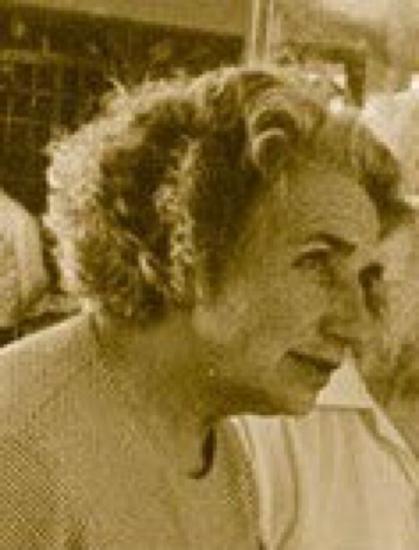
Marguerite Massart 1st woman #engineering graduate in #Belgium 1925 1st Belgian member of the UK Women's Engineering Society. Set up foundry business in #Ghent & introduced #desalinisation project & early #solar panels in 1st hotel on Sal Island #CapeVerde. d. #OTD 25 Feb 1979 https://en.wikipedia.org/wiki/Marguerite_Massart @CarveHerName
À Marseille, Seawards développe une technologie propre pour dessaler l’eau de mer

Installée à Saumaty depuis fin 2025, Seawards a mis au point un prototype pour dessaler l'eau de mer. Depuis ce port d'attache marseillais, la start-up espère conquérir le monde, à commencer par l'Ara

Made in Marseille

#FresnelLens -- not just for #Lighthouses!

#Solar #Desalination Using Fresnel Lens as Concentrated Solar Power Device: An Experimental Study in Tropical Climate

Wing Sum Choong, Zhi Yong Ho,. Rubina Bahar, 21 October 2020

"Solar desalination is a renewable energy-driven method that produces freshwater from saline/brackish water. Conventional solar desalination units are equipped with an inclined transparent condensing plate placed over a feedwater basin containing saline water. The process is limited to a small quantity of production because of scattered solar irradiation and the unavailability of solar heat due to intermittent cloudy weather. In this study, a Fresnel lens has been used to concentrate solar energy onto a spot to increase the local temperature of feedwater and the evaporation rate. Flat Fresnel lenses on a double sloped passive solar still were used, where the focal points were adjusted to fall directly on the feedwater. The experiments were conducted for two different geometries and alongside the comparison between the conventional and the modified solar still; the number of Fresnel lenses was also varied. Saline solution with a concentration of 20,000 ppm was used as the feedwater. The research is aimed to be implemented for producing freshwater in the natural weather conditions of #Malaysia. It was found that using two Fresnel lenses instead of a single large one gives a boost to the production of freshwater per unit solar irradiation by 39%. The produced water has a total dissolved solids (TDS) value of 37 ppm, which is well within the drinking water standard range according to the World Health Organization."

Conclusions

"This study was conducted as an initial investigation to observe the applicability of the #FlatFresnel lens as a cheap CSP device, which is conducted through experiments on different geometry solar stills varying the number of lenses. The study revealed that incorporating the Fresnel lens in tropical weather can enhance the overall production of distillate from a #SolarStill, although the location does not receive strong DNI. This study has opened up the possibility of further exploration in this field through more vigorous experiments. The findings can be summarized as:

1. Fresnel lens increases the total production from a solar still. The addition of Fresnel lenses increased the average and total production rate for different geometry solar stills.

2. Using multiple Fresnel lenses instead of a single one provides multiple hotspots and causes more evaporation of feedwater, thus leading to higher total production per total solar irradiation by 39%.

3. The increased length/width ratio caused significant improvement in production for all models, with the highest performance improvement of 41.8% for the Fresnel lens associated model."

Read more:
https://www.frontiersin.org/journals/energy-research/articles/10.3389/fenrg.2020.565542/full

#SolarPunkSunday #SolarPower #Desalinization #SolarStills #SolarDesalinization #Desalinisation

Frontiers | Solar Desalination Using Fresnel Lens as Concentrated Solar Power Device: An Experimental Study in Tropical Climate

Solar desalination is a renewable energy-driven method that produces freshwater from saline/brackish water. Conventional solar desalination units are equippe...

Frontiers
Marguerite Massart 1st woman #engineering graduate in #Belgium. Set up foundry business in #Ghent & introduced #desalinisation project & early #solar panels in 1st hotel on Sal Island #CapeVerde @wes1919.bsky.social member. b.#OTD 19 Sept 1900 #WomenInSTEM https://en.wikipedia.org/wiki/Marguerite_Massart
@CarveHerName @histodons
“L’eau n’est plus ce qui purifie, mais ce que nous faisons passer dans des stations d’épuration”

@interessant
revue-sesame-inrae.fr/leau-nest-plus-ce-qui-purifie-mais-ce-que-nous-faisons-passer-dans-des-stations-depuration/

Mathématicien et philosophe, Olivier Rey est chercheur au CNRS, enseignant en philosophie à l’Université Paris 1, membre de l’Institut d’histoire et de philosophie des sciences et des techniques. Egalement romancier et essayiste, il a publié plusieurs ouvrages, dont Réparer l’eau (Stock, 2021) – lui rendre sa capacité d’enchantement, en quelque sorte, et Une question de taille (Stock 2014) qui aborde la perte de notre sens de la mesure. Au fil de ses publications qui scrutent la place des sciences dans notre société, il livre une réflexion sensible sur les ruptures grandissantes entre l’humanité et son milieu naturel. Interrogé par la revue Sesame, il répond avec un regard lucide et poétique à la fois sur notre rapport actuel aux « ressources hydriques ». Une eau gérée, canalisée, traitée qui, perdant ses vertus purifiantes, dessèche nos imaginaires.

Vous dénoncez dans votre ouvrage Réparer l’eau la vision utilitariste de l’eau comme ressource. À l’heure du changement climatique, où coexistent selon les régions inondations et sécheresse, certains prônent le stockage de ce fluide dans les dites « méga-bassines ». Que vous évoquent ces deux termes, « bassines » d’un côté, et « méga » de l’autre ?

#Sesame #Eau #Mégabassine #Désalinisation #Sobriété #CaféPhilo
“L’eau n’est plus ce qui purifie, mais ce que nous faisons passer dans des stations d’épuration” 

<!-- wp:paragraph --> <p><strong>Mathématicien et philosophe, Olivier Rey est chercheur au CNRS, en...

Revue SESAME

Marguerite Massart 1st woman #engineering graduate in #Belgium. Set up foundry business in #Ghent & introduced #desalinisation project & early #solar panels in 1st hotel on Sal Island #CapeVerde @womensengsoc member d. #OTD 25 February 1979 bit.ly/3fHExas

#WomenInEngineering #INWED #WomensHistoryMonth#WomenInSTEM #STEM #engineering #WomenEngineers #WomenInHistory #ExtraordinaryWomen #WomenInCulture #STEAM #HistSTM #WikiWomenInRed #Wikipedia #WomenInHistoryShouldntBeAMystery