📋 Server Security Checklist — Essential Hardening Guide 🛡️
Securing servers is critical to protect sensitive data, applications, and networks. Here’s a quick checklist every sysadmin and security engineer should follow to reduce risk and strengthen resilience. ⚡🔐
1️⃣ System & OS Hardening
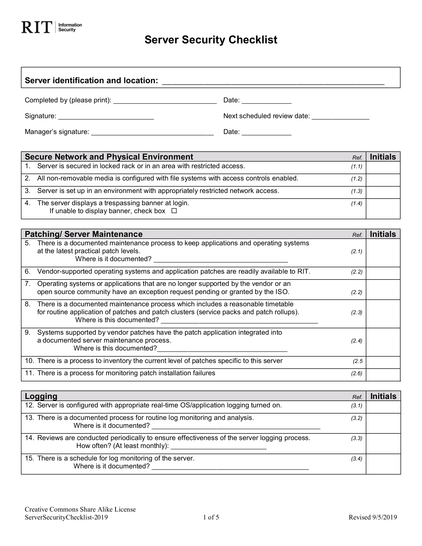
🔹 Keep OS and packages updated (apply patches regularly).
🔹 Remove or disable unused services & software.
🔹 Configure secure boot and BIOS/UEFI passwords.
2️⃣ Access Control
🔹 Enforce strong passwords + MFA for all accounts.
🔹 Use role-based access (least privilege).
🔹 Disable root/administrator login over SSH/RDP.
3️⃣ Network Security
🔹 Restrict inbound/outbound traffic with firewalls.
🔹 Segment critical servers from general networks.
🔹 Disable unused ports & protocols.
4️⃣ Secure Remote Access
🔹 Use SSH with key-based auth (disable password logins).
🔹 Enforce VPNs for admin access.
🔹 Monitor and log remote sessions.
5️⃣ Logging & Monitoring
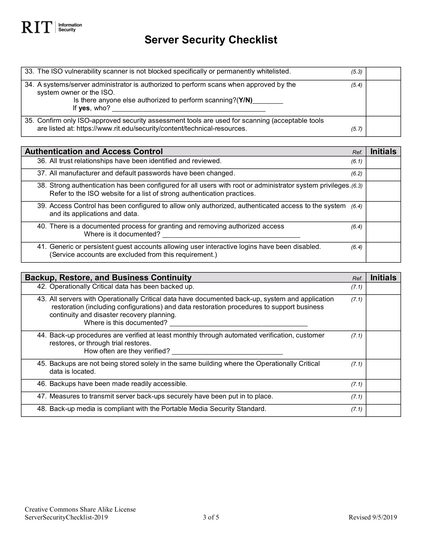
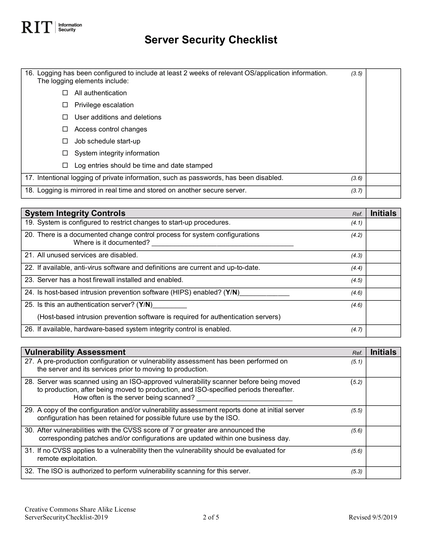
🔹 Enable centralized logging (syslog/SIEM).
🔹 Monitor failed login attempts & unusual activity.
🔹 Configure alerts for critical events.
6️⃣ Data Protection
🔹 Encrypt sensitive data at rest & in transit (TLS, disk encryption).
🔹 Regularly back up data to secure, offline storage.
🔹 Apply strict database access policies.
7️⃣ Application & Patch Management
🔹 Keep middleware, frameworks, and apps patched.
🔹 Remove default credentials and sample configs.
🔹 Use secure coding practices.
8️⃣ Malware & Intrusion Defense
🔹 Deploy antivirus/EDR for endpoints.
🔹 Enable IDS/IPS at the network edge.
🔹 Scan regularly for vulnerabilities.
9️⃣ Physical & Cloud Security
🔹 Restrict physical access to server rooms.
🔹 Harden cloud instances with provider tools (security groups, IAM).
🔹 Regularly review cloud audit logs.
🔟 Policy & Compliance
🔹 Apply CIS/NIST benchmarks.
🔹 Document access, configs, and changes.
🔹 Train admins in security best practices.
#ServerSecurity #CyberSecurity #InfoSec #BlueTeam #SysAdmin #ITSecurity #SecurityChecklist #DefensiveSecurity
 Negative PID SL
 SecuriLee🇨🇭
 nixFREAK
 TechNadu
 Manuel Bissey
 AJCxZ0


 Anastasis Vasileiadis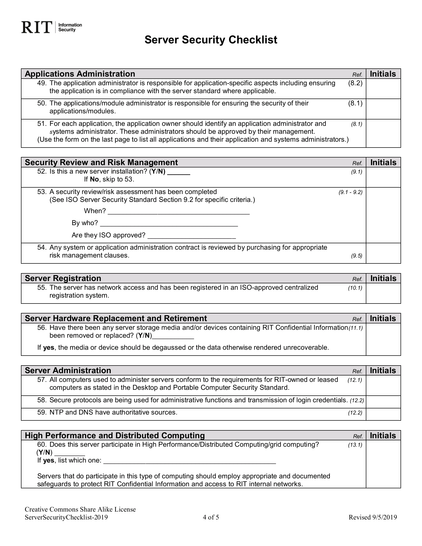
 infosystir
 Rene Robichaud