The Herbario EEZA - Colección de Angiospermae, from the Estación Experimental de Zonas Áridas (CSIC), expands to 5,076 records and 934 species:
▶️ https://doi.org/10.15470/ttw9mc #CiteTheDOI
▶️ https://colecciones.gbif.es/public/showDataResource/dr1302?lang=en
#datapublication #gbif #biodiversity
Herbario EEZA - Colección de Angiospermae
<p>Esta colección contiene las angiospermas del Herbario de la Estación Experimental de Zonas Áridas (CSIC). Nuestro ejemplar mas antiguo es Bassia hyssopifolia del año 1924. Casi todos nuestros registros son de España principalmente de la provincia de Almeria. Teniendo también de Marruecos, Francia y Finlandia.
Por ahora esta colección se encuentra en disposicion GBIF solamente 41 familias, dentro de estas tenemos 934 especies recogidas.</p>
A new contribution by our partners Lea Sophie Singson and Ely Nova Natalia Silaban; "Die Rechtslage bei der Publikation großer Datensätze im Bereich Meteorologie und Klimaforschung" explaining the results of a survey on legal questions around the publication of large research datatasets in meteorology & climatology
https://zenodo.org/records/15209663
#climatology #meteorology #digitalisation #AI #DataPrivacy #datapublication @fiz_karlsruhe @AnnaJacyszyn @ITAS_KIT @KIT_Karlsruhe
Die Rechtslage bei der Publikation großer Datensätze im Bereich Meteorologie und Klimaforschung
Dieses Fact-Sheet bietet einen Überblick über häufig gestellte Rechtsfragen im Zusammenhang mit der Inhaberschaft an Forschungsdaten un Software, der richtigen Lizenzierung dieser Daten und ggf. bestehenden Haftungsfragen. Es entstand aus einem Fragenkatalog des Use Cases „Publikation großer Datensätze“ des DiTraRe-Projekts. Es soll als Übersicht und Ressourcensammlung für in der Forschung häufig auftretenden Fragen dienen. Die Fragen haben ihre rechtlichen Schwerpunkte im Urheber- und allgemeinem Datenrecht.
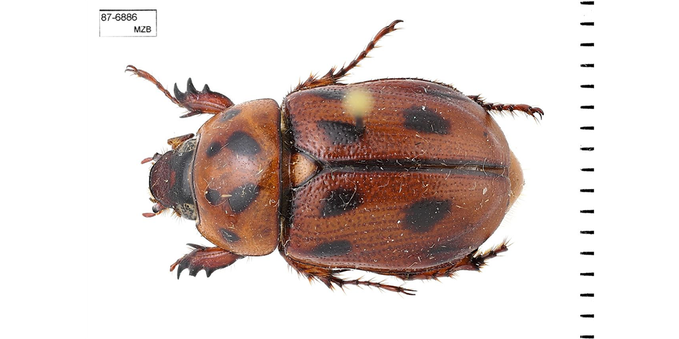
The collection of arthropods is the most numerous and diverse at the MCNB. It houses specimens from most of the main subphyla, although insects (Hexapoda) predominate. New update:
▶️ https://doi.org/10.15468/pewzzr #CiteTheDOI
▶️ https://colecciones.gbif.es/public/showDataResource/dr297?lang=es
#GBIF #publicacióndedatos #datapublication #biodiversidad #biodiversity @gbif
Museu de Ciències Naturals de Barcelona: MCNB-Art
The Arthropod Collection is the most numerous and diverse of all the Museum’s collections and houses over half the total number of its specimens. The exact number of specimens is difficult to estimate but lies somewhere in the range 1,750,000–1,900,000. Most of the orders of all the different subphylums (Chelicerata, Crustacea, Uniramia) that constitute the Arthropoda are represented, although the Hexapoda are the best represented group given the high number of insect specimens. The collections of Artur Martorell and Daniel Müller were the first to be incorporated into the Museu Martorell in 1…
Navantia updates its dataset of benthic macroinvertebrates obtained from marine sediments of the soft bottoms of the Cartagena Dock (Murcia). 985 records:
▶️ https://doi.org/10.15470/e6kyz3 #CiteTheDOI
▶️ https://colecciones.gbif.es/public/showDataResource/dr1285?lang=es
#GBIF #datapublication #biodiversity #biodiversidad @gbif
Análisis taxonómicos de macrofauna bentónica de Navantia Dársena de Cartagena (2021-2024)
<p>Datos de macroinvertebrados bentónicos obtenidos en sedimentos marinos de los fondos blandos de la Dársena de Cartagena (Murcia), mediante los Planes de Vigilancia Ambiental realizados desde 2021 hasta 2024, en las instalaciones de NAVANTIA S.A., S.M.E.</p>
The MACB Herbarium of the Faculty of Biological Sciences at UCM has been updated again in @gbif : 125,920 records, predominantly of Spanish flora:
▶️ https://doi.org/10.15470/akznrb #CiteTheDOI
▶️ https://colecciones.gbif.es/public/showDataResource/dr779?lang=en
#GBIF #datapublication #biodiversity

Herbario de la Facultad de Ciencias Biológicas de la Universidad Complutense de Madrid (MACB)
<p>Incluye todos los pliegos del herbario, que en la actualidad son cerca de 130.000, en su mayor parte corresponden a plantas de la flora española, con buena representación de la flora europea y americana. Existen ejemplares procedentes de más 70 países destacando Portugal, Francia, Finlandia, Chipre, Estados Unidos, Argentina, Chile y Marruecos. Como es frecuente, la mayoría de los pliegos es de plantas con semillas, más de 90.000 muestras informatizadas. Además, en el Herbario se conservan excelentes colecciones de criptógamas, unos 28.000 pliegos, de los cuales hay unos 10.000 briófitos, 15.000 líquenes y 2.500 helechos.</p>

nodegoat | Blog | New Data Publication Module
nodegoat is a web-based data management, network analysis & visualisation environment. Using nodegoat, you can create and manage any number of datasets by use of a graphic user interface. Your own data model autoconfigures the backbone of nodegoat's core functionalities. Within nodegoat you are able to instantly analyse and visualise datasets. nodegoat allows you to enrich data with relational, geographical and temporal attributes. Therefore, the modes of analysis are inherently diachronic and ready-to-use for interactive maps and extensive trailblazing.
My Data, My Love: In case you missed it or want to re-view our workshop on
#datapublication during
#loveData24 - materials are now online.
Watch it on Youtube and check the slides on Zenodo:
https://t1p.de/6hvsb#LoveDataWeek #rdmVideo and slides for the "My Data, my Love: How to Wow the World with Your Data Publications" are online! - Network of Expertise for Research Data in Thuringia
Workshop materials are now available online!

My Data, My Love: How to Wow the World with Your Data Publications - a Love Data Week 2024 Workshop
Reading Defra's provisional tech guidance on continuous water quality monitoring for water companies. Encouraging signs on data publication and visualization, especially relevant to our recent publication of EA's continuous water quality archive.
https://www.gov.uk/government/consultations/continuous-water-quality-monitoring-and-event-duration-monitoring
See previous blog post on the hydrology service release: https://www.epimorphics.com/publishing-ea-hydrology-archive/
#WaterQuality #OpenData #DataPublication #DataVisualization

Continuous water quality monitoring and event duration monitoring
Seeking views on the government’s proposals to enhance the monitoring of storm overflows and final effluent discharges into watercourses.
New paper for my #PhD published! 🥳
A #SystematicMapping of scientific literature on #LandUseConflicts, providing an overview of current research clusters and gaps and a conceptual discussion: https://doi.org/10.1080/08941920.2023.2199380
It comes with my 1st ever #DataPublication: Searchable database of land use #conflict literature: https://doi.org/10.5281/zenodo.7389768
Very labour-intensive but I learned so much. Thoughts & feedback welcome!
#SystematicReview #LandUse @geography @sociology @politicalscience
@ZALF_leibniz

Taking Stock of Land Use Conflict Research: A Systematic Map with Special Focus on Conceptual Approaches
The literature on land use conflicts has significantly increased in number in recent years, and keeping track has become challenging. Moreover, “land use conflict” is a rather fuzzy concept; a cohe...
 GBIF España/Spain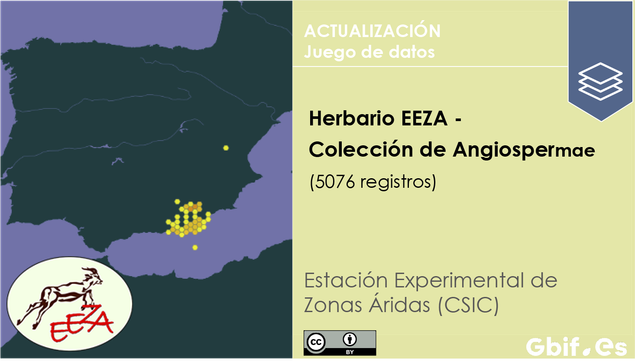
 DiTraRe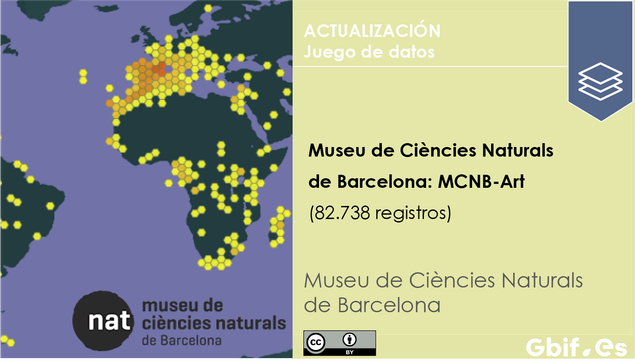
 LAB1100
 FDM Thüringen
 Epimorphics
 Meike Fienitz