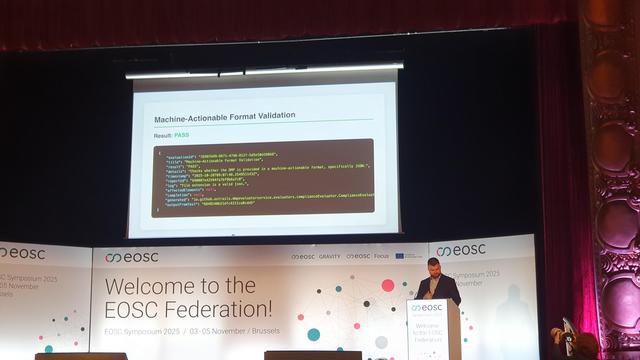
Today at #EOSCSymposium2025, Jakub Jirka (Codevence) showcased their DMP platform, part of #OSTrails, featuring the first implementation of the DMP evaluation service co-developed by Athena RC and TU Wien.

#OpenScience #DataInteroperability #EOSC #ResearchInnovation

The #OSTrails team & Steering Committee are at the #EOSCSymposium! 🌍✨

Discover how we’re boosting collaboration, data interoperability, and supporting the EOSC Federation across scientific fields — 41 partners, 80+ tools, 24 pilots driving innovation.

#OpenScience #EOSC #DataInteroperability #ResearchInnovation

Healthcare Data Interoperability Market

Market Size (2024): USD 68,951.2 million

Market Forecast (2032): USD 349,875.9 million

CAGR: 22.51%

Key drivers include EHR adoption, government mandates, and AI-driven healthcare solutions. Major players shaping the market include Epic Systems, Cerner (Oracle), InterSystems, and Philips.

Get the complete insights here 👉 https://www.credenceresearch.com/report/healthcare-data-interoperability-market

#Healthcare #DataInteroperability #DigitalHealth

🧬 Can AI fix the chaos in biological sample data?

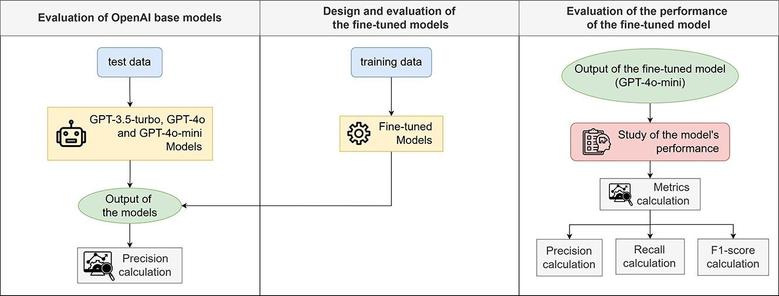
🔗 Annotation of biological samples data to standard ontologies with support from large language models. Computational and Structural Biotechnology Journal, DOI: https://doi.org/10.1016/j.csbj.2025.05.020

📚 CSBJ: https://www.csbj.org/

#AIinScience #LLMs #Bioinformatics #DataAnnotation #GPT4 #BiomedicalAI #OpenScience #FAIRData #Ontology #AIinBiology #DataInteroperability

Turned our presentations at the Data Sharing Festival into a podcast https://spoti.fi/3ExQpgY - The dutch federated data space (FDS) as the Dutch government’s data ecosystem #DataSharingFestival #DataInteroperability #TrustedData #DigitalEU
FDS at the Data Sharing Festival 2025

FDS · Episode

Spotify

Domain Ontologies: Indispensable for Knowledge Graph Construction

AI slop is all around and increasingly extraction of useful information will face difficulties as we start to feed more noise into the already noisy world of knowledge. We are in an era of unprecedented data abundance, yet this deluge of information often lacks the structure necessary to derive meaningful insights. Knowledge graphs (KGs), with their ability to represent entities and their relationships as interconnected nodes and edges, have emerged as a powerful tool for managing and leveraging complex data. However, the efficacy of a KG is critically dependent on the underlying structure provided by domain ontologies. These ontologies, which are formal, machine-readable conceptualizations of a specific field of knowledge, are not merely useful, but essential for the creation of robust and insightful KGs. Let’s explore the role that domain ontologies play in scaffolding KG construction, drawing on various fields such as AI, healthcare, and cultural heritage, to illuminate their importance.

Vassily Kandinsky, 1913 – Composition VII (1913)
According to Kandinsky, this is the most complex piece he ever painted.

At its core, an ontology is a formal representation of knowledge within a specific domain, providing a structured vocabulary and defining the semantic relationships between concepts. In the context of KGs, ontologies serve as the blueprint that defines the types of nodes (entities) and edges (relationships) that can exist within the graph. Without this foundational structure, a KG would be a mere collection of isolated data points with limited utility. The ontology ensures that the KG’s data is not only interconnected but also semantically interoperable. For example, in the biomedical domain, an ontology like the Chemical Entities of Biological Interest (ChEBI) provides a standardized way of representing molecules and their relationships, which is essential for building biomedical KGs. Similarly, in the cultural domain, an ontology provides a controlled vocabulary to define the entities, such as artworks, artists, and historical events, and their relationships, thus creating a consistent representation of cultural heritage information.

One of the primary reasons domain ontologies are crucial for KGs is their role in ensuring data consistency and interoperability. Ontologies provide unique identifiers and clear definitions for each concept, which helps in aligning data from different sources and avoiding ambiguities. Consider, for example, a healthcare KG that integrates data from various clinical trials, patient records, and research publications. Without a shared ontology, terms like “cancer” or “hypertension” may be interpreted differently across these data sets. The use of ontologies standardizes the representation of these concepts, thus allowing for effective integration and analysis. This not only enhances the accuracy of the KG but also makes the information more accessible and reusable. Furthermore, using ontologies that follow the FAIR (Findable, Accessible, Interoperable, Reusable) principles facilitates data integration, unification, and information sharing, essential for building robust KGs.

Moreover, ontologies facilitate the application of advanced AI methods to unlock new knowledge. They support both deductive reasoning to infer new knowledge and provide structured background knowledge for machine learning. In the context of drug discovery, for instance, a KG built on a biomedical ontology can help identify potential drug targets by connecting genes, proteins, and diseases through clearly defined relationships. This structured approach to data also enables the development of explainable AI models, which are critical in fields like medicine where the decision-making process must be transparent and interpretable. The ontology-grounded KGs can then be used to generate hypotheses that can be validated through manual review, in vitro experiments, or clinical studies, highlighting the utility of ontologies in translating complex data into actionable knowledge.

Despite their many advantages, domain ontologies are not without their challenges. One major hurdle is the lack of direct integration between data and ontologies, meaning that most ontologies are abstract knowledge models not designed to contain or integrate data. This necessitates the use of (semi-)automated approaches to integrate data with the ontological knowledge model, which can be complex and resource-intensive. Additionally, the existence of multiple ontologies within a domain can lead to semantic inconsistencies that impede the construction of holistic KGs. Integrating different ontologies with overlapping information may result in semantic irreconcilability, making it difficult to reuse the ontologies for the purpose of KG construction. Careful planning is therefore required when choosing or building an ontology.

As we move forward, the development of integrated, holistic solutions will be crucial to unlocking the full potential of domain ontologies in KG construction. This means creating methods for integrating multiple ontologies, ensuring data quality and credibility, and focusing on semantic expansion techniques to leverage existing resources. Furthermore, there needs to be a greater emphasis on creating ontologies with the explicit purpose of instantiating them, and storing data directly in graph databases. The integration of expert knowledge into KG learning systems, by using ontological rules, is crucial to ensure that KGs not only capture data, but also the logical patterns, inferences, and analytic approaches of a specific domain.

Domain ontologies will prove to be the key to building robust and useful KGs. They provide the necessary structure, consistency, and interpretability that enables AI systems to extract valuable insights from complex data. By understanding and addressing the challenges associated with ontology design and implementation, we can harness the power of KGs to solve complex problems across diverse domains, from healthcare and science to culture and beyond. The future of knowledge management lies not just in the accumulation of data but in the development of intelligent, ontologically-grounded systems that can bridge the gap between information and meaningful understanding.

References

  • Al-Moslmi, T., El Alaoui, I., Tsokos, C.P., & Janjua, N. (2021). Knowledge graph construction approaches: A survey of recent research works. arXiv preprint. https://arxiv.org/abs/2011.00235
  • Chandak, P., Huang, K., & Zitnik, M. (2023). PrimeKG: A multimodal knowledge graph for precision medicine. Scientific Data. https://www.nature.com/articles/s41597-023-01960-3
  • Gilbert, S., & others. (2024). Augmented non-hallucinating large language models using ontologies and knowledge graphs in biomedicine. npj Digital Medicine. https://www.nature.com/articles/s41746-024-01081-0
  • Guzmán, A.L., et al. (2022). Applications of Ontologies and Knowledge Graphs in Cancer Research: A Systematic Review. Cancers, 14(8), 1906. https://www.mdpi.com/2072-6694/14/8/1906
  • Hura, A., & Janjua, N. (2024). Constructing domain-specific knowledge graphs from text: A case study on subprime mortgage crisis. Semantic Web Journal. https://www.semantic-web-journal.net/content/constructing-domain-specific-knowledge-graphs-text-case-study-subprime-mortgage-crisis
  • Kilicoglu, H., et al. (2024). Towards better understanding of biomedical knowledge graphs: A survey. arXiv preprint. https://arxiv.org/abs/2402.06098
  • Noy, N.F., & McGuinness, D.L. (2001). Ontology Development 101: A Guide to Creating Your First Ontology. Semantic Scholar. https://www.semanticscholar.org/paper/Ontology-Development-101%3A-A-Guide-to-Creating-Your-Noy/c15cf32df98969af5eaf85ae3098df6d2180b637
  • Taneja, S.B., et al. (2023). NP-KG: A knowledge graph for pharmacokinetic natural product-drug interaction discovery. Journal of Biomedical Informatics. https://www.sciencedirect.com/science/article/pii/S153204642300062X
  • Zhao, X., & Han, Y. (2023). Architecture of Knowledge Graph Construction. Semantic Scholar. https://www.semanticscholar.org/paper/Architecture-of-Knowledge-Graph-Construction-Zhao-Han/dcd600619962d5c1f1cfa08a85d0be43a626b301
  • #AIInHealthcare #ArtificialIntelligence #BiomedicalOntologies #CulturalHeritageData #DataIntegration #DataInteroperability #DomainOntologies #DrugDiscovery #ExplainableAI #FAIRPrinciples #GraphDatabases #KnowledgeGraphs #KnowledgeManagement #LLMs #Ontology #OntologyDesign #OntologyDevelopment #OntologyDrivenAI #SemanticRelationships #SemanticWeb

    Le Brick Schema simplifie l’interopérabilité des données des bâtiments pour améliorer l’efficacité et réduire les coûts.

    https://www.smart-buildings.net/guide/comprendre-le-brick-schema-pour-des-batiments-plus-intelligents

    #SmartBuilding #IoT #BrickSchema #BuildingAutomation #DataInteroperability #EnergyEfficiency

    Vers des bâtiments connectés avec le Brick Schema

    Le Brick Schema simplifie l’interopérabilité des données des bâtiments pour améliorer l’efficacité et réduire les coûts.

    Smart Buildings

    👩🏽‍💻 Now anyone can detect errors in their tables and optimise the #datainteroperability. The latest features improved at ODE are changes to the Errors Report Panel, #AI integration, and fixes to usability.

    📩 Available for Linux, MacOS and Windows: https://github.com/okfn/opendataeditor/releases/tag/v1.2.0

    Release 1.2.0 · okfn/opendataeditor

    What's Changed Updated readme to v1.1 by @roll in #583 Provide list of licenses by @roll in #586 Fix releasing flow by @roll in #584 Rename column functionality by @roll in #595 Fix results per pa...

    GitHub

    🤖 The CEF Context Broker (CB) orchestrates the management of data and context to enhance connectivity across diverse systems. This interesting article presents the use of CEF Context Broker in #TemaEU and its effects in achieving #datainteroperability.

    https://tema-project.eu/articles/tema-use-cef-context-broker-and-its-effects-achieving-data-interoperability

    #TemaEU #ContextBroker #interoperability #datainteroperability #systemconnectivity #riskmanagement #emergencymanagement

    TEMA use of CEF Context Broker and its effects in achieving data interoperability

    In the rapidly evolving landscape of the Internet of Things (IoT) and smart solutions, the need for seamless interoperability among disparate platforms and technological frameworks has become a cornerstone of modern infrastructure. The CEF Context Broker (CB), an open-source initiative under the

    TEMA Project
    The WorldFAIR Project - The journey so far and next steps: A special double session at RDA P22, on 22/23 May 2024 - CODATA, The Committee on Data for Science and Technology

    The WorldFAIR Project – The journey so far and next steps: A special double session co-located with the RDA Virtual Plenary 22. 22 May 2024, 12:00 – 14:00 UTC, 23 May 2024, 12:00 – 14:00 UTC. Register here (free): https://zoom.us/meeting/register/tJItdemsqDMuHtBkM51ZXx2sjGa4HuQzRibE#/registration This special double session co-located with the RDA Virtual Plenary 22 is designed to showcase the outputs […]

    CODATA, The Committee on Data for Science and Technology