 Zorz Studios
Jahz Design: I’ve photographed all the most beautiful #theatres and #ConcertHalls in Paris https://zorz.it/rpSFz
#JahzDesign #DimitriBourriau #ProfessionalPhotographer #ArchitecturalPhotography #Paris #culture #ArchitecturalHeritage #WorksOfArt
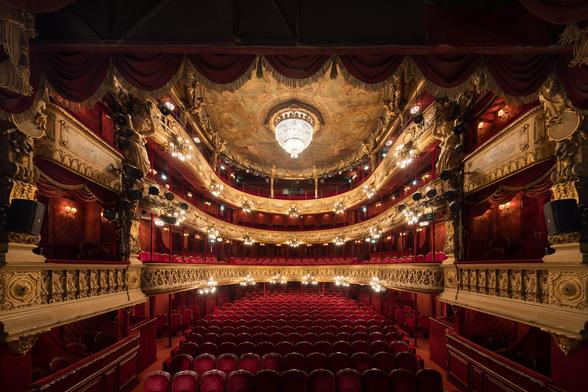
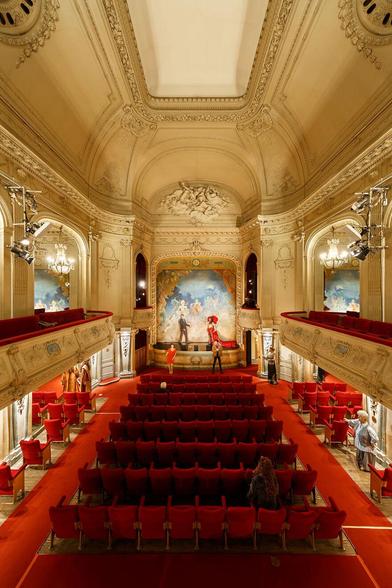
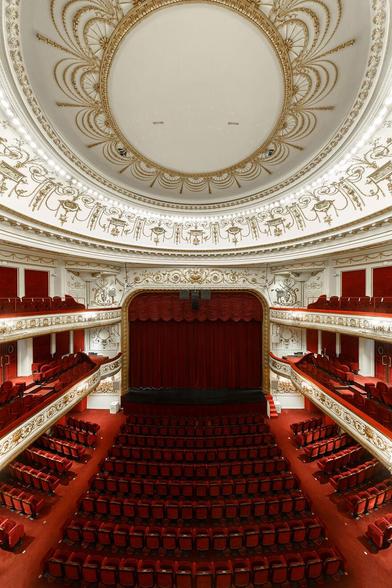

Jahz Design: I’ve photographed all the most beautiful #theatres and #ConcertHalls in Paris https://zorz.it/rpSFz
#JahzDesign #DimitriBourriau #ProfessionalPhotographer #ArchitecturalPhotography #Paris #culture #ArchitecturalHeritage #WorksOfArt
_The Evening Post_, 1 March 1924:
TOWN HALL RENOVATIONS
The Town Hall Concert Chamber, which is much in need of a coat of paint, is being renovated by Corporation employees, and the operations will occupy about twelve days. Structural alterations are to be made to the concert platform, which will greatly improve it for dramatic and musical performances. A permanent proscenium is to be constructed, which will be roofed in above, while at the back of the stage proper facilities are to be provided for drop-scenes. The interior decoration of the hall has already been commenced. At the end of this month the renovation of the interior of the large hall will be commenced.
https://paperspast.natlib.govt.nz/newspapers/EP19240301.2.67
#OnThisDay #OTD #PapersPast #TownHalls #ConcertHalls #Renovations #Wellington #NewZealand

Gary Glitter concert, Wellington. From the series: Notes on the country I live in
#GaryGlitter #Wellington #moe_tahurangi #Kōtuia #Youngadults #Concerthalls #silver #photographicgelatin #photographicpaper #workprints #gelatinsilverprints #undefined

Frank Gehry's Walt Disney Concert Hall is "a living room" for Los Angeles
Up next in our deconstructivism series we take a look at the iconic Walt Disney Concert Hall designed by Canadian-American architect Frank Gehry.
Occupying an entire city block in Downtown Los Angeles, the Walt Disney Concert Hall is an architectural landmark that took more than 15 years to build.
It is one of Gehry's best-known projects, internationally recognised for its facade made from swooping metal-clad panels that echo the billows of the giant auditorium below.
Top: Walt Disney Concert Hall is one of Frank Gehry's most notable projects. Photo is by Tuxyso. Above: it is distinguished by its curved facade. Photo courtesy of the Los Angeles Philharmonic Association
Gehry, now aged 93, was selected to design the music centre in the late 1980s by Lillian Disney – the widow of American animator Walt Disney – from a list of 80 potential architects.
Lillian Disney donated $50 million (£38.5 million) to the project in her husband's memory. Its construction began in 1991 and was completed in 2003 when it became home to the Los Angeles Philharmonic.
Though the Walt Disney Concert Hall was commissioned prior to Gehry's equally iconic Guggenheim Bilbao, a building with a similar aesthetic, it was completed six years later due to revisions and a lack of fundraising.
However, Gehry said this order of the events "worked out well" for the project.
The building is located in Downtown Los Angeles. Photo is by Levi Clancy
"Getting the Guggenheim done was like a training ground for LA," he said in an interview when the building opened. "We got to know how best to build it."
The delays also allowed planners to observe the acclaim for the Guggenheim's titanium cladding, prompting them to ask Gehry to switch his design for a stone exterior to its now-iconic stainless steel skin – a decision he did not make easily.
"Disney Hall would look beautiful at night in stone," Gehry once told the Los Angeles Times' journalist Barbara Isenberg.
"It would have just been great. It would have been friendly. Metal at night goes dark. I begged them. No, after they saw Bilbao, they had to have metal."
The entrance leads up from the main street outside. Photo is by Carol M Highsmith
Gehry has said that, as with all his buildings, the Walt Disney Concert Hall was designed "from the inside out".
Its plan centres around a large concert hall containing 2,265 seats with a vineyard-style seating arrangement intended to make the audience feel close to the orchestra.
Unlike many traditional concert halls, it does not have boxes and balconies to avoid implied social hierarchies. The room is also column-free, made possible by its large steel roof structure.
[
Read:
Frank Gehry brought global attention to deconstructivism
](https://www.dezeen.com/2022/05/17/frank-gehry-brought-global-attention-to-deconstructivism/)
The silver waves and arcs that line the exterior were developed later using CATIA, a French computer modelling software.
More commonly used by aerospace and automotive industries, the technology allowed Gehry to transfer complicated models of the project into buildable forms and show contractors how his vision could be realised.
However, despite the lengthy design process, the studio did not identify the problems the facade would later cause. After installation, the reflective finish of the metal contributed to an increase in traffic accidents, requiring the steel to be sanded to reduce glare.
Its exterior is clad in stainless steel. Photo is by Tobias Keller
Today, the Walt Disney Concert Hall is considered to be a notable example of deconstructivist architecture – an architecture movement from the 1980s that opposed rationality and symmetry.
However, Gehry does not and never did consider himself a deconstructivist. He has famously claimed an overarching goal for the project was to create "a living room for the city" that could make music accessible to people.
"I felt there was a need for a place that people felt comfortable, would like to come to, that became an iconic destination, that people would identify with it and feel like it was theirs," Gehry said in an interview reflecting on the building in 2013.
"And so I thought of that term, 'the living room for a city', because we needed that."
The building is designed around the auditorium. Photo is courtesy of the Los Angeles Philharmonic Association
To create the feeling of publicly accessible space, the venue's entrance is marked by a large staircase that connects to the surrounding streets.
The stair leads into a light-filled lobby lined with expanses of glass and fitted with a grand stairway, surrounded by curving walls.
Inside the main auditorium, there are few right angles. Oak lines the floor, while the stage is made from Alaskan yellow cedar and the walls are finished with Douglas-fir.
This space was engineered for the highest acoustical clarity. Photo is by Daniel Hartwig via Wikimedia Commons
These details form part of the elaborate acoustic design for the building, which Gehry developed in collaboration with expert acoustician Yasuhisa Toyota and the former Los Angeles Philharmonic music director Esa-Pekka Salonen to ensure the highest acoustical clarity.
To achieve this, acoustic tests were performed on a scale model of the building while it was being developed.
[
Read:
Frank Gehry's Guggenheim Museum Bilbao is "the greatest building of our time"
](https://www.dezeen.com/2022/05/18/frank-gehry-guggenheim-museum-bilbao-deconstructivism/)
Today, Gehry cites the "clarity of the sounds" as the most successful outcome of the Walt Disney Hall.
"When the orchestra is full on, they feel a receptive audience because the audience can hear them," the architect once said.
"They feel it. It's like theatre you feel it. Like when you give a talk, and you feel like you're coming across. And when the orchestra hears that and feels that it makes them play better."
It features an organ designed by Gehry. Photo is by cultivar413 via Wikimedia Commons
A centrepiece of the Walt Disney Concert Hall's auditorium is its large 6,134-pipe organ, which was designed by Gehry with organ consultant Manuel Rosales.
Developed over two years using 40 different models, it is lined with external pipes that the architect is said to refer to as french fries.
According to the Los Angeles Philharmonic, the collaboration between Rosales and Gehry was key to the organ's design as, while Gehry's initial designs were "fanciful and marvelous", they could not "lead to the construction of a practical musical instrument".
There is a light-filled entrance to the building. Photo is by Codera23 via Wikimedia Commons
The Walt Disney Concert Hall is complete with an elevated urban park that pays homage to Lillian Disney, who died before the project's completion.
It features a flower-like fountain designed by Gehry, which is covered in a mosaic made from thousands of pieces of blue and white china.
[
Read:
Deconstructivist architecture "challenges the very values of harmony, unity and stability"
](https://www.dezeen.com/2022/05/03/deconstructivist-architecture-introduction/)
Upon completion, the building was well received and celebrated for reinvigorating the downtown area and enlivening the city's cultural scene. At the time, architectural critic Jonathan Glancey hailed the building as "nothing short of a masterpiece", while Herbert Muschamp stated it is "the most gallant building you are ever likely to see".
However, the building also inadvertently highlighted the gap between the city's rich and poor.
At the lavish opening of the building – a red-carpet affair – a number of protesters at its opening carried signs reading, "For the Rich Overabundant Opulence" and "For the Poor the Boot".
A fountain outside pays homage to Lillian Disney who initiated the project. Photo is by Carol M Highsmith via Wikimedia Commons
Today, Gehry is developing a towering hotel and apartment complex named The Grand for a site opposite the building. It has been in development for more than 10 years.
Comprising multiple buildings across a three-acre (1.2-hectare) site, the development will be linked to the Walt Disney Concert Hall by a large pedestrian area. Alongside a hotel and apartments, it will contain restaurants, shops and a cinema.
The illustration is by Jack Bedford
Deconstructivism is one of the 20th century's most influential architecture movements. Our series profiles the buildings and work of its leading proponents – Peter Eisenman, Gehry, Zaha Hadid, Rem Koolhaas, Daniel Libeskind, Bernard Tschumi and Wolf Prix.
Read our deconstructivism series ›
The post Frank Gehry's Walt Disney Concert Hall is "a living room" for Los Angeles appeared first on Dezeen.
#deconstructivism #all #architecture #cultural #frankgehry #losangeles #usa #concerthalls #downtownlosangeles


BIG wraps Vltava Philharmonic Hall in ascending colonnades
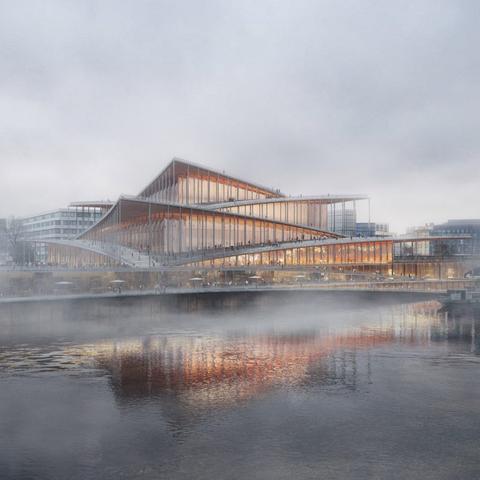
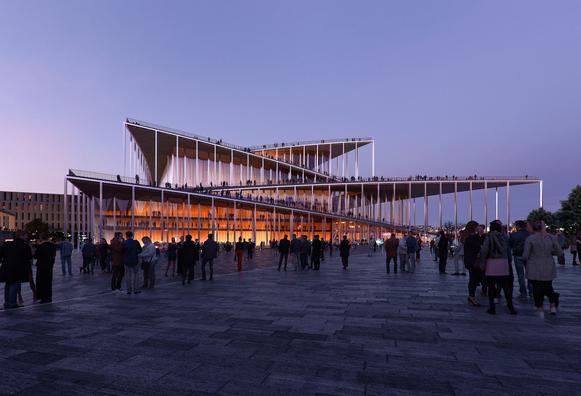
Danish architecture studio BIG has unveiled plans for a national concert hall in Prague that features protruding angular colonnades, which double as large balconies.
Named the Vltava Philharmonic Hall, the venue will be built on the bank of the Vltava river in central Prague. It will be comprised of angled colonnades that will slope and extend outwards from the concert hall.
The Vltava Philharmonic Hall is a concert hall that will be designed by BIG
The building, which will house the Prague Symphony Orchestra, the Czech Philharmonic and the music department of the Municipal Library of Prague, will be characterised by its four stacked colonnades.
The colonnades will protrude in different directions and gradually slope upwards forming elevated walkways around the exterior, which were designed to become extensions of the street and Vltava square.
Renders show the concert hall with protruding angular terraces
"From the Vltava square, streets ascend upward connecting interior balconies with exterior colonnades and terraces," said BIG partner in charge Brian Yang.
"The Vltava Philharmonic Hall is composed as a meandering journey from riverbank to rooftop," said BIG founder Bjarke Ingels. "Public flows and belvedere plazas unite the city life of Prague to the music within."
Its collonaded terraces will become extensions of the street level
Bohemian Forest timber will clad the undersides of the protruding terraces and extend to the interior while expanses of glass will surround the main volume of the concert hall on each of its stacked levels.
According to BIG, the interior of the concert hall's foyer will be inspired by Czech glass artists.
[
Read:
AL_A set to design Belgrade Philharmonic Concert Hall as "architectural panorama"
](https://www.dezeen.com/2022/04/13/ala-belgrade-philharmonic-concert-hall-serbia/)
Prague Hall, one of the building's auditoriums, will feature a timber interior to provide balanced acoustics while its audience seating will be arranged like "petals of a pinecone turned inside out".
"Arranged like petals of a pinecone turned inside out, the seats of Prague Hall are rotating within the compactness of a perfect square," said BIG.
"The seating rakes meet at their corners to allow physical connectivity between every seat in the audience, providing a greater sense of unity and shared experience."
Renders show that timber will stretch throughout the interior of the Vltava Philharmonic Hall
Alongside its auditoriums, the top of the building will house a rooftop restaurant and ballroom that will frame views across Prague.
"Its halls are formed for sight, fine-tuned for sound, and orchestrated for functionality and connectivity," said Ingels.
"From this rhythmic structure, a symphony of colonnades and balconies extend as platforms for public life. Expressive yet pragmatic, the new Philharmonic will ascend to form a key landmark for Prague - from river to roof."
The building will house three concert halls
Construction is expected to begin in 2027 with the building projected to open in 2032.
BIG's proposal for The Vltava Philharmonic Hall was selected from a total of 19 international entries, which included proposals from SANAA, Diller Scofidio + Renfro, Snøhetta, David Chipperfield Architects and Ateliers Jean Nouvel.
Elsewhere, AL_A revealed its plans to design a concert hall in Belgrade that will be covered in a draped canopy. In February 2021, plans for Diller Scofidio + Renfro's pyramidal Centre for Music in London were axed, following plans for a "major renewal" of the nearby Barbican estate.
The post BIG wraps Vltava Philharmonic Hall in ascending colonnades appeared first on Dezeen.
#all #architecture #cultural #publicandleisure #big #prague #concerthalls #culturalbuildings
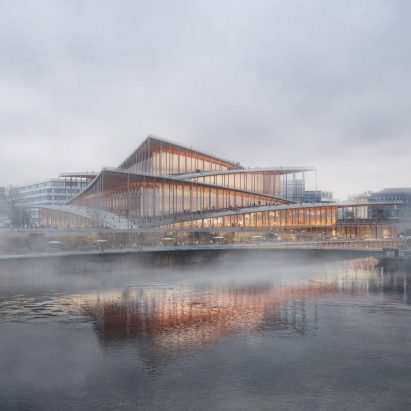

Snøhetta to add entrance shaped like "canted shells" to St Louis' Powell Hall
Architecture studio Snøhetta has unveiled its design for an expansion to St Louis Orchestra's Powell Hall that will feature scalloped walls, a grainy brick facade and glazed arches.
The 65,000-square-foot (6,039-square-metre) expansion will add new lobby space, backstage space and educational facilities to the historic building in St Louis, Missouri.
Snøhetta is managing both the structural and landscape architecture for the addition to the home of the second-oldest orchestra in the United States.
Snøhetta revealed the plans for the expansion of Powell Hall in St Louis
"Drawing on the spatial language of historic concert halls and the instruments within, the new entry is shaped as a series of canted shells assembled from raked masonry units, creating a front-of-house addition defined by simple inclined surfaces and arched openings inspired by the musicality of the historic building and its program," said Snøhetta.
The entrance will have a grainy brick facade that will wrap around the current 1920s brick-and-stone structure. The addition will be shorter than the current building and decrease in height as it wraps around the building.
"The scalloped walls of the new front-of-house building, as well as the eastern addition’s exterior, are clad in light-coloured brick echoing Powell Hall’s ornamental terracotta," said Takeshi Tornier, project leader for Snøhetta.
[
Read:
Norway's remote Hotel Finse 1222 undergoes subtle update by Snøhetta
](https://www.dezeen.com/2022/05/02/finse-1222-hotel-interiors-norway-snohetta/)
Where the new structure meets the old will be a pane of vertical glass, which the architects call a "glass ribbon", that corresponds with the paned, vertical glazing on Powell Hall's face.
A glazed archway will serve as the primary entrance to the lobby. Through this entrance, a spiral staircase will take visitors into the multiple levels of the concert hall.
The existing 1920s structure houses the second-oldest orchestra in the United States
Within the lobby, the staircase will branch out onto mezzanines that look over the volume and out through the glazing of the arch into the outdoor plaza.
The plaza will replace an existing parking lot on the corner of Grand Boulevard and Samuel Shepard Drive.
With multiple pathways through the plaza into the hall, the space will be a way for the public to gather and for the concert experience to extend outside, according to the architects.
[
Read:
Studio Gang designs One Hundred skyscraper with angled facades in St Louis
](https://www.dezeen.com/2021/06/02/studio-gang-one-hundred-st-louis/)
"Inspired by the music created and performed within the building, the site design works to create light and lyrical entry groves that frame the new addition," said Tornier.
The structure is set to be completed in 2025, in time for Powell Hall's centennial.
Snøhetta was founded in 1989 in Oslo and now has offices internationally. Its recent projects in the United States include an extension to Dartmouth's Hopkins Center for the Arts as well as a curved glass research centre for Ford in Dearborn.
The post Snøhetta to add entrance shaped like "canted shells" to St Louis' Powell Hall appeared first on Dezeen.
#all #architecture #cultural #usa #concerthalls #snøhetta #mezzanines #missouri #stlouis #expansion #arches

Commenter calls The Colburn School extension "a lovechild of Gehry and Koolhaas"
In this week's comments update, readers can't believe that plans to extend The Colburn School in Downtown Los Angeles were designed by architect Frank Gehry and are discussing other top stories.
The Colburn School, a place for training musicians and dancers, has enlisted Gehry Partners to build the Colburn Center – a significant expansion to its current facilities.
At the heart of the 100,000-square-foot campus expansion is a performance space oriented around a 1,000-seat theatre.
"Suprisingly tame for Gehry"
Readers are flabbergasted. "Suprisingly tame for Gehry," said Miles Teg.
"He found his set-square!" exclaimed Maiki Larkins.
Ken Steffes replied: "Finally something not so garish,"
"... or Gehry-ish," added Alfred Hitchcock.
"A young Gehry and Koolhaas lovechild," concluded JZ.
Are you surprised by the design? Join the discussion ›
Balldo sex toy turns testicles into a dildo
"Two balls or not two balls? T hat is the erection" says reader
Commenters are baffled by a sex toy that allows testicles to be used for penetrative sex. Billed as "the world's first ball-dildo", the Balldo cradles the user's testicles within a silicone container that can be inserted into a partner.
"Two balls or not two balls?" said Jim Angrabright. "That is the erection."
"It's like the meme where people imagined we would all have flying cars in 2022", continued Roelv, "and instead we have Balldo."
"I really can't imagine how this can be anything but painful," concluded Guy. "But each to their own, I guess."
What do you think of Balldo? Join the discussion ›
Frida Escobedo set to design The Met's new wing
Commenter says the "time is ripe for clients to look for talented architects who aren't well known"
Readers are discussing The Metropolitan Museum of Art in New York's decision to have Mexican architect Frida Escobedo design the new Oscar L Tang and HM Agnes Hsu-Tang Wing.
"Well-chosen," said Ulisses Papa. "The time is ripe for clients to start looking for talented architects, young or old, who are not necessarily big names or continuously in the limelight. Congrats to Frida!"
Walter Astor disagreed: "Given the prestige, the budget and sheer size and prominence of the project, I would have thought the Met Museum would be selecting an architect with a proven track record of designing projects of this size and scale."
"Escobedo will likely be paired up with an experienced executive architect," replied Clarencesomerset, "who will handle the CD/CA while her firm does the conceptual designs and maybe DD. It's fairly common for a younger, more popular designer to hand off execution to a larger, more experienced local executive firm."
What do you think of the choice? Join the discussion ›
Nimtim Architects updates London house with plywood partitions and arch motifs
Architect responds to readers commenting on London project
Commenters are engaging in conversation with Nimtim Architects about the studio's use of plywood joinery within the interior of a 1920s house in Southwark, London.
"Looks great in CAD but it's shame it didn't carry through," said Mike Dean. "The details look a little unresolved and the overall feel is one of a temporary DIY holding design rather than a meaningful intervention."
Nimtim Architects director Tim O'Callaghan responded: "Thanks for your comments Mike. I'm impressed you can see the ply edges so clearly in these photos. We actually used a low VOC plywood which had a few more imperfections than regular ply but was healthier for our clients and their family."
"Not sure I buy the terracotta but I get what they were going for," concluded JZ. "The cabinets are great, visually calming with a staid energy and a nice injection of po-mo tactics. Great transformation."
How do you feel about the use of plywood? Join the discussion ›
Comments update
Dezeen is the world's most commented architecture and design magazine, receiving thousands of comments each month from readers. Keep up to date on the latest discussions onour comments page.
The post Commenter calls The Colburn School extension "a lovechild of Gehry and Koolhaas" appeared first on Dezeen.
#all #comments #frankgehry #losangeles #california #usa #concerthalls #downtownlosangeles



Frank Gehry releases design for Colburn Center in Los Angeles
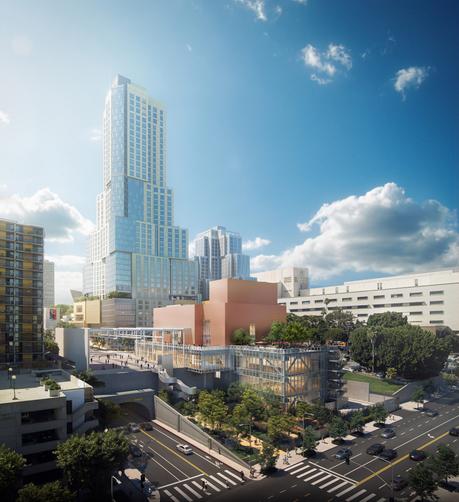
The Colburn School has announced plans for a 100,000-square-foot campus expansion in Downtown Los Angeles designed by architect Frank Gehry.
A place for training musicians and dancers, the Colburn School enlisted Gehry Partners to build the Colburn Center – a significant expansion to its current facilities.
Frank Gehry has designed the new Colburn Center in Los Angeles
At the heart of the design is a performance space that is meant to increase the capacity of the school. Oriented around a 1,000-seat theatre, the design has both large and small-scale performance areas and training facilities.
"Their new hall is a major blessing for the music world of this city, and I am honored to be a part of it," said Gehry.
The Colburn Center is an expansion of the Colburn School's campus
The design is for a 100,000-square-foot (9,290-square-metre) expansion across the street from the school's current campus. It is expected to break ground in 2023 and open to the public in 2025.
Stepped down in line with the elevation, a series of opaque and transparent volumes make up the performance halls and training facilities. An expansive garden and public plaza will wrap around the building and will be oriented toward the complex towards the already existing structures of the school's campus.
A trellis with lights will illuminate the public plaza
The large theatre, named Terri and Jerry Kohl Hall after the project's primary donors, will have an acoustic ceiling that resembles clouds. Two skylights will bring additional light into the space.
Identical in shape to Gehry's Walt Disney Concert Hall nearby, the theatre will have an orchestra pit but be reconfigurable to accommodate different kinds of performances.
[
Read:
"I respond to every fucking detail of the time we're in" says Frank Gehry
](https://www.dezeen.com/2021/06/29/frank-gehry-interview-luma-arles/)
A series of lifts enable these configurations which include a method to lift up the orchestra pit, built for 70 musicians, to be an extension of the audience seating.
The east side of the complex will be made of glass and host the dance studios, the largest of which is a studio theatre that will accommodate 100 people.
A 100-person studio theatre will be open to the outside with glass windows
Having the studios opened up to the outside with the glass facade is meant to "provide a literal window into the beauty and rigor of dance training and performance", said Colburn.
This project will bring the total number of Gehry designs in the neighbourhood to three, the most of his buildings in one place in the world. The studio's The Grand mixed-use development is under construction across the street from the Walt Disney Concert Hall, which completed in 2003.
The configurable primary theatre will be able to accommodate 1,000 guests
For the acoustic aspects of the Colburn Center project, Gehry has consulted prior collaborators such as Yasuhisa Toyota of Nagata Acoustics and Michael Ferguson, principal of TheatreDNA.
Gehry previously worked with Nagata Acoustics to complete the New World Symphony in Florida in 2011. The architect's other ongoing projects include the Guggenheim museum in Abu Dhabi, which will also open in 2025.
The renderings are courtesy of Gehry Partners.
The post Frank Gehry releases design for Colburn Center in Los Angeles appeared first on Dezeen.
#all #architecture #cultural #news #frankgehry #losangeles #california #usa #concerthalls #downtownlosangeles

Open Architecture unveils rock-like concert hall in a valley outside Beijing
Chinese studio Open Architecture has completed The Chapel of Sound, a monolithic open-air concert hall in a valley next to the ruins of the Great Wall of China outside Beijing.
The project by Beijing-based practice Open Architecture is situated in a mountainous countryside area, two hours drive from the centre of the Chinese capital.
Chapel of Sound is an open-air concert hall that was built by Open Architecture
The building comprises a semi-outdoor amphitheatre, outdoor stage, viewing platforms and a rehearsal room.
Built entirely from concrete that has been enriched with an aggregate made from local stone, the concert hall has been designed to resemble a piece of the natural landscape.
It was designed to blend in with the surrounding landscape
"We were very aware of the responsibility we had to contribute a thoughtful structure that fits naturally into such a unique landscape," said Open Architecture's founders Li Hu and Huang Wenjing.
"The symphony of nature is what we really wanted people to experience here."
The structure was built using concrete that was reinforced with a local stone aggregate
The rock-like structure is composed of a series of concrete layers, each of which cantilevers out from the previous layer to create an inverted cone shape.
What appears to be a solid structure is actually an inner and outer shell with the space between operating like a truss.
[
Read:
Open Architecture builds cave-like art gallery inside a sand dune
](https://www.dezeen.com/2018/12/12/open-architecture-ucc-dune-art-museum-architecture-china/)
Staircases wind through the building to a rooftop platform that offers views of the valley and the nearby Ming Dynasty-era Great Wall.
In Chapel of Sound's interior spaces, bronze handrails and doors contrast against the concrete and add warmth.
The concert hall is an open-air space
The building does not feature any heating or air-conditioning. A void in the centre of the rooftop allows daylight into the structure and naturally illuminates the performance spaces.
When it rains, the water also falls through the void, and a drainage system has been put in place to ensure that it quickly drains away.
The space can be used for concerts or hired for events
The openings in the Chapel of Sound not only connect the interior with the outside environment but also help to ensure good acoustics in the space, without the need to introduce additional sound-absorbing materials, Open Architecture claimed.
The architects intend the concert hall to be a space of quiet contemplation as well as a venue for large-scale concerts.
The venue is surrounded by mountains
"Solitary or communal, music or sound of nature, gazing into the starry sky or connecting with one’s inner self – it’s open to the interpretation of the users," said Huang.
Other cultural projects from OPEN include The UCCA Dune Art Museum, a cave-like art gallery inside a sand dune, and a library and theatre that resembles a blue whale in Shanghai.
The photography is courtesy of Open Architecture.
Project credits:
Architectural and interior design: OPEN Architecture
Principals in charge: Li Hu, Huang Wenjing
Project team: Zhou Tingting, Fang Kuanyin, Huang Zetian, Lin Bihong, Chen Xiuyuan, Cai
Zhuoqun, Kuo Chunchen
Structural and MEP engineers: Arup
Lighting Consultant: Beijing Ning Zhi Jing Lighting Design Co., Ltd.
Theater and acoustic consultant: JH Theatre Architecture Design Consulting Company
Landscape design: Guangzhou Turen Landscape Planning Co., Ltd.
Signage design: OPEN Architecture
The post Open Architecture unveils rock-like concert hall in a valley outside Beijing appeared first on Dezeen.
#cultural #all #architecture #beijing #china #concerthalls #openarchitecture


 John Arnold
 Edward Curtis
 Cheshire
 dezeen (unofficial)