Der Comparator begegnet dir in Java spätestens dann, wenn du anfängst, Listen nicht nur "irgendwie", sondern gezielt nach bestimmten Eigenschaften sortieren zu wollen. Vielleicht willst du Modelle nach einem Feld ordnen, Daten fürs Frontend vorbereiten oder einfach nur eine Liste von Objekten sau

https://magicmarcy.de/der-comparator-in-java

#Vergleich #Comparator #Comparable #Sortierung #Java #Interface #CompareTo #Programming

Der Comparator in Java: Dein Werkzeug für präzise und flexible Sortierungen | magicmarcy.de

Der Comparator begegnet dir in Java spätestens dann, wenn du anfängst, Listen nicht nur "irgendwie", sondern gezielt nach bestimmten Eigenschaften sortieren zu wollen. Vielleicht willst du Modelle nach einem Feld ordnen, Daten fürs Frontend vorbereiten oder einfach nur eine Liste von Objekten sauber und strukturiert ausgeben. Genau hier spielt der Comparator seine Stärken aus: Du kannst Vergleichslogik definieren, ohne deine Klassen selbst anzupassen, und behältst dabei volle Kontrolle über das Sortierverhalten.

magicmarcy.de

Der Comparator begegnet dir in Java spätestens dann, wenn du anfängst, Listen nicht nur "irgendwie", sondern gezielt nach bestimmten Eigenschaften sortieren zu wollen. Vielleicht willst du Modelle nach einem Feld ordnen, Daten fürs Frontend vorbereiten oder einfach nur eine Liste von Objekten sau

https://magicmarcy.de/der-comparator-in-java

#Vergleich #Comparator #Comparable #Sortierung #Java #Interface #CompareTo #Programming

Der Comparator in Java: Dein Werkzeug für präzise und flexible Sortierungen | magicmarcy.de

Der Comparator begegnet dir in Java spätestens dann, wenn du anfängst, Listen nicht nur "irgendwie", sondern gezielt nach bestimmten Eigenschaften sortieren zu wollen. Vielleicht willst du Modelle nach einem Feld ordnen, Daten fürs Frontend vorbereiten oder einfach nur eine Liste von Objekten sauber und strukturiert ausgeben. Genau hier spielt der Comparator seine Stärken aus: Du kannst Vergleichslogik definieren, ohne deine Klassen selbst anzupassen, und behältst dabei volle Kontrolle über das Sortierverhalten.

magicmarcy.de
Machine Unlearning Comparator

Machine Unlearning Dashboard

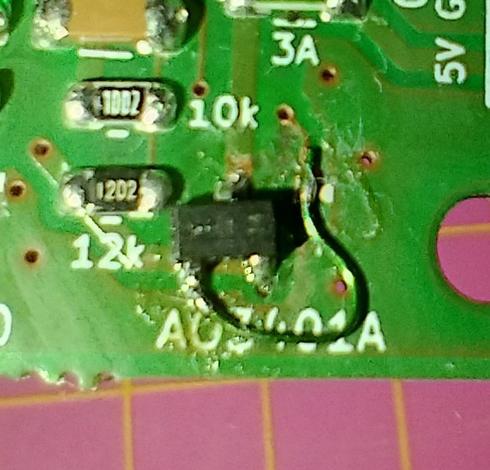
I fixed the mistake with the #MOSFET and didn't even have to turn it on its back. I lost one in the attempt to bend the legs.
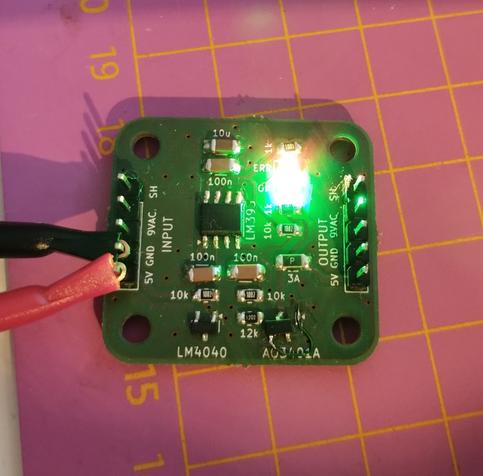
Now the power gets cut when it's over 5.53 Volts. Both LEDs turn off then, but fixing that would require cutting traces underneath the #comparator, which I don't want to unsolder again.
Time to attach a cable and use it for protecting my #Commodore #C64
#diyelectronics #electronics
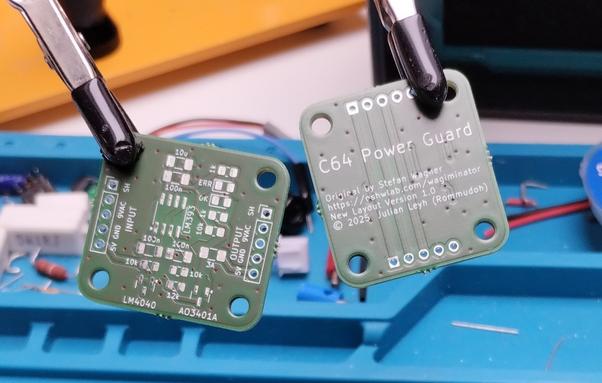
Today my new #PCBs arrived. The first is an adaptation of Stefan Wagner's #C64 Power Guard: https://oshwlab.com/wagiminator/c64-power-guard
I changed some components to what I had available. Thanks @aislerhq for manufacturing them.
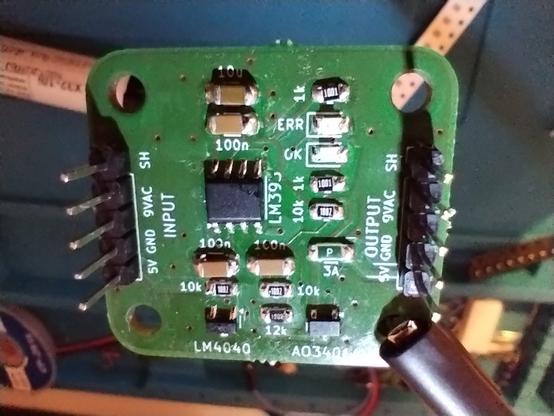
Only I messed up two small details. The second #comparator is backwards, so the error #LED is practically the same as the power good LED. And I also put in the #MOSFET backwards. I'll try to mount it on its back and rotated tomorrow.
#PCBfails #deadbug #diyelectronics #electronics #soldering
C64 Power Guard - Platform for creating and sharing projects - OSHWLab

Overvoltage and Overcurrent Protection for the Commodore C64

An application made with React for synchronized comparison of maps in multiple views, which allows both choosing the number of windows and the data sources of the maps (made with Claude AI) #comparator

https://github.com/veloplanner/map-matrix

GitHub - veloplanner/map-matrix: MapMatrix - A React application for synchronized multi-view map comparison. Mostly generated by AI.

MapMatrix - A React application for synchronized multi-view map comparison. Mostly generated by AI. - veloplanner/map-matrix

GitHub
Connaissez-vous un site web de comparaison des prix et des fonctionnalités des offres VPS ? - LinuxFr.org
Connaissez-vous un site web de comparaison des prix et des fonctionnalités des offres VPS ?

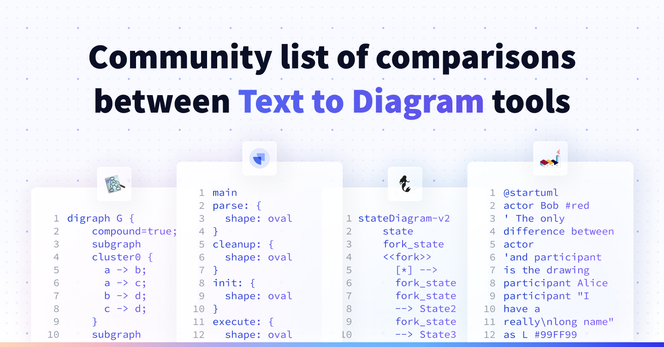
Si vous voulez comparer différents outils de diagram as code, c'est un très bon site, qui montre à la fois les différences de grammaire, mais aussi les différences de grammaire. (D2 s'en sort pas mal du tout !) https://text-to-diagram.com/ #diagram #code #comparator #exemple
Text to diagram

Community list of comparisons between text to diagram tools

Text to diagram

The No-MCU Fan Controller

The default for any control project here in 2019 was to reach for a microcontroller. Such are their low cost and ubiquity that they can be used to replicate what might once have needed some extra circuitry, with the minimum of parts. But here we are at the end of 2021, and of course microcontrollers are hard to come by in a semiconductor shortage. [Hesam Moshiri] has a project that takes us back to a simpler time, a temperature controlled fan the way they used to be made, without a microcontroller in sight.

Old hands will no doubt guess where this design is heading, there is an LM35 temperature sensor producing a voltage proportional to its temperature, and half of an LM358 which forms a comparator against a static voltage from a divider. The LM358's output drives a MOSFET which in turn switches on or off the fan motor. This type of circuit used to be the daily fare of simple control electronics in the days when a microcontroller represented a significant expense, and it's still a handy circuit to be reminded of.

Have you forgotten sensors such as the LM35 in a world of on-board sensors? Time to refresh your sensing memory.

#hardware #comparator #fancontroller #lm35

The No-MCU Fan Controller

The default for any control project here in 2019 was to reach for a microcontroller. Such are their low cost and ubiquity that they can be used to replicate what might once have needed some extra c…

Hackaday

Homebrew Circuit Explores the Mysteries of Analog-to-Digital Conversion

When it comes to getting signals from an analog world into our computers, most of us don't give much thought to how the hardware that does the job works. But as it turns out, there are a number of ways to skin the analog to digital conversion cat, and building your own homebrew successive approximation register ADC is a great way to dispel some of the mystery.

From his description of the project, it's clear that [Mitsuru Yamada] wasn't looking to build a practical ADC, but was more interested in what he could learn by rolling his own. A successive approximation register ADC works by quickly cycling through all possible voltage levels in its input range, eventually zeroing in on the voltage of the input signal at that moment and outputting its digital representation. The video below shows how the SAR ADC works visually, using an oscilloscope to show both the input voltage and the output of the internal R-2R DAC. The ADC has an input range of 0 V to 5 V and seven bits of resolution and uses nothing but commonly available 74xx series logic chips and a couple of easily sourced analogs for the sample-hold and comparator section. And as usual with one of his projects, the build quality and workmanship are impeccable.

We love these sorts of projects, which are undertaken simply for the joy of building something and learning how it works. For more of [Yamada-san]'s projects, check out his 6502-based RPN calculator, or the serial terminal that should have been.

#mischacks #adc #analogtodigital #comparator #dac #r2r #samplehold #successiveapproximation

Homebrew Circuit Explores The Mysteries Of Analog-to-Digital Conversion

When it comes to getting signals from an analog world into our computers, most of us don’t give much thought to how the hardware that does the job works. But as it turns out, there are a numb…

Hackaday