The University of Amsterdam is hosting a symposium on South-South migrants settling in self-built cities in Latin America, with case studies in Medellín and San José on topics like community governance and urban borderscapes by May 1.

https://www.linkedin.com/feed/update/urn:li:activity:7448113336572932096/

#urbanism #urbanplanning #LatinAmerica #Migration #CommunityGovernance

#callforpapers #cfp #urbanstudies #migrationstudies #humangeography | CEDLA (University of Amsterdam)

Call for Papers – Symposium Settling in the Self-Built City: South–South Migration and Urban Borderscapes 5–6 November 2026, Amsterdam, the Netherlands The UvA invites submissions for a two-day symposium linked to the project Contesting Urban Borderscapes in Latin America (www.cedla.nl/urban-project). The event will take place at the city-centre campus, with sessions at the Allard Pierson Museum. The symposium focuses on the social dynamics of self-built neighbourhoods in Latin America receiving migrants from neighbouring countries, with case studies in Medellín and San José. We welcome contributions addressing South–South migration, community governance, social integration and exclusion, memory and narrative, and processes of bordering and symbolic boundaries. Please submit an abstract (max. 250 words). Selected papers will be considered for a special issue, so we encourage original, unpublished work. The symposium will be held in person. Meals are included, and two travel grants are available for scholars from low-income countries. The programme will close with a public keynote and exhibition. Deadline: 1 May 2026 Submissions: [email protected] / Isabelle Mollinger Enquiries: [email protected] / Christien Klaufus #CallForPapers #CFP #UrbanStudies #MigrationStudies #HumanGeography CEDLA (University of Amsterdam)

LinkedIn

A Response to Tim Chambers’s 2026 Predictions

Tim Chambers' 2026 predictions may not fully consider what Fediverse users actually need.

https://islandinthenet.com/a-response-to-tim-chamberss-2026-predictions/

A Response to Tim Chambers’s 2026 Predictions - Island in the Net

Tim Chambers’ 2026 predictions may not fully consider what Fediverse users actually need.

Island in the Net

New #CoARA OI4RRA WG publication out now!

Our latest report from the CoARA Working Group “Towards Open Infrastructures for Responsible Research Assessment (OI4RRA)” is out!

Read it here: https://doi.org/10.5281/zenodo.17399516

#RRA #OpenScience #OpenInfrastructure #ResearchAssessment #CommunityGovernance

Fedora's AI policy debate highlights the tension between automation & community values: balancing innovation with ethics, transparency, and preserving open-source trust. Key question: Will AI empower all or deepen corporate control? #OpenSource #AI #Fedora #TechEthics #Linux #CommunityGovernance

#OpenSource #AI #Fedora #TechEthics #Linux #CommunityGovernance

https://saysomething.hashnode.dev/fedoras-ai-policy-debate-ethical-implications-and-the-future-of-open-source

🧵 The Mautic Council is seeking 2 new members!

Real opportunity to influence our open-source marketing automation platform's direction.

Seeking:

• Diverse backgrounds/experiences

• Open source passion

• Business/leadership experience welcome

• Community advocates 3-year commitment, genuine impact.

Nominations close Nov 10th.

Learn more: https://mautic.org/blog/could-you-be-mautics-next-council-member/

Questions: #wg-governance on Slack

#OpenSource #CommunityGovernance #Mautic #MauticCouncil #Governance

Wem gehört ein Open-Source-Projekt? – RubyGems droht die Spaltung

In der Open-Source-Welt erlebt die populäre Programmiersprache Ruby derzeit eine heftige Kontroverse in Bezug auf die Kontrolle kritischer Infrastrukturen.

heise online

Democracy is slow, but that's a feature, not a bug!

Working on a hypothetical thought experiment: replacing "Benevolent Dictator" with "Benevolent Leader" for open source communities. The difference? Leaders can be voted out.

The model: Leader holds 20% voting power. Three committees split 80%:

Technical (those who build and understand systems)

Humanities (those who ask "why?" and "what does it mean?")

People's (those who actually use what we build)

Why these three? Tech fails when engineers build alone. We need philosophers questioning ethics and implications. Users explaining real needs, not imagined ones. That friction creates wisdom.

Not sharing the full framework yet, but collecting governance stories. What worked in your projects? What failed? How did transitions from BDFL go?
Especially interested in #Django #Python experiences.

Reply/DM freely.

Looking for messy reality, not theory.

#OpenSource #TechGovernance #HumanInTheLoop #CommunityGovernance #Philosophy #Humanities #DigitalHumanities

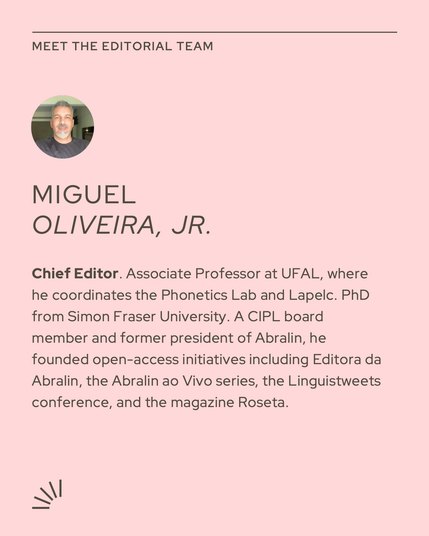
At Cadernos de Linguística, our editorial team is made up of active researchers from within the community—people you read, cite, and work with.
No hidden structures. No commercial control. Just science, in the open.
🔗 Meet the team: https://cadernos.abralin.org/index.php/cadernos/about/editorialTeam
#OpenAccess #CommunityGovernance #Linguistics #EditorialTransparency #ScienceByScientists #CadLin #NotForProfit

Big News! 🎉

We're introducing a new AsyncAPI Governance Board to guide the future of the initiative! We’ve taken a big step forward in strengthening community leadership and transparency.

Lukasz Gornicki wrote a detailed blog about it. 💜
Learn more & get involved: https://buff.ly/jK00lWW

Nominations are now open!

#AsyncAPI #OpenSourceLeadership #CommunityGovernance #APIs

Transition from Executive Director to Governance Board and Elections Kick-Off

End of startup period for AsyncAPI Initiative. We no longer need an Executive Director, as with such a strong community, we can set up a more resilient Governance Board