"Waiting for the Moon in the Mid Autumn Festival" masterfully intertwines calligraphy with serene landscapes, showcasing the essence of classical Chinese art. How does this piece inspire your appreciation of nature and culture?
#ChineseArt #ClevelandMuseum #ArtAppreciationhttps://clevelandart.org/art/1973.72Explore the tranquility of the Shakyamuni Triad, a stunning Yuan Buddhist triptych that unites figures of wisdom, virtue, and those on the path to enlightenment. How does this artwork resonate with your understanding of spirituality and art?
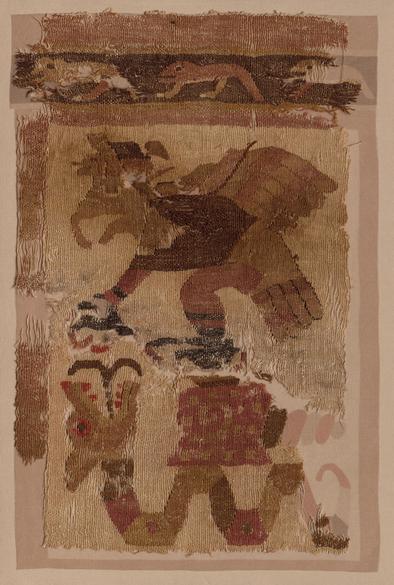
#BuddhistArt #ClevelandMuseum #ArtAndSpiritualityhttps://clevelandart.org/art/2009.342.1Textile Fragments from the Moche culture reveal a poignant story of resilience and artistry amidst natural disaster. The serpent and snail designs combined with their ceremonial significance invoke deep cultural reflections. What stories do you imagine they tell?
#MocheArt #ClevelandMuseum #Textiles #Artefacts #CulturalHeritagehttps://clevelandart.org/art/2007.2Four Poems: Calligraphy in Cursive Script captures the essence of Chen Jiru's soul through graceful characters and rhythmic strokes. This remarkable piece reflects a life dedicated to art rather than duty. How does calligraphy speak to you?
#Art #Calligraphy #ClevelandMuseum
https://clevelandart.org/art/2004.65
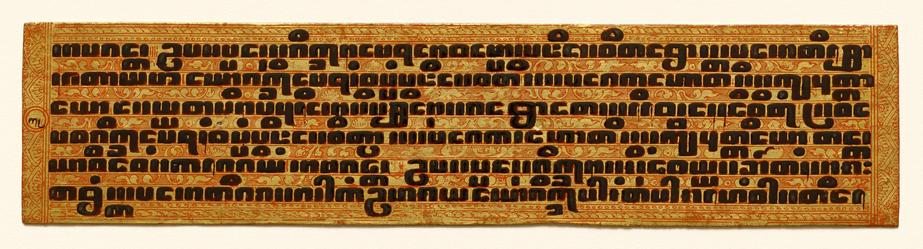
A stunning glimpse into premodern Burma's spiritual artistry, this manuscript page features celestial nats amid lush flora, embodying devotion and ceremony. What stories do you think these winged beings whisper?
#BuddhistArt #ClevelandMuseum #ArtHistory
https://clevelandart.org/art/1945.172.6.b
Min Zhen’s "Cat and Butterfly" captures a charming moment and deep cultural significance, wishing longevity for a friend. The playful composition invites reflection on life and art. What emotions does this harmony evoke in you?
#ChineseArt #ClevelandMuseum #ArtHistoryhttps://clevelandart.org/art/1985.71.5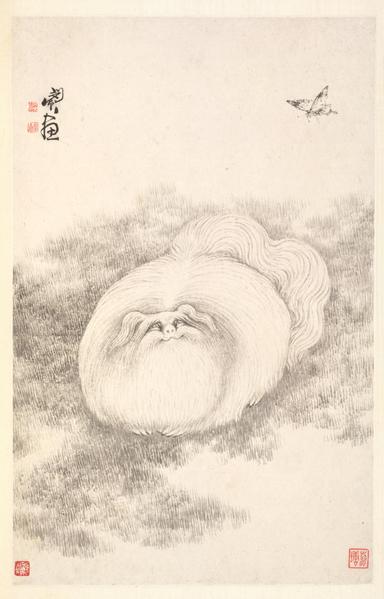

Cat and Butterfly | Cleveland Museum of Art
Min Zhen, who was orphaned at age 12 and developed an eccentric personality, was trained by Tang Yin (1682–1756), a writer, playwright, and superintendent of the imperial porcelain workshops in Jingdezhen. The connection to him may have enabled Min to stay in Beijing for a decade from around 1773. It is not clear whether he ever resided in Yangzhou, but his style is in many instances reminiscent of that of Yangzhou artist Huang Shen. <br><br>The album was painted for his friend Dailili Shanren in exchange for a scholar’s stone. The paintings demonstrate the artist’s versatility and mature style in the last years of his life. While two leaves are rendered in unconventional compositions seen from above (<em>Cat and Butterfly </em><a href="https://www.clevelandart.org/art/1985.71.5">CMA 1985.71.5</a>) and below (<em>Banana Plant </em><a href="https://www.clevelandart.org/art/1985.71.11">CMA 1985.71.11</a>), they have a humorous touch. “Cat and butterfly” is a homophone for the Chinese characters “mao die,” meaning “octogenarian,” and express the wish for the recipient’s longevity. The banana plant stands for the world of literati but can also allude to Buddhism.
Discover "A Spring Shower" from Tiepolo's I Divertimenti per li Regazzi series at
#ClevelandMuseumofArt. Playful, melancholic & inventive! Who's your favorite Commedia dell'arte character?
#Tiepolo #ArtHistory #ClevelandMuseumhttps://clevelandart.org/art/1937.573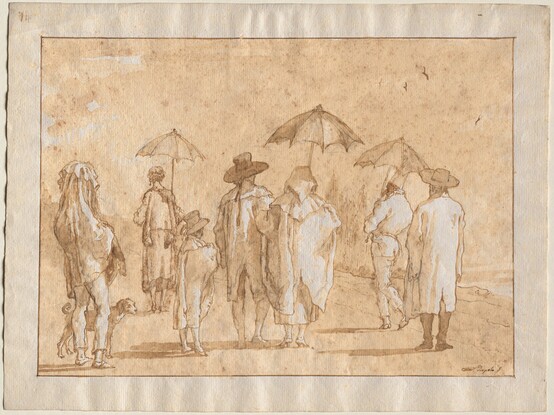

A Spring Shower | Cleveland Museum of Art
Giovanni Domenico Tiepolo, an important Venetian fresco painter of the 18th century, is best known today for his highly finished historical drawings that ingeniously incorporate details from daily life. In his series of 104 drawings known as<em> Divertimento per li Regazzi </em>(Entertainment for Children), he featured the Punchinello character from the Italian tradition of popular theater, a picaresque clown figure with a hooked nose, hunched back, and bloated belly. The character appears repeatedly in Tiepolo's sprawling narrative that rehearses the social mores of late 18th-century Venice through genre scenes of daily life, comic misadventures, and pathetic tragedies. In this enigmatic scene, one of nine sheets from the<em> Divertimento </em>at the CMA, the artist depicted a group of seven figures from the back as they wander aimlessly amid a shower that literally drips down the white paper. Domenico's characteristically tremulous lines and broad, simple washes of brown ink, laid down over an initial sketch in black chalk, capture a fresh and misty atmospheric effect that magnifies the pensive quality of the scene. The artist made this and other drawings from the series as finished works without correlations in other media.
 Jay
Jay


 Hidden Gems

 Christian Alvarez