 Merlin Makes
I'm developing an MPPT solar chargecontroller.
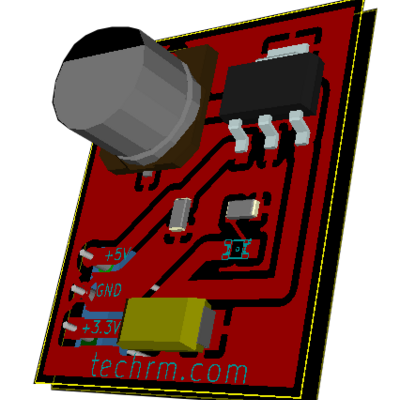
My partner thinks this image of the board is already a work of art in itself.
I tend to agree.
#solar #PV #ChargeController #MPPT #DIY #electronics #microcontroller #PIC #technology

I'm developing an MPPT solar chargecontroller.
My partner thinks this image of the board is already a work of art in itself.
I tend to agree.
#solar #PV #ChargeController #MPPT #DIY #electronics #microcontroller #PIC #technology
smart idea for building a simple 12v #UPS out of a dirt cheap pwm #solar #chargecontroller
https://steemit.com/deutsch/@madmac/sparsame-12v-usv-ups-fuer-lau-diy
Solar Power for Arduino, ESP8266 and IoT: Complete Guide to Energy Independence
#photovoltaicpanel, #chargecontroller, #lithiumbattery, #DC/DCconverter, #solarpower, #Arduino, #ESP32, #ESP8266
Bee Motion Combines ESP32 with PIR Sensor and USB-C
There's no shortage of ESP32 development boards out there, with many of them offering some "killer app" feature which may or may not align with whatever it is you're trying to do. But if you've got a project that could benefit from the pairing of a powerful WiFi-enabled microcontroller and a passive infrared (PIR) motion sensor, the Bee Motion created by [Paul Price] is certainly worth a close look.
This breadboard compatible package combines an ESP32-S2 module with a top-mounted PIR sensor, making it a turn key solution for all sorts of motion sensing projects. In addition to the expected onboard voltage regulation, there's also a LiPo charge controller and status LEDs for mobile or battery-backed operation.
While there's far too many variables involved for [Paul] to give a specific runtime for the Bee Motion, he's run some numbers and found that a 1500 mAH cell could potentially keep the board running for over a year if you're taking advantage of the MCU's deep sleep capabilities. When it's time to recharge, whenever that may be, the board's USB-C connector means you won't be searching around for the proper cable.
Schematics and CAD files are available in the Bee Motion GitHub repo, and [Paul] is also selling assembled boards on Tindie. All you need now is to get inspired by some of the slick PIR projects we've covered in the past.
#microcontrollers #chargecontroller #esp32s2 #passiveinfrared #pirsenor #usbc
Tracking Maximum Power Point for Solar Efficiency
In days of yore when solar panels weren't dirt cheap, many people (and even large energy companies) used solar trackers to ensure their panels were always physically pointed at the sun to make sure they harvested every watt of energy possible. Since the price of panels has plummeted, though, it's not economical to install complex machines to track the sun anymore. But all solar farms still track something else, called the Maximum Power Point (MPP), which ensures that even stationary panels are optimized for power production.
While small MPP trackers (MPPT) are available in solar charge controllers in the $200 range that are quite capable for small off-grid setups, [ASCAS] aka [TechBuilder] decided to roll out an open source version with a much lower price tag since most of the costs of these units are in R&D rather than in the actual components themselves. To that end, the methods that he uses for his MPPT are essentially the same as any commercial unit, known as synchronous buck conversion. This uses a specially configured switch-mode power supply (SMPS) in order to match the power output of the panels to the best power point for any given set of conditions extremely rapidly. It even works on many different battery configurations and chemistries, all configurable in software.
This build is incredibly extensive and goes deep into electrical theory and design choices. One design choice of note is the use of an ESP32 over an Arduino due to the higher resolution available when doing analog to digital conversion. There's even a lengthy lecture on inductor core designs, and of course everything on this project is open source. We have also seen the ESP32 put to work with MPPT before, although in a slightly less refined but still intriguing way.
Thanks to [Sofia] for the tip!
#news #chargecontroller #controller #maximumpowerpoint #mpp #mppt #opensource #panel #solar #tracker
 GeekProjects News

 DeltaLima 🐧
 Techrm
 hackaday unofficial
 Raimondas Lapinskas