“Everything is destroyed by its own particular vice: the destructive power resides within”*…

Government graft in the U. S. has a long (and unbroken) history; but there have been especially corrupt periods, for instance in the Jacksonian era and the Gilded Age… and again today.

Profiteering and insider trading, “pay-to-play”/influence peddling, foreign emoluments, conflicts of interest, regulatory and policy favors, purchased pardons (and commutations)– we’ve got it all, and at epic levels.

The estimable Cory Doctorow uses a telling comparison to drill down on one of the dominant strands: Trump’s (ironic) campaign to fight (what he identifies as) corruption…

… It’s a story about boss-politics anti-corruption, in which anti-corruption is pursued to corrupt ends.

From 2012-2015, Xi Jinping celebrated his second term as the leader of China with a mass purge undertaken in the name of anti-corruption. Officials from every level of Chinese politics were fired, and many were imprisoned. This allowed Xi to consolidate his control over the CCP, which culminated in a rule-change that eliminated term-limits, paving the way for Xi to continue to rule China for so long as he breathes and wills to power.

Xi’s purge exclusively targeted officials in his rivals’ power-base, kneecapping anyone who might have blocked his power-grab. But just because Xi targeted his rivals’ princelings and foot-soldiers, it doesn’t mean that Xi was targeting the innocent. A 2018 paper by an economist (Peter Lorentzen, USF) and a political scientist (Xi Lu, NUS) concluded that Xi’s purge really did target corrupt officials.

The authors reached this conclusion by referencing the data published in the resulting corruption trials, which showed that these officials accepted and offered bribes and feathered their allies’ nests at public expense.

In other words, Xi didn’t cheat by framing innocent officials for crimes they didn’t commit. The way Xi cheated was by exclusively targeting his rivals’ allies. Lorentzen and Lu’s paper make it clear that Xi could easily have prosecuted many corrupt officials in his own power base, but he left them unmolested.

This is corrupt anti-corruption. In an environment in which everyone in power is crooked, you can exclusively bring legitimate prosecutions, and still be doing corruption. You just need to confine your prosecutions to your political enemies, whether or not they are more guilty than your allies (think here of the GOP dragging the Clintons into Epstein depositions).

14 years later, Xi’s anti-corruption purges continue apace, with 100 empty seats at this year’s National People’s Congress, whose former occupants are freshly imprisoned or awaiting trial.

I don’t know the details of all 100 prosecutions, but China absolutely has a corruption problem that goes all the way to the upper echelon of the state. I find it easy to believe that the officials Xi has targeted are guilty – and I also wouldn’t be surprised to hear that they are all supporters of Xi’s internal rivals for control of the CCP.

As the Epstein files demonstrate, anyone hoping to conduct a purge of America’s elites could easily do so without having to frame anyone for crimes they didn’t commit (remember, Epstein didn’t just commit sex crimes – he was also a flagrant financial criminal and he implicated his network in those crimes).

It’s not just Epstein. As America’s capital classes indulge their incestuous longings with an endless orgy of mergers, it’s corporate Habsburg jaws as far as the eye can see. These mergers are all as illegal as hell, but if you fire a mouthy comedian, you can make serious bank.

And if you pay the right MAGA chud podcaster a million bucks, he’ll grease your $14b merger through the DoJ.

And once these crooks merge to monopoly, they embark on programs of lawlessness that would shame Al Capone, but again, with the right podcaster on your side, you can keep on “robbing them blind, baby!”

The fact that these companies are all guilty is a foundational aspect of Trumpism. Boss-politics antitrust – and anti-corruption – doesn’t need to manufacture evidence or pretexts to attack Trump’s political rivals. When everyone is guilty, you have a target-rich environment for extorting bribes.

Just because the anti-corruption has legit targets, it doesn’t follow that the whole thing isn’t corrupt…

On the practice of selective enforcement and prosecution: “Corrupt anticorruption,” from @pluralistic.net.web.brid.gy.

For thoughts on what we can do about all of this, see “Building political integrity to stamp out corruption: three steps to cleaner politics” (source of the image above)

Menander

###

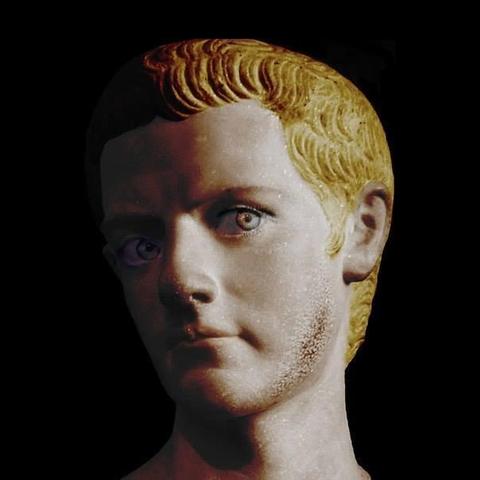
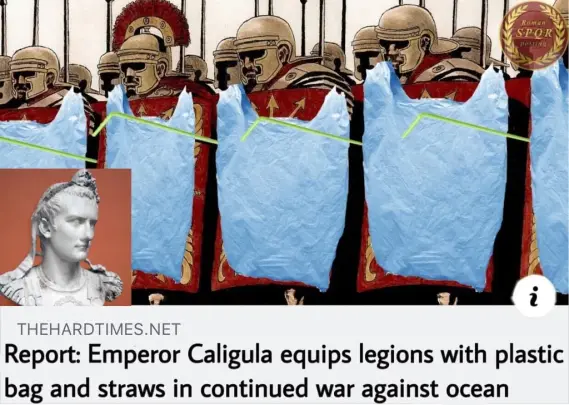
As we decide on disinfectants, we might recall that it was on this date in 37 CE, following the death of Tiberius, that the Roman Senate annulled Tiberius’ will and confirmed Caligula, his grandnephew, as the third Roman emperor.  (Tiberius had willed that the reign should be shared by his nephew [and adopted son] Germanicus and Germanicus’ son, Caligula.)

While he has been remembered as the poster boy for profligacy and corruption, Caligula (“Little Boots”) is generally agreed to have been a temperate ruler through the first six months of his reign.  His excesses after that– cruelty, self-dealing, extravagance, sexual perversity– are “known” to us via sources increasingly called into question.

Still, historians agree that Caligula did work hard to increase the unconstrained personal power of the emperor at the expense of the countervailing Principate; and he oversaw the construction of notoriously luxurious dwellings for himself.  In 41 CE, members of the Roman Senate and of Caligula’s household attempted a coup to restore the Republic.  They enlisted the Praetorian Guard, who killed Caligula– the first Roman Emperor to be assassinated (Julius Caesar was assassinated, but was Dictator, not Emperor).  In the event, the Praetorians thwarted the Republican dream by appointing (and supporting) Caligula’s uncle Claudius as the next Emperor.

 source

#Caligula #corruption #CoryDoctorow #culture #graft #history #law #politics #RomanHistory #society

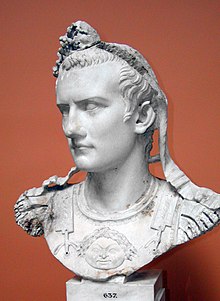
🪷 #Caligula becomes Emperor following the 16 March 37 AD death of #Tiberius, who had tutored him, calling him "a viper nursed at my breast." 🪷
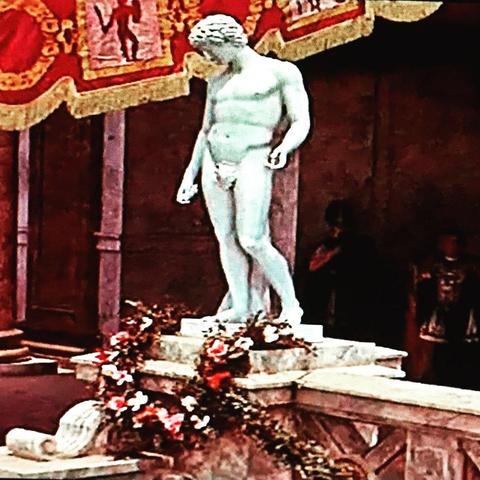
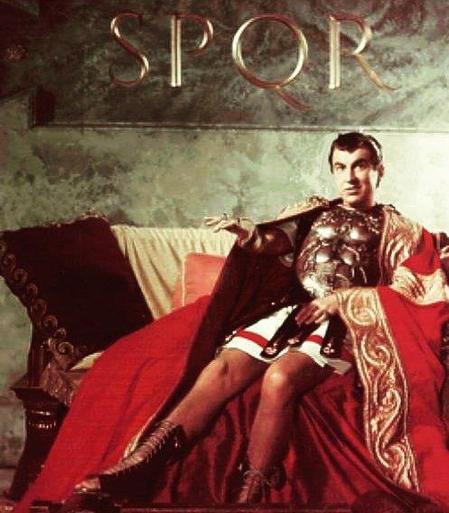
🪷 16 March 37 AD #Tiberius dies, #Caligula becomes Emperor. #Antinous statue with #figleaf looks down on his swaggering entry into the Colosseum in this 1954 epic. Campy #JayRobinson as Caligula throws shade until he gets the point in the finale of #DemetriusAndTheGladiators. 🪷
Tiberius (42 BCE to 37 CE) was the second Roman emperor, who reigned from 14 to 37 CE. #History #Tiberius #Sejanus #RomanEmperor #LiviaDrusilla #Germanicus #Caligula #Augustus #HistoryFact https://whe.to/ci/1-10428-en/
Tiberius: The Tormented and Reclusive Roman Emperor

Tiberius (42 BCE to 37 CE) was the second Roman emperor, who reigned from 14 to 37 CE. The adopted son of Augustus, he led a long and tormented life of service to the Roman Empire before becoming princeps...

World History Encyclopedia

Tipasa

Tipasa, Villa aux fresques

Ik heb het voorrecht nogal wat te kunnen reizen. Mijn laatste reis, per trein en bus door Spanje, waas puur vakantie. Maar de meeste reizen maak ik als reisleider en omdat ik ook het programma van zo’n reis maak, kan ik eigenlijk altijd wel iets invoegen dat ik zelf nog nooit heb gezien. Ik denk dat ik bovengemiddeld veel antieke ruïnes en archeologische musea heb bezocht, en ik zou niet goed weten wat ik de allermooiste vind – maar de Algerijnse stad Tipasa scoort hoog, heel hoog.

Het begint natuurlijk bij de locatie: aan de kust. In de hierboven afgebeelde villa moet het heerlijk wonen zijn geweest, met altijd het ruisen van de zee en een achtertuin die ook destijds overging in een bos. Dat was niet overal zo; momenteel zijn er meer bomen dan vroeger, zodat de site iets feeërieks heeft, al is het natuurlijk niet bepaald historisch verantwoord. Ik zei dat Tipasa mooi is, niet dat je er als het ware door een antieke stad wandelde. Daarvoor moet je naar Pompeii.

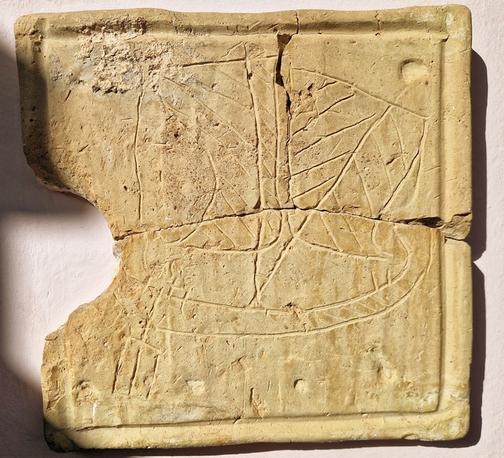
Afbeelding van een Romeins schip (Archeologisch museum, TIpasa)

De naam Tipasa begint met een /t/, wat in de Berbertalen aangeeft dat het woord vrouwelijk is, en plaatsnamen zijn vrouwelijk. Anders gezegd: Tipasa was er al heel vroeg, want het is dus een Numidische naam. We weten dat de Feniciërs er een handelspost hebben aangelegd, maar daarover is verder weinig bekend. De Romeinse bewoning is het beste bekend.

Romeinse stad

De stad is Romeins geworden ten tijde van keizer Caligula, die in 40 na Chr. de lokale heerser uit de weg ruimde en zo de weg vrij maakte voor de vorming van de provincie Mauretania Caesariensis. Tipasa kreeg vervolgens nieuwe inwoners toen keizer Claudius er Romeinse veteranen vestigde. De stad produceerde garum, een zoute vissaus, en lijkt daardoor vrij rijk te zijn geworden. Wie nu door het bos wandelt, herkent de garumfabriek, het amfitheater, het theater, een fontein, het forum met tempels en overheidsgebouwen, en de luxe villa’s aan de kust.

Mozaïek van de gevangenen (Archeologisch museum, Tipasa)

In een van de overheidsgebouwen is een beroemd mozaïek gevonden waarop enkele krijgsgevangenen staan afgebeeld. Het kan verwijzen naar een historische gebeurtenis, maar ik weet niet welke. Het kan ook betekenen dat de stad profiteerde van de slavenhandel en dat de gevangenen zijn aangeleverd door de nomaden in het achterland.

In de Late Oudheid werd Tipasa versterkt met een stadsmuur. Het amfitheater maakte daar deel van uit en bij de bouw heeft men oude grafstenen gerecycled. Daaronder was het monumentje voor Adiutor de Cananefaat. Ik heb zes jaar geleden staan stuiteren toen ik de grafsteen van onze landgenoot zag staan in het kleine plaatselijke museum.

Martyrium

Late Oudheid

Zoals zoveel Romeinse steden met een internationaal netwerk kende ook Tipasa een christelijke gemeenschap. Er schijnt een inscriptie te zijn uit het jaar 238 waarop christenen zijn vermeld, maar ik weet niet welke dat kan zijn. Er is ook een kerk uit de late vierde eeuw waarin negen bisschoppen liggen begraven die leiding hadden gegeven aan de gemeenschap vóór deze kerk werd gebouwd. Uiteraard kende de stad een bloedgetuige uit de tijd van de vervolging: in dit geval een zekere Salsa van Tipasa. De legende wil dat deze jonge vrouw een heidens beeld zou hebben onthoofd en de kop in zee zou hebben gegooid, waarop ze zou zijn gestenigd. Er is een basiliek aan haar gewijd, opnieuw met uitzicht op zee. Even verderop is een martyrium.

De stad is kort voor 430 overgenomen door de Vandalen, die vervolgens oprukten naar het oosten, naar Hippo Regius en Karthago. De Byzantijnen veroverden het gebied een eeuw later, en weer een eeuw later arriveerden de Arabieren. Een normale ontwikkeling, zoals ook de rest van Tipasa’s verleden eigenlijk vrij normaal was. Wat niet normaal is: de combinatie van zee, bos en ruïnes. Zoals gezegd: een feeërieke plek.

PS

In september organiseer ik een reis naar Algerije. Er kunnen nog een stuk of drie mensen mee. De reis is kostbaar maar ik beloof u dat het land elke cent waard is.

#AdiutorDeCananefaat #Caligula #Claudius #garum #MauretaniaCaesariensis #SalsaVanTipasa #Tipasa #Vandalen
Claudius (10 BCE to 54 CE) was the fourth Roman emperor, who reigned from 41 to 54 CE. #History #RomanEmpire #RomanEmperor #RomanBritain #Nero #Claudius #Caligula #HistoryFact https://whe.to/ci/1-674-en/
The Ostracized Laughingstock Who Became Roman Emperor

Claudius (10 BCE to 54 CE) was the fourth Roman emperor, who reigned from 41 to 54 CE. Though a member of the imperial Julio-Claudian Dynasty, his rise to power had always seemed unlikely. Indeed, for...

World History Encyclopedia

 𝑪𝒂𝒍𝒊́𝒈𝒖𝒍𝒂 𝒚 𝒔𝒖𝒔 𝒆𝒙𝒄𝒆𝒏𝒕𝒓𝒊𝒄𝒊𝒅𝒂𝒅𝒆𝒔  

Cuando Calígula accedió al trono en el 37 d.C., Roma recibió al hijo de Germánico con entusiasmo.
Era joven, popular y representaba una continuidad dinástica sólida.
Sin embargo, en apenas cuatro años su nombre quedó ligado a una sucesión de gestos extremos que combinaron propaganda, provocación política y una ostentación casi desafiante.

El episodio de Incitatus es el más célebre.
Según Suetonio y Dion Casio, su caballo favorito vivía en un establo de mármol, con pesebre de marfil y mantas púrpura.
Se afirmaba que era invitado a banquetes y que el emperador pensaba nombrarlo cónsul.
No hay prueba de que el nombramiento se realizara, pero la intención misma era un mensaje político: el Senado era tan prescindible que incluso un animal podía ocupar su magistratura más alta.
Más que locura, fue una humillación calculada.

En el año 40 d.C., tras concentrar tropas en la costa del Canal de la Mancha para una posible invasión de Britania, protagonizó la llamada “guerra contra el mar”.
Las fuentes narran que ordenó a los soldados atacar las olas y recoger conchas como botín arrebatado a Neptuno.
La escena parece absurda, pero pudo tratarse de una retirada estratégica convertida en espectáculo para evitar reconocer un fracaso.
En cualquier caso, consolidó su fama de imprevisible.

Otro gesto espectacular fue la construcción de un puente flotante sobre la bahía de Baiae.
Se utilizaron barcos mercantes anclados en línea para formar una pasarela de varios kilómetros.
Calígula la cruzó a caballo con atuendo militar, evocando a Alejandro Magno, desafiando una profecía que cuestionaba su destino imperial.
Durante días hubo celebraciones y juegos.
Fue una demostración pública de poder técnico, económico y simbólico.

En el Lago de Nemi mandó construir embarcaciones extraordinarias, conocidas hoy como los barcos de Nemi.
No eran simples naves de recreo. Medían más de setenta metros y estaban equipadas con suelos de mármol, mosaicos, columnas decoradas, sistemas hidráulicos complejos y tuberías de plomo para agua caliente.
Incorporaban anclas de diseño avanzado y mecanismos de ingeniería poco comunes para la época.
Todo indica que eran estructuras ceremoniales vinculadas al culto de Diana, aunque también servían como escenarios de representación imperial.
Aquí no hablamos de exageración literaria: la arqueología confirmó su existencia y su lujo desmesurado.

Además de estos barcos monumentales, promovió construcciones especiales en Roma y alrededores, incluyendo ampliaciones palaciegas en el Palatino y obras destinadas a reforzar su presencia simbólica en el espacio urbano.
Su relación con la arquitectura fue claramente instrumental: el poder debía verse, tocarse y sorprender.

Calígula también impulsó activamente su divinización en vida.
Aparecía caracterizado como Hércules o Apolo y exigía honores que tensionaban la tradición romana.
El intento de colocar su estatua en el Templo de Jerusalén provocó una crisis política de gran envergadura.
No se conformaba con ser príncipe; quería ser reconocido como figura sagrada.

En el plano económico, el tesoro acumulado por Tiberio se agotó con rapidez.
Donativos masivos, espectáculos continuos, construcciones extraordinarias y recompensas a la Guardia Pretoriana drenaron las reservas.
Cuando el dinero empezó a faltar, aumentaron las confiscaciones y los procesos por traición.
Las fuentes hablan de banquetes lujosísimos y ostentación extrema; aunque parte pueda ser exageración hostil, el desequilibrio financiero fue real.

Su forma de gobernar combinó teatralidad y dureza represiva.
Se le atribuyen humillaciones públicas, ejecuciones arbitrarias y un clima político basado en el miedo.
A diferencia de Augusto, no disimuló el carácter absoluto del poder imperial.

El 24 de enero del 41 d.C., una conspiración encabezada por Cassius Chaerea puso fin a su vida en un pasillo del Palatino.
Recibió múltiples puñaladas.
Su esposa y su hija fueron asesinadas poco después.
La Guardia proclamó emperador a su tío, Claudio, consolidando el peso decisivo del ejército en la sucesión.

Calígula gobernó apenas cuatro años, pero su combinación de lujo extremo, construcciones desmesuradas, provocación política y violencia dejó una huella profunda.
No fue solo el emperador del caballo cónsul; fue el gobernante que convirtió el poder en espectáculo permanente, incluso cuando ese espectáculo acabó volviéndose contra él.

▣▣▣▣▣▣▣▣▣▣▣▣▣▣▣▣▣▣

#caligula #romaantigua #imperioromano #dinastiajulioclaudia #historiaromana #incitatus #nemí #baiae #tiberio #claudio

 𝑪𝒂𝒍𝒊́𝒈𝒖𝒍𝒂 𝒚 𝒆𝒍 𝒆𝒔𝒑𝒆𝒋𝒐 𝒅𝒆𝒍 𝒑𝒐𝒅𝒆𝒓  

Cayo Julio César Germánico, al que la historia recuerda como Calígula, nació el 31 de agosto del año 12 d.C.
Era hijo de Germánico, el general más popular de su tiempo, y de Agripina la Mayor, nieta de Augusto.
Su linaje era impecable: descendía directamente de la dinastía que había fundado el Principado.

El apodo “Calígula” (“botita”) no fue político, fue infantil.
De niño acompañaba a su padre en las campañas del Rin y vestía una versión en miniatura del uniforme militar, incluidas las caligae, las sandalias reglamentarias.
Las legiones lo adoraban.

Pero su infancia se quebró pronto.
En el año 19 d.C., Germánico murió en Siria en circunstancias sospechosas.
Muchos creyeron que había sido envenenado por orden de Tiberio o de su entorno.
Agripina inició una guerra política contra el emperador… y perdió.
Fue desterrada.
Dos de los hermanos mayores de Calígula murieron en prisión.
Él sobrevivió.

Ese detalle importa.
Creció viendo cómo el poder aplastaba a su propia familia.

No recibió una educación filosófica brillante como la de su futuro tío Claudio.
Fue formado en retórica y protocolo imperial, pero sobre todo aprendió prudencia.
Pasó años en Capri junto a Tiberio, en una corte tensa, llena de sospechas y delaciones.
Las fuentes dicen que allí aprendió a disimular.
Suetonio lo resume con una frase cruel: “no hubo mejor esclavo ni peor amo”.

Cuando Tiberio murió en el 37 d.C., Calígula tenía 24 años.
Fue proclamado emperador con apoyo del Senado y entusiasmo popular.
Roma celebró su llegada como el retorno del hijo de Germánico.

Comenzó bien.
Concedió amnistías, organizó juegos, devolvió restos de familiares exiliados, quemó expedientes de traición.
Era el joven restaurador tras los años oscuros de Tiberio.

Pero en octubre del 37 enfermó gravemente.
No sabemos qué fue: encefalitis, epilepsia, intoxicación.
Sobrevivió.
Y después de eso, su comportamiento cambió de forma perceptible en las fuentes.

Se casó cuatro veces.

Primero con Junia Claudila, que murió en parto.

Después con Livia Orestila, a la que arrebató a su marido el mismo día de su boda.

Luego con Lolia Paulina, matrimonio breve y político.

Finalmente con Milonia Cesonia, la única a la que parece haber estado realmente unido.
Con ella tuvo una hija, Julia Drusila.
Las crónicas la describen como una niña a la que él adoraba, pero también como víctima final de la violencia política.

Hubo además acusaciones de relaciones incestuosas con sus hermanas, especialmente Drusila.
No existe prueba directa; procede de autores hostiles.
Pero sí es cierto que honró a su hermana Drusila con privilegios extraordinarios tras su muerte, incluso con honores casi divinos.

Su reinado se caracterizó por la eliminación de rivales, procesos por traición, confiscaciones masivas y una teatralización constante del poder.
No inventó la represión política, pero la ejerció sin la contención simbólica que Augusto había mantenido.

El conflicto con el Senado fue creciendo.
La Guardia Pretoriana, clave del equilibrio imperial, comenzó a resentirse.

El 24 de enero del 41 d.C., durante unos juegos en el Palatino, fue atacado en un criptopórtico por una conspiración liderada por Cassius Chaerea, tribuno pretoriano al que había humillado repetidamente.

Recibió múltiples puñaladas.
Las fuentes hablan de más de treinta.
Murió con 28 años.

Su esposa Milonia Cesonia fue asesinada poco después.
Su hija pequeña, estrellada contra un muro.
Brutal y rápido.
No fue un motín descontrolado: fue una eliminación dinástica calculada.

Mientras el Senado debatía restaurar la República, la Guardia encontró escondido a Claudio y lo proclamó emperador.
A partir de ese momento quedó claro que el ejército, no el Senado, decidía el poder.

Claudio ordenó ejecutar a Chaerea y a los principales conspiradores.
No podía permitir el precedente de impunidad.

¿Fue un loco?
Probablemente no en el sentido clínico simple que se repite.
¿Fue cruel, imprevisible y peligroso?
Sí, y las fuentes coinciden en ello.
Gobernó cuatro años, pero dejó una huella desproporcionada porque rompió el equilibrio entre fachada republicana y poder absoluto.

Murió joven.
Y, como ocurre con muchos gobernantes caídos violentamente, su imagen quedó en manos de quienes sobrevivieron para contar la historia.

▣▣▣▣▣▣▣▣▣▣▣▣▣▣▣▣▣▣

#caligula #romaantigua #imperioromano #dinastiajulioclaudia #germanico #agripinalamayor #tiberio #claudio #historiaromana #magnicidio

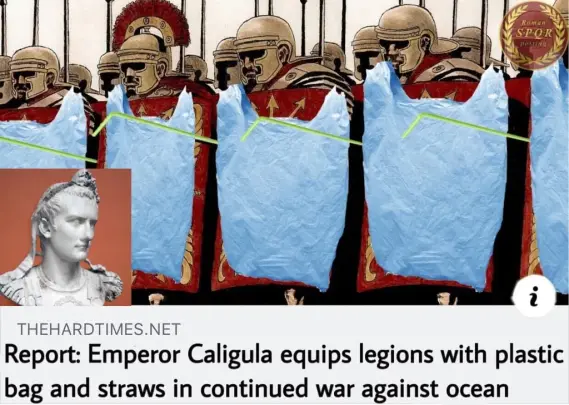
GO, CALIGULA! DEFEAT THE OCEANS ONCE AND FOR ALL