Ocean Bubbles Capture Carbon

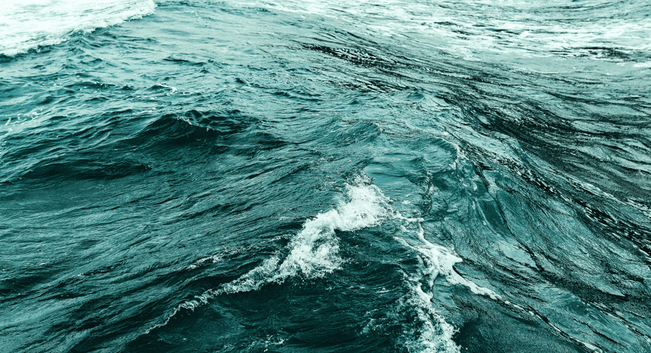
As humanity pumps carbon dioxide into the atmosphere, the ocean absorbs about a quarter of it. This exchange happens largely through bubbles created by breaking waves. When waves grow large enough to break, their crests curl over and crash down, trapping air beneath them. The turbulence of the upper ocean can push these buoyant bubbles meters under the surface, where the gases inside them dissolve into the surrounding water. This is how the ocean gets the oxygen used by marine animals, but it’s also how it gathers up carbon dioxide.

Current climate models often approximate this process using only the wind speed, but a recent study took matters a step further by modeling wave breaking and bubble generation, too. While they found a global carbon uptake that was similar to existing models, the researchers found their breaking wave model showed more variability in where carbon gets stored. For example, more carbon got absorbed in the southern hemisphere, where oceans are consistently rougher, than in the northern hemisphere, where large landmasses shelter the oceans. (Image credit: J. Kernwein; research credit: P. Rustogi et al.; via Eos)

#breakingWave #bubble #climateChange #fluidDynamics #oceanography #physics #science
How CO2 Gets Into the Ocean

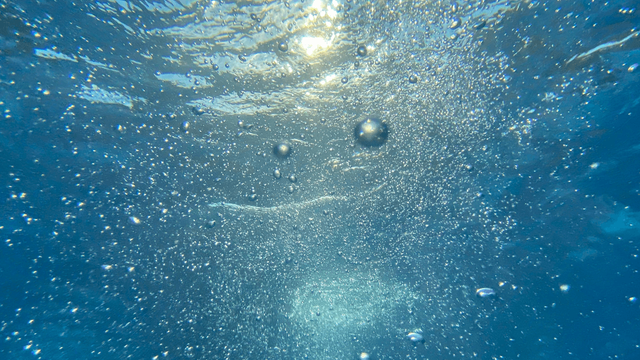
Our oceans absorb large amounts of atmospheric carbon dioxide. Liquid water is quite good at dissolving carbon dioxide gas, which is why we have seltzer, beer, sodas, and other carbonated drinks. The larger the surface area between the atmosphere and the ocean, the more quickly carbon dioxide gets dissolved. So breaking waves — which trap lots of bubbles — are a major factor in this carbon exchange.

This video shows off numerical simulations exploring how breaking waves and bubbly turbulence affect carbon getting into the ocean. The visualizations are gorgeous, and you can follow the problem from the large-scale (breaking waves) all the way down to the smallest scales (bubbles coalescing). (Video and image credit: S. Pirozzoli et al.)

#2024gfm #breakingWave #bubbles #carbonCycle #carbonDioxide #CFD #climateChange #computationalFluidDynamics #dissolution #flowVisualization #fluidDynamics #numericalSimulation #physics #science #turbulence

Many models for forecasting ocean waves simplify the physics by assuming that waves are essentially two-dimensional, like a long breaker heading toward shore. But in the open ocean, waves often come from more than one direction; crossing seas are a good example. When waves from different directions combine, a recent study shows, the resulting wave can grow far larger and steeper than expected. These monstrous rogue waves are especially dangerous for offshore infrastructure like oil rigs and wind turbines, which must be built to withstand rare but extreme waves. (Image credit: O. Мороз; research credit: M. McAllister et al.; via Gizmodo)

https://fyfluiddynamics.com/2024/10/breaking-in-rogue-seas/

#breakingWave #fluidDynamics #oceanWaves #physics #rogueWaves #science

Reader Question: Cross Sea

Reader Matt G asks:[What’s] going on here?Why’s the pattern square? Just a special case of waves traveling in different directions, and this photo happe

FYFD

Surfer and photographer Tim McKenna lives in the village of Teahupo’o on Tahiti’s southeastern coast. The area’s shallow coral reef system creates some of the world’s biggest barreling waves, which attract surfers from around the world. McKenna captures the majestic power of these surges in these black-and-white photographs; you can find more of his work on his website and Instagram. (Image credit: T. McKenna; via Colossal)

https://fyfluiddynamics.com/2024/10/the-crashing-waves-of-french-polynesia/

#breakingWave #fluidDynamics #fluidsAsArt #oceanWaves #physics #science

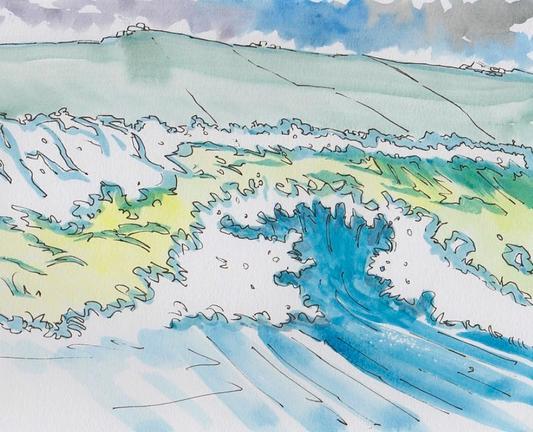
Dartmoor breaking wave surreal painting by Mike Jory

Dartmoor breaking wave surreal painting by Mike Jory

Mike Jory - Website
Dartmoor breaking wave surreal painting by Mike Jory

Dartmoor breaking wave surreal painting by Mike Jory

Mike Jory - Website

It took a while to get the feeling back in my fingers.
This morning's #sunrise as a wave breaks over a groyne on #worthingbeach
It feels like it was worth the effort

Later I'll put a sequence of these over on the blog & go through details. (Julieedwards-x)

#breakingwave

A wave breaking in from of the breakwater at Rockaway Point.

#breakingwave #waves #nature #nps #canonphotography #luminarneo

Surf Sensor Adds Depth To Finding The Ultimate Wave

To say that the ocean is a dynamic environment would be a gross understatement, especially when coastlines are involved. Waves crash, tides go in and out, and countless variables make even the usual conditions a guessing game. When [foobarbecue] goes surfing, he tries to take into account all of these things. The best waves at his local beach are directly over an ever-moving sand bar, and their dynamics are affected by depth, another constant variable. [foobarbecue]'s brilliant solution to understanding current conditions? Build a depth finder directly into his surf board!

At the heart of the "surfsonar" is the Ping Sonar Echosounder, a sonar transducer designed for AUV's and ROV's. [foobarbecue] embedded the transducer directly into the board. Data is fed to a Raspberry Pi 4b, which displays depth and confidence (a percentage of how sure it is of the measurement) on a 2.13 inch e-Paper Display Hat.

Power is provided by a PiSugar. Charging is done wirelessly, which we'd say is pretty important considering that the whole device is sealed inside a modified surfboard.

While it's not a low budget build, and there's yet room for improvement, early reports are positive. Once away from the breaking waves, the device confidently shows the depth. More testing will show if the surfsonar will help [foobarbecue] find that ever-moving sandbar!

Surf hacks are always welcome, we've featured the LED Strip Lit Surfboard as well as the Surf Window, which tells its owner if the surf is up. Be sure to let us know about any cool hacks you find when you're out surfing the 'net via our Tips Line!

#raspberrypi #techhacks #breakingwave #depthsensing #raspberrypi4b #sonar #surfing #transducer #underwatersonar

Surf Sensor Adds Depth To Finding The Ultimate Wave

To say that the ocean is a dynamic environment would be a gross understatement, especially when coastlines are involved. Waves crash, tides go in and out, and countless variables make even the usua…

Hackaday