In 1900, Vladimir Ul’ianov arrived in Europe with his wife, Nadezhda Krupskaia.
Just released from several years of Siberian exile, the couple would use their time in exile to embark on a wholesale renovation of Russian Marxism.
While still in Siberia, Ul’ianov, who wrote under the nom de guerre #Lenin, delivered blistering critiques of the shortcomings of émigré intellectuals.
Once in Europe, he rejected the Marxist orthodoxy that revolution would evolve out of social contradictions, insisting that it would necessarily be incited and guided by experienced cadres.
These ideas, which would become the foundation of Bolshevism, are usually portrayed as the outgrowth of a long and distinctively Russian philosophical tradition.
However, this new doctrine was profoundly shaped by the milieu of the colonies and their utopian project to hasten the arrival of a new political order by transforming everyday life.
Lenin saw precisely what others valued about émigré life – its intimacy and striving for emancipation from below – as its greatest liabilities.
He insisted that the colonies’ traditions of communal living and their boisterous public life assisted the work of the police spies working to infiltrate these communities.
As he explained to a subordinate: “When you are taken up with secret, conspiratorial matters, you must not speak with those whom you normally converse, nor about the things you usually talk about, but only with those you need to talk to about only about things you need to talk about.”
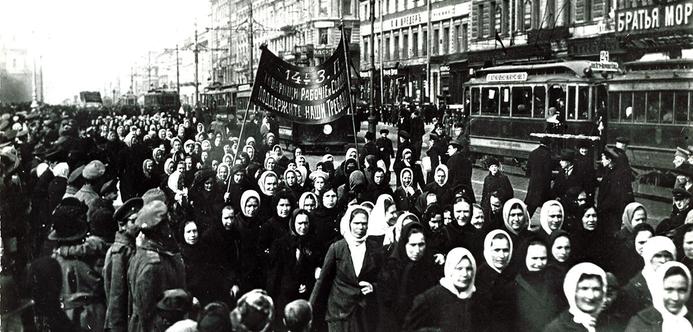
He similarly condemned émigrés’ grassroots campaigns to liberate ethnic minorities and denounced the Marxist women who demanded special publications and party organizations for female workers as a “right deviation towards [bourgeois] feminism.”
The path to liberation, he preached, would be blazed by a centralized, conspiratorial party that embraced the universalist mission of emancipating all mankind, not the agenda of one particular group or another.
The Bolsheviks’ harsh condemnation of particularism and their emphasis on central direction was a dramatic departure from émigré culture in many respects. Yet at the same time, it continued the long exile tradition of creating a new gender order and using it to articulate revolutionary lifestyles and values.
Lenin often described the party he wished to build in masculinist terms – as a “party of extreme opposition,” the purveyor of a hard and uncompromising ideological line.
Party activists reinforced this gendered culture by taking noms de guerre that emphasized their masculine fortitude: Kamenev (rock), Molotov (hammer), and Stalin (steel).
Lenin’s critics denounced both his project and style as anti-democratic, self-aggrandizing, and averse to “any spirit of compromise.”
However, these very qualities endeared him to the generation of young activists coming of age amidst the crises of the twentieth century.
By 1904, a small cohort of young revolutionaries who admired Lenin and his vision had begun to coalesce in Geneva...
#BolshevikRevolution #VladimirLenin #NadezhdaKrupskaia
#BourgeoisFeminism
https://journals.openedition.org/diasporas/6904
 Estelle Platini
 Chuck Darwin