 Unofficial PetaPixel Bot
Brightin Star’s New 50mm f/2 Tri-Sight Lens Has 3 Swappable Photo Looks https://petapixel.com/2026/02/26/brightin-stars-new-50mm-f-2-tri-sight-lens-has-3-swappable-photo-looks/ #brightinstar50mmf2trisight #BokehControl #brightinstar #manualfocus #cpplus2026 #Equipment #rfmount #emount #lmount #zmount #bokeh #News

Voigtländer’s First Lens With Spherical Aberration Control Comes to RF and Z https://petapixel.com/2026/02/18/voigtlanders-first-lens-with-spherical-aberration-control-comes-to-rf-and-z/ #sphericalaberration #cosinavoigtlander #mediumtelephoto #BokehControl #canonrfmount #nikonzmount #voigtlander #aberration #Equipment #portrait #canonrf #cosina #nikonz #bokeh #News #lens

 petapixel (unofficial)
Petzval 55mm f/1.7 Review: A Lovely Lens For Pro or Creative Use
The $449 Petzval 55mm f/1.7 Mark II Bokeh Control Art Lens from Lomography is the first Petzval lens designed specifically for full-frame mirrorless camera systems like the Nikon Z, Canon RF, and Sony E. It's also fantastic.
Much like the Petzval 80.5mm f/1.9 lens I reviewed previously, the 55mm f/1.7 Mark II Lens was created with discerning photographers and filmmakers in mind and designed to allow full creative flexibility, with its seven levels of Bokeh Control and Dual Aperture system. According to the company, the 55mm lens features an improved design and a maximum aperture of f/1.7 that produces a "subtle, almost painterly” rendering when shooting at larger apertures.
After using the lens for a few weeks now, Lomography described the bokeh delivery of the lens quite accurately.
The lens is available in three different color options with the Brass and Black Aluminum options priced at $449 and the Black Brass priced at $499. Also just like the 80.5mm DSLR version, this mirrorless 55mm lens has the ability to control the amount of swirly bokeh effect in the images through an integrated Bokeh Control Ring which has seven settings, where level one is barely noticeable and level seven grants maximum bokeh.
Even though this is a new lens designed for the most recent camera systems on the market, it still holds on to its "steampunk" vibe that the Petzval lenses are known for, especially since the body of the lens is all-metal and the operation is entirely manual.
Build Quality and Design
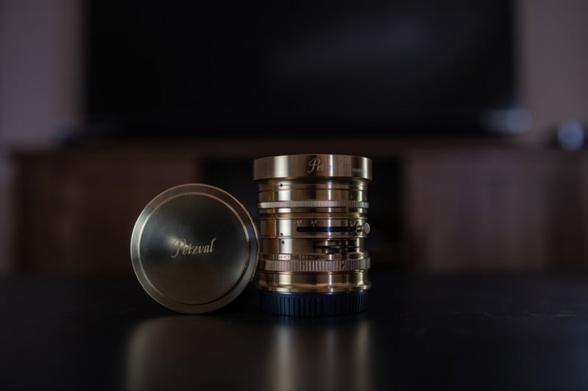
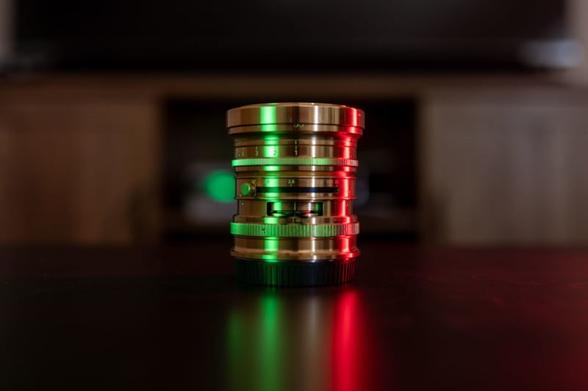
While the two black versions of the 55mm Petzval lens look the same as any other lens, the brass version that I tested will definitely stand out and draw some eyes. The layout of the lens is similar to its 80.5mm sibling with its clickless focus, aperture, and bokeh intensity ring. All three controls shift smoothly and have enough tension in them to hold their zoons without having to worry about any drifting issues while shooting. That being said, when shooting with a system like this, it is always a good idea to double-check your settings before taking any important shots, just to be sure nothing got bumped or inadvertently adjusted.
Aesthetically, while the brass lens is rugged, it felt much easier to scratch and scuff than the black versions, and dust, hair, and smudges are very quick to appear if you are not diligent in keeping the lens body clean. When you have a lens as shiny as this one, you want to keep it sparkling clean to truly show it off and as a dog owner, I had to reach for my lens pens, air dusters, and microfiber cloths far more than usual -- a small price to pay in the grand scheme of things since the brass version of this lens really looks great.
Despite the great look of the 55mm Mark II lens, it lacks any true weather sealing or protection like the rest of the Petzval lens lineup. This lack of sealing and the drop-in bokeh pattern inserts it offers leads me to believe you should be extra cautious when using this lens outside in the "elements" just to be sure no water gets inside of it, and definitely make sure you have it insured.
The 55mm Mark II f/1.7 Bokeh Control lens has a built-in lens hood and a 67mm filter thread inside of it, making it quite difficult to get on, and off should you choose to use them. From conversations with other Petzval users, you can pretty much count on covering the filter in fingerprints while adding or removing them, so keep those microfiber cloths handy. I didn't have any need for the ND filters during my testing, but I can absolutely envision situations where an ND filter would come in handy shooting wide open with a lens like this.
Focus and Aperture
The lens has a dual aperture system with eight blades capable of a range of f/1.7 to f/22 with a secondary "waterhouse" plate aperture system for special bokeh effects that include a sun, snowflake, heart, star, and the default circle. While shooting at f/4 to f/22 (and the bokeh set to minium), the lens shot and behaved like any other manual 50mm lens on the market with just the smallest tell-tale signs of the swirly bokeh design on the very outer edges of the frame.
But while you can use it as though it is just like any other lens, why would you? This system is meant to be shot wide open to take advantage of the dreamy, painting-like swirls.
Shooting at f/3.5 or shallower, you start to see where this lens truly stands out, and unlike its 80.5mm sibling, the difference between the bokeh increments is much more noticeable. That includes a subtle "zoom" as you go deeper into the bokeh application.
I appreciate that the lens is capable of being used like a "normal" lens as well as providing some rather extreme bokeh effects though. As I said in the 80.5mm review, the fact it can be either adds value and usability to the lens since you are able to flip back into a "normal" lens should you be in the middle of a shoot and need to capture something a little sharper and less dramatic.
Also of note, thanks to the design of the optics, focusing is achievable from about two feet (0.6 meters) away, which lets you get a little closer to your subjects and creates some different perspectives.
As you might expect, when using the lens in its bokeh-rich modes, the "safe zone" for your subjects is pretty much dead center of the frame. Even if your camera shows you a focus peaking value that is in focus, if the subject is in the outer edges of the frame, the actual finishe dimage will be blurry or soft when you open it up on your computer. Be prepared to take lots of extra safety shots if you have never worked with a lens like this before, as there is going to be a pretty steep learning curve when it comes to controlling the bokeh.
Subject not centered equals blurry foreheads
Like the 80.5mm version, this lens equally threw my composition game for a loop. I will admit that there were a lot of deleted shots in the review process. Since I wanted to treat this like a vintage-style lens and get the most out of the bokeh I could, I shot at f/1.7 and dialed the bokeh dial all the way up to seven.
The Petzval lens forced me to throw the conventional training for composition completely out the window and start center focusing on everything I wanted to capture. You need to forget the "rule of thirds" and ensure your subject is dead center in the frame since the borders will be filled with swirl and bokeh. Once you let go of the rules, you will start to have an actual blast while working with this lens capturing everything from plant life to people in the street.
Image Quality
As mentioned above, if you do decide to shoot with this lens at f/4 or higher, it will return results similar to any other 50mm lenses at that aperture do with just minimal swirls on the very outer edges of the frame. Once you start to dial up the bokeh, you can see the swirl start to show up and become much more pronounced starting along the outer edge.
Minimal Bokeh at f/3.5 Maximum Bokeh at f/3.5
As long as you nail your focus, the image will be sharp. Much like its sibling, the colors from this lens come out of the camera a little bit on the cooler side than normal, but that is easily compensated for in post if you want to warm things back up. Check the images below to view the patterns you can get when using the different bokeh inserts at different intensities from the mid-range to the maximum.
Sun Max Sun Mid Star Max Star Mid Snowflake Max Snowflake Mid Heart Max Heart - Mid Normal - Mid Normal - Max
As you can see from the above examples, the difference between the bokeh levels in this lens is pretty extreme and personally I definitely love the look of photos taken at the extreme end. Just remember to always shoot with this lens focusing on the "center mass" in order to actually be in focus. If you do this, your shots will be swirly, dreamy, and full of incredible bokeh.
Sample Images
A Portrait Photographer's Secret Weapon
At $450, the Petzval 55mm f/1.7 MKII Brass lens isn't particularly expensive, and that price puts it somewhere around the middle to lower end of other "normal" 50 to 58mm lenses on the market. The price feels more than fair, even if the lens lacks autofocus.
For portrait and product photographers, this lens can be an amazing "secret weapon" to have tucked away in your gear bag. It's not the kind of lens you would necessarily use for an entire session, but it is one that will give you a few results to include with the rest of your set that will very likely delight portrait clients.
Are There Alternatives?
The Petzval lenses are a niche style with the only real rival for something else as unique and interesting as the Lomography lenses would be the Lensbaby lineup. While Lensbaby has some incredibly fun and interesting products, I don't believe they have anything that truly competes or compares to the Petzval bokeh patterns, nor this lens's flexibility or sharpness. Additionally, you could try finding some older 19th-century lenses from your local camera shops or auction sites. You may even get lucky and find some for incredibly cheap, however, you will still be left searching for a compatible adapter to use on modern mirrorless systems.
Should You Buy It?
Yes. Maybe it was the gorgeous brass design, maybe it was the fact it was easier to focus manually on my Nikon Z6 body than the 80.5mm Petzval, but either way, the Petzval 55mm f/1.7 MKII Brass Lens is useful in both professional and creative situations. The vintage-looking lens is a great conversation piece and just a ton of fun to shoot with on both sides of the camera. I actually enjoyed working with the 55mm f/1.7 MKII Petzval lens for mirrorless so much, after finishing the review I ended up ordering one for myself.
#equipment #reviews #55mm #art #artlens #bokeh #bokehcontrol #canon #lens #manual #manualfocus #mirrorless #nikon #petzval #review #vintage
Petzval 80.5mm f/1.9 MKII Review: A Stunning Vintage-Style Lens
Just over a year ago, Lomography launched the 180th Anniversary Edition of the Petzval 80.5mm f/1.9 MKII Bokeh Control Art Lens which promised a bevy of improvements over its 85mm predecessor. It looked as though it would put a historic lens back in the hands in creatives at an affordable $549 price. So does it?
The 80.5mm f/1.9 MKII Art Lens with Bokeh Control was in development at Lomography for about seven years and is finally available for Nikon F and Canon EF mounts. While the "basic version" is available in three different colors, the bokeh control model that I reviewed here is only available in black aluminum.
Besides the color limitation, the real difference between the basic and this bokeh control version is the ability to control the amount of swirly bokeh effect in the images using the Bokeh Control Ring which goes from 1 (barely noticeable) to 7 (maximum bokeh). I do feel like making the scale go to eleven was a missed opportunity but, we can let that slide for now.
The original Petzval lenses from 1840 were previously only adaptable to large format cameras until Lomography started rebuilding them for digital systems in 2013. In doing so, the company sought to bring back the old "romantic" aesthetic from early portraits. Even though this particular lens was meant for the Nikon F mount, adapting it with the FTZ mount made it quick and easy to use on the Nikon Z mirrorless system without any issues.
Since the lens only weighs 440 grams, it is easy to balance on a gimbal which could make it quite a fun lens for videographers to use as well. For the purposes of this review, however, we'll focus on the lens from the perspective of a still shooter.
Build Quality and Design
The 80.5mm Petzval lens doesn't look all that different from any other manual lens aside from the built-in lens hood and the metal lens cap. It does have a couple of notable differences though: the bokeh control ring located at the end of the lens and the "slide plates" you can insert to change the shape of the bokeh, should you decide to go that extra step.
The focus, aperture, and bokeh rings each have a good amount of tension in them that I noticed when making adjustments, so you shouldn't have to worry about any drifting due to gravity or positioning. However, since all three of these rings are the "clickless" style (meaning there is no noticeable click when you make changes), you should double-check your settings if you are about to take an important shot to make sure no ring has slipped.
I found that when I shot freehand it was easy to accidentally bump one of the three rings slightly while moving around. Outside of that cautionary moment, the lens handled well and overall felt great to shoot with. Aesthetically, the lens is rugged, too. Even the paint on the barrel of the lens and the lettering felt almost impossible to scuff up. It is clear that the team at Lomography took their time with the quality presentation and look of this lens.
Something that does concern me about the longevity of this optic though is the lack of weather sealing or protection. While the lens seems to be designed quite well, the fact that there is no mention of weather sealing on the official website and that lens has a drop-in bokeh pattern insert leads me to believe you should be extra cautious using this lens outside in the "elements" just to be sure no water gets inside of it.
It is also worth noting that the bokeh control version of this lens is unable to have an ND, polarizer, or any other threaded filter type mounted to it. In my testing, I didn't have any need for it, but I can absolutely envision situations where an ND filter would come in handy. Maybe in the future, this could be something that could eventually be added into the drop-in section for the bokeh control.
Focus and Aperture
The lens has an aperture range of f/1.9 to f/16 and each of those stops looks as expected from a quality standpoint. That said, with a lens like this it's kind of hard to imagine why you would want to shoot it at anything more than wide open, as it detracts from the whole purpose of having it the more you close that aperture down.
When taking photos at f/4 or higher and with bokeh control at its minimum, it honestly looks like any other 80mm lens. When you are at f/3.5 and shallower, that's when the true nature of the lens starts to shine. Still, I can see the advantage of a lens that has the ability to offer wildly unique visuals while also is able to transform into something more "normal." It does add to the usability of the optic.
When you shoot wide open, you will be met with a soft focus and distorted vintage feel, which is likely the whole reason you would pick up something like this lens in the first place. With that in mind, be prepared to take a lot of extra shots to be sure you've nailed your focus as it can be easy to miss. That brings me to my next note about a learning curve -- The Bokeh Control.
I have never used a lens like this before and, at first, it really threw my composition game for a loop. As I learned how to use the lens, I will admit that there were a lot of deleted shots in the review process. Like I mentioned above, the bokeh control lets you shift through seven levels of bokeh, with level one being pretty much the same as you'd see on a standard f/1.9 type lens and level seven pushing out the maximum bokeh effect. Since I wanted to treat this like a vintage-style lens, I shot at f/1.9 and cranked the bokeh dial all the way up to seven.
What I discovered is with a lens like this, you have to throw your conventional training for composition completely out the window.
Notice her forehead and hair are out of the "safe zone" and blurred here.
To get things "in focus" at those settings, you effectively need to ensure your subject is dead center in the frame. Even if your camera tells you it is in focus near the edges with focus-peaking, once you take the shot, the borders will be filled with swirl and bokeh. When I treated the Petzval 80.5mm like any other portrait lens, I messed up a bunch of the early images until I managed to compensate for this.
Once you shift your compositional thinking, taking photos with this lens can get quite fun with the 80.5mm's soft focus and incredibly swirly bokeh patterns.
Image Quality
If you do happen to use this lens at f/4 or higher, it behaves and returns results like any other prime lens of that focal length on the market except for the very outer edges of the frame which will still show a small amount of tell-tale bokeh swirls and vignetting the Petzval lenses are made to produce. I did take a fair amount of shots at that f/4 to f/16 range and they were all very similar to the sample image below.
As long as you nail your focus, the image is sharp. Colors come out of the camera a little bit on the cooler side than normal, but that is easily compensated for in post if you want to warm things back up.
f/8 Bokeh Level 1 f/1.9 Bokeh Level 7
As you can see from the above examples, the difference from "normal" to "true Petzval" is pretty extreme, and I have to say… I kind of love it on the extreme end. The thing to keep in mind with this lens is if you use it the way it is meant to be used, only your "center mass" will be in focus. When you do so, your shots will be soft, dreamy, and full of incredible bokeh.
Additionally, if you want to get a little more creative with your bokeh patterns, the lens allows you to insert bokeh slides with some pre-cut shapes in them, shifting the patterns from the soft oval/circle to something entirely new. In the package I reviewed, the lens came with three inserts that allow you to add a star, diamond, or heart pattern to your shots as seen below.
Sample Images
A Wonderfully Enjoyable Lens
After nearly a year of not really shooting due to the pandemic, not only did working with this lens force me to adjust my subject framing mindset, it actually got me incredibly inspired to get out and shoot more as a whole. I found myself capturing more images of things I would have never even looked at previously as subject matter, all because of how the bokeh patterns can do such wild and interesting things.
The Petzval 80.5mm f/1.9 MKII SLR Bokeh Control Art lens is available from the Lomography shop for $549, placing it somewhere around the middle of other "normal" 85mm lens prices that range from $200 to $800.
Things I Liked
- The ability to control the amount of bokeh is interesting and fun
- Solid metal body and lens hood
- Smooth and stable aperture, focus, and bokeh rings
- Sharper than I expected when shooting f/4 to f/16
- Small and Lightweight
- Useful for video
- Affordable price given the niche market
- Clickless rings work well
- Paint seems to be very scuff-proof
Things I Didn't Like
- Rather significant learning curve
- Unable to mount ND or other filters
- Focusing can be exceptionally challenging, especially when shooting wide open
- No weather proofing
Are there Alternatives?
The Petzval lenses are a very niche style with the only real rival for something else as unique and interesting as the Lomography lenses would be the Lensbaby lineup, and while Lensbaby has some incredibly fun and interesting products, I don't believe they have anything that truly competes or compares to the Petzval bokeh patterns, nor this lens's flexibility or sharpness.
Should You Buy It?
Yes. The Petzval 80.5mm f/1.9 is suitable for both professional as well as creative reasons, and -- perhaps most importantly -- it's just a blast to shoot. After I return this review unit, I'm buying one for myself.
#equipment #reviews #bokeh #bokehcontrol #bokehinserts #f19 #lens #lensreview #lomography #manual #manuallens #petzval #photography #review #swirl #vintage


