Hans Hass and Jacques-Yves Cousteau. Pioneering Achievements and Structural Inequalities in the Construction of Maritime Memory . A working paper.
https://doi.org/10.5281/zenodo.18115420
#histSTM #histocean #envhist #bluehumanities
#oceanhist #histsci #historyofdiving #Maritimememory
This study examines the parallel yet highly divergent careers of Hans Hass and Jacques-Yves Cousteau, two central pioneers of twentieth century underwater exploration. While both contributed substantially to marine science, diving technology, and the visual mediation of the underwater world, their long-term global recognition developed in markedly different ways. Drawing on diverse interdisciplinary perspectives, the article explores how geopolitical conditions, institutional support systems, narrative self-presentation, and the rise of a global media ecology shaped their public visibility. Beyond a biographical or technical comparison, the juxtaposition of Hass and Cousteau is deliberately employed as a conceptual case study to examine the formation of maritime memory in twentieth century underwater research. The findings demonstrate that Cousteau’s worldwide prominence resulted not solely from scientific or technological achievement, but from his exceptional integration into powerful institutional, technological, and cultural infrastructures that amplified and internationalized his work. In contrast, Hass - despite significant early innovation and ecological awareness - was constrained by weaker institutional embeddedness, a scientifically restrained and emotionally neutral serial television aesthetic with limited long-term repeatability, and subsequent theoretical isolation. A decisive factor in this divergence was Cousteau’s entrepreneurial engagement with emerging television markets, which transformed underwater exploration into a scalable media enterprise and provided the structural basis for his enduring visibility. Overall, the analysis suggests that maritime memory is shaped less by scientific merit alone than by the ways media, politics, and economic scalability stabilize certain cultural narratives. These dynamics have produced asymmetrical legacies that continue to shape how ocean exploration is remembered and imagined today.
Find both books here in our catalogue:
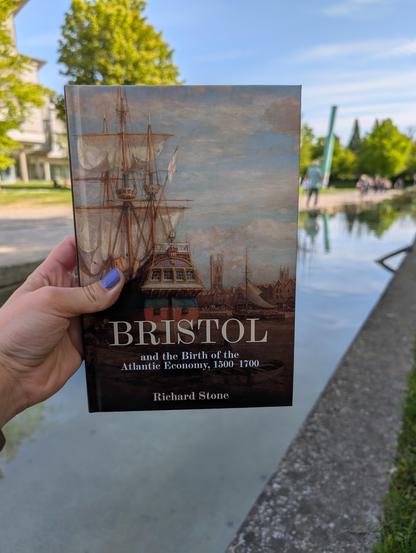
Bristol:
https://opac.sub.uni-goettingen.de/DB=1/XMLPRS=N/PPN?PPN=1887649514
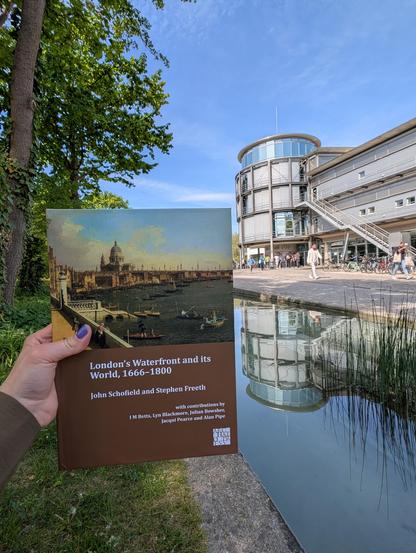
London:
https://opac.sub.uni-goettingen.de/DB=1/XMLPRS=N/PPN?PPN=1904029493
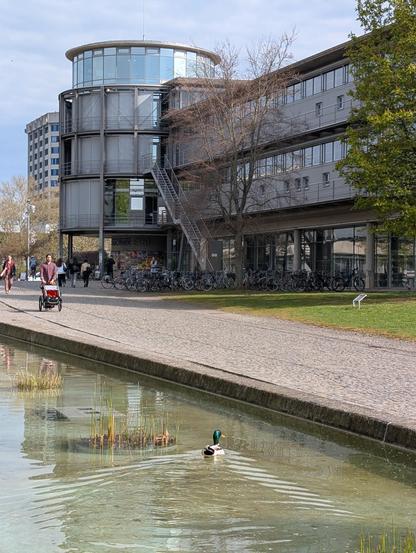
(bonus pic of one of our famous Göttingen campus ducks @subugoe !)
#BlueHumanities #EnglishHistory #EconomicHistory #PostcolonialStudies #LondonHistory #MaterialCulture #History #Archaeology
Now off to #London - this large volume, edited by John Schofield & Stephen Freeth, presents archaeological findings from London's waterfront, 1666-1800, making #history & #MaterialCulture come alive in many pictures of maps, houses & objects found
Fancy a dip? 🌊 Today's books share the refreshing topic of ports in #EnglishHistory
Richard Stone's 2024 monograph on #Bristol & the birth of the Atlantic #economy 1500-1700 analyses #EarlyModern trade in Britain, based on the Bristol Port Books
Forbes published a nice new review of my latest book: https://www.forbes.com/sites/brucedorminey/2025/01/23/new-book-offers-reality-check-on-sea-level-rise/
“In a revelatory new book, Sea Level: A History, author Wilko Graf von Hardenberg, […], deftly chronicles just how difficult it was to come up with a standard method of measuring mean sea level. In the process, Hardenberg gives us a richly detailed yet very accessible history of how over five centuries, the concept of measuring mean sea level was a painstaking process that advanced in fits and starts.”