#Night is the time, when the #sun is below the #horizon and #astronomically the period between sunset/sunrise with maximum possible #darkness. #Nighttime controls #biologicalrhythms in organisms, influences the #human psyche, and #limits our everyday #actions. However, according to C.C.M. Kyba et al.(2020), #interdisciplinary #nightstudies are necessary, but not yet fully established.
©#StefanFWirth #Berlin #Nordhafen 2025
Ref
C.M. Kyba et al. (2020)
https://doi.org/10.3390/j3010001
#Photos
©S.F.Wirth
Evidence for ~12-h ultradian gene programs in humans
https://www.nature.com/articles/s44323-024-00005-1
https://news.ycombinator.com/item?id=41208934
* prospective, temporal transcriptome profiling of peripheral white blood cells f. 3 healthy humans
* ~12-h transcriptional rhythms in RNA, protein metabolism
* strong homology to circatidal gene programs prev. identified in Cnidarian marine species
Ultradian rhythms: https://en.wikipedia.org/wiki/Ultradian_rhythm
Chronobiology: https://en.wikipedia.org/wiki/Chronobiology
#ultradian #circadian #chronobiology #biology #BiologicalRhythms

Evidence for ~12-h ultradian gene programs in humans - npj Biological Timing and Sleep
Mice and many marine organisms exhibit ~12-h ultradian rhythms, however, direct evidence of ~12-h ultradian rhythms in humans is lacking. Here, we performed prospective, temporal transcriptome profiling of peripheral white blood cells from three healthy humans. All three participants independently exhibited robust ~12-h transcriptional rhythms in molecular programs involved in RNA and protein metabolism, with strong homology to circatidal gene programs previously identified in Cnidarian marine species.
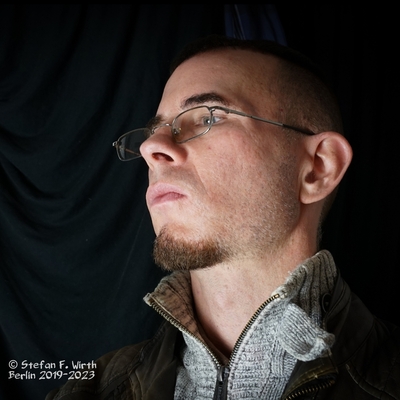 Stefan F. Wirth


 Victoria Stuart 🇨🇦 🏳️⚧️