 Ma Quest
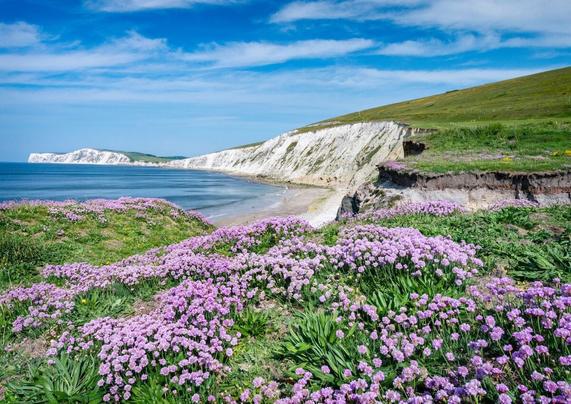
Find A Biosphere Reserve (UK)
https://unesco.org.uk/our-network/biospheres
#SolarPunkSunday #BioSphereReserves #BioSpheres #UNESCO #Nature #WildLife #BioDiversity #Conservation
Find A Biosphere Reserve (UK)
https://unesco.org.uk/our-network/biospheres
#SolarPunkSunday #BioSphereReserves #BioSpheres #UNESCO #Nature #WildLife #BioDiversity #Conservation
The challenge of Space makes us think of our own cycles on Earth, and how out of whack they can be when we don't appreciate them. A hydroponic wonder crop is no use if it's waste clogs up the pipes, and Humans need things like spices and textures and variety or will go mad...
https://phys.org/news/2026-02-mars-astronauts-space-greenhouses.html
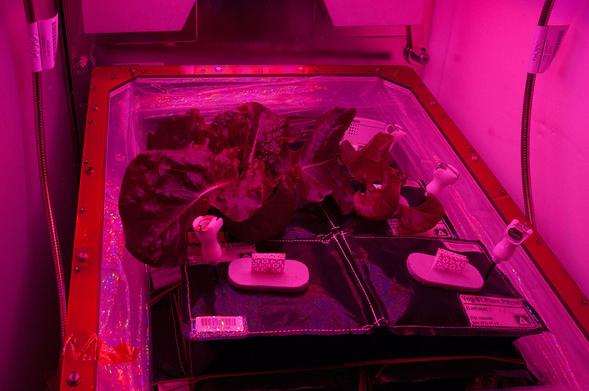
Thinking about food systems in deep space likely brings to mind something like The Martian where an astronaut is scratching barely enough food to survive out of potatoes grown in Martian regolith. Or perhaps a fancy hydroponic system on an interplanetary transport ship, with artificial lighting and all the associated technological wizardry. But a new paper published in Acta Astronautica by Tor Blomqvist and Ralph Fritsche points out that growing food is only one small part of the whole cycle of providing sustenance for astronauts in space. To really get a sense of how difficult it will be, we have to look at the whole picture.
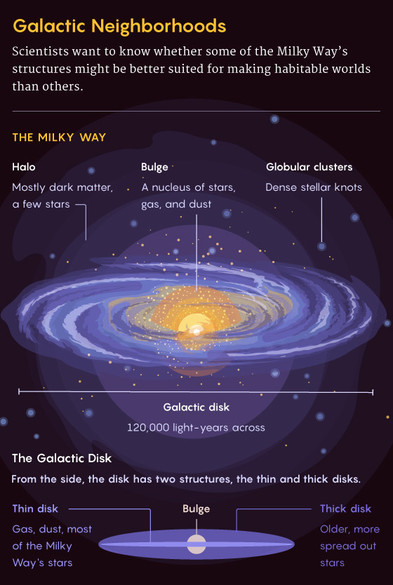
Galactic Geography versus Habitability: The Best Neighborhoods for Starting a Life in the Galaxy
➡️ https://quantamagazine.org/the-best-neighborhoods-for-starting-a-life-in-the-galaxy-20240124 by Rebecca Boyle @Rboyle31
@QuantaMagazine
The research paper by Jesper Nielsen and co-authors: https://doi.org/10.1051/0004-6361/202346697
#astronomy #astrophysics #astrodon #milkyway #galaxy #geography #map #galaxymap #habitability #life #planet #planets #star #stars #biosphere #biospheres #habitable #zone #habitablezone #exoplanets #universe #space #science #research #AandA_journal
One way to study #MachineIntelligence is with more powerful #space #telescopes.
Even though we have yet to find examples of other civilizations out there, they certainly are there to be found. There is a growing consensus among scientists that extraterrestrial #technosignatures might well be more common than #biosignatures. After all, machines can prosper in all the wide space while biospheres require very specific circumstances.
#Biospheres are also very difficult to detect.
Even if planetary life was fleeting and oft erased by asteroids and gamma ray bursts, once autonomous machines start replicating in space they become practically invulnerable to #extinction.
Why haven't we found examples yet? Well, we don't quite know what to look for. If you look at astronomy as a field, we almost routinely find things which have no convincing explanations. As these observations often do not repeat, we just shrug and move on.
Most search for extraterrestrial intelligence so far has focused on planets and biospheres, and only recently we have been starting to look more seriously with a wider focus.
Regardless, the space is huge, it extends in the cube of the distance, and we haven't really scratched the surface of it yet.
We might well gain crucial insights into machine intelligence with one of the next generation space telescopes instead of through our own experimentation. At least we know that paperclip maximization doesn't really seem like a thing, that we would have noticed already.
Now thinking of Planet Earth as that garden, and space as that bottle. Drives home how totally dependent we are on the preservation of our life-sustaining planetary cycles #biospheres #CircularPlanet
 Lazarou Monkey Terror 🚀💙🌈
 Daniel Pomarède
 Tero Keski-Valkama
 Aldo de Moor