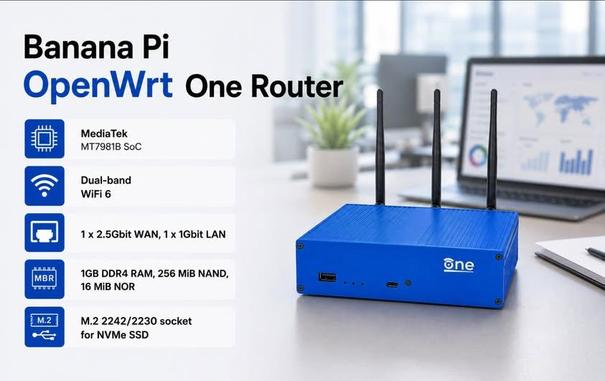
anyone use Openwrt One do some cool project? can you share your project ?
https://docs.banana-pi.org/en/OpenWRT-One/BananaPi_OpenWRT-One
#openwrt #bananapi #wifi #router #network #wireless
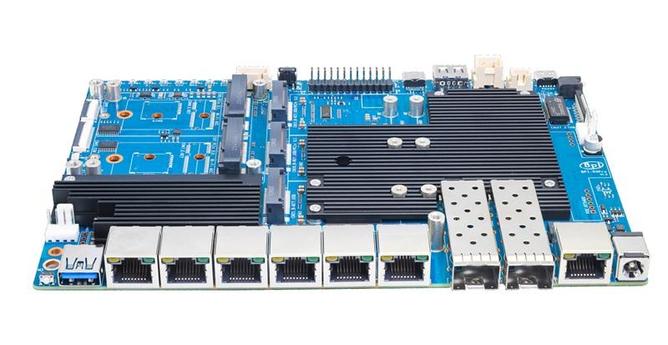
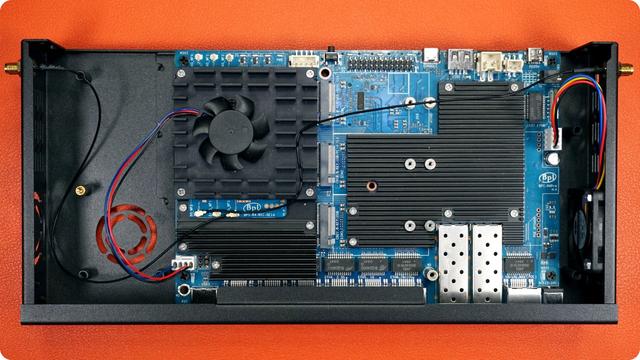
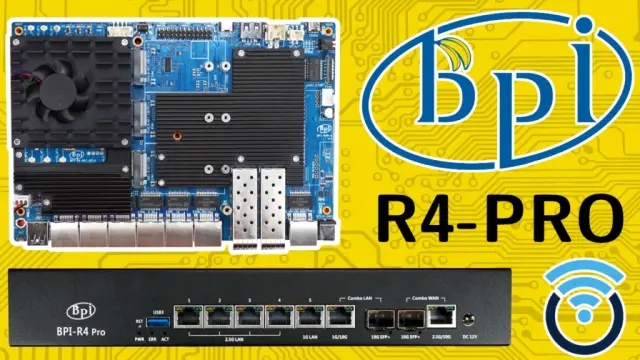
How The Banana Pi BPI-R4 Pro Violates The First Rule Of OpenWRT Club

As fun as ARM and RISC-V single-board computers (SBCs) are, all too often getting the most out of the hardware requires the use of an unofficial firmware image. So too with the Banana Pi BPI-R4 Pro…

Hackaday
How The Banana Pi BPI-R4 Pro Violates The First Rule Of OpenWRT Club

As fun as ARM and RISC-V single-board computers (SBCs) are, all too often getting the most out of the hardware requires the use of an unofficial firmware image. So too with the Banana Pi BPI-R4 Pro…

Hackaday
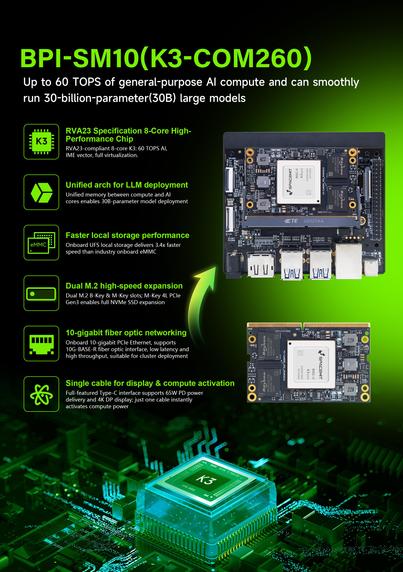
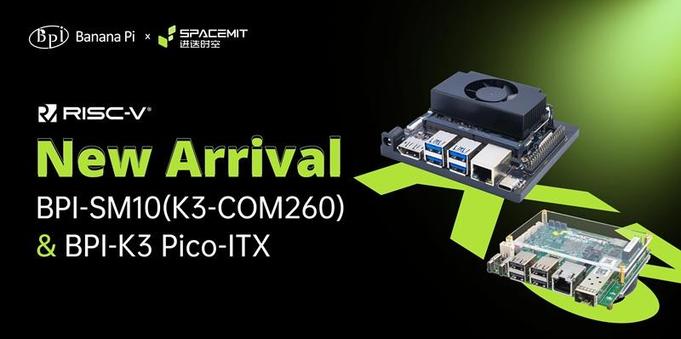
Banana Pi BPI-SM10(SpacemiT K3-COM260) RISC-V AI board. free DIY your AI Project
https://www.banana-pi.org/en/product-news/593.html
#bananapi #rsicv #spacemit #K3 #raspberrypi #AI #AIoT #linux #ubuntu

The Banana Pi BPI-R4 Pro reminds me a lot of the Radxa Orion O6 and Orange Pi 6 Plus. It is a piece of fantastically neat, powerful hardware with

https://interfacinglinux.com/2026/05/18/banana-pi-bpi-r4-pro-build-guide-and-setup-ft-forbidden-openwrt/ #BananaPi #BPIR4Pro #OPENWRT #router

Dziś robiłem przegląd przydasi i znalazłem Banana Pi. Choć w dalszym ciągu nie mam na niego pomysłu, to ciągle uważam, że kiedyś znajdę zastosowanie dla niego.

Do Raspberry Pi jest mnóstwo materiałów. Do Banana Pi, niestety mało....

#bananapi

RVA23-compliant K3 Pico-ITX SBC and K3-CoM260 SoM feature SpacemiT K3 octa-core RISC-V AI SoC, up to 32GB RAM, 256GB UFS

https://fed.brid.gy/r/https://www.cnx-software.com/2026/05/11/rva23-pico-itx-sbc-spacemit-k3-octa-core-risc-v-ai-soc-up-to-32gb-ram-256gb-ufs/

RVA23-compliant K3 Pico-ITX SBC and K3-CoM260 SoM feature SpacemiT K3 octa-core RISC-V AI SoC, up to 32GB RAM, 256GB UFS

SpacemiT has now officially launched the K3 Pico-ITX SBC and K3-CoM260 system-on-module with the RVA23-compliant, SpacemiT K3 octa-core X100 CPU with up to 60 TOPS of AI performance, up to 32GB LPDDR5, 256GB UFS, and PCIe Gen3 x4 NVMe SSD support. The board also features an eDP connector, a 10GbE SFP+ cage, a Gigabit Ethernet RJ45 port, built-in WiFi 6 and Bluetooth 5.2 wireless connectivity, two USB Type-C connectors, four USB 2.0 ports, an M.2 Key-B socket coupled with a NanoSIM card slot for 4G LTE or 5G cellular connectivity, and more. K3 Pico-ITX SBC specifications: System-on-Module - K3-CoM260 SoC - SpacemiT K3 CPU 8x 64-bit RISC-V X100 "big" cores clocked up to 2.4 GHz, RVA23 compliance; 130 KDMIPS performance (similar to RK3588) 8x RISC-V A100 AI Cores with support for up to 1024-bit RVV1.0 parallel computing, optimized for matrix operations. GPU - Imagination Technologies BXM4-64-MC1 GPU with Vulkan 1.3, OpenCL

CNX Software - Embedded Systems News
Banana Pi & SpacemiT Launch BPI-SM10 (K3-COM260) and K3 Pico-ITX for Commercial Availability,Order now via the links below:
https://www.banana-pi.org/en/product-news/593.html
#bananapi # #spacemit #K3 #raspberrypi #AI #AIoT #linux #ubuntu
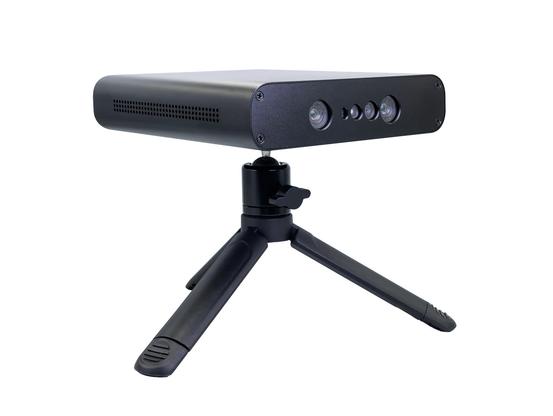
Banana Pi BPI-OM7 AI 3D camera pairs BPI-M7 RK3588 SBC with ORBBEC Gemini 2 depth camera

Banana Pi BPI-OM7 is an AI 3D depth camera that combines Banana Pi BPI-M7 low-profile Rockchip RK3588 SBC with an ORBBEC Gemini 2 depth camera, targeting applications in 3D vision, robotics, edge AI, and spatial perception. The solution ships with 8GB of RAM and a 64GB eMMC flash by default, offers HDMI and USB-C video outputs, dual 2.5GbE networking, and a few USB ports. It's mounted on a tripod for convenience. Banana Pi BPI-OM7 specifications: SoC – Rockchip RK3588 octa-core processor with CPU – 4x Cortex‑A76  cores @ up to 2.4 GHz, 4x Cortex‑A55 core @ 1.8 GHz GPU – Arm Mali-G610 MP4 GPU Video decoder – 8Kp60 H.265, VP9, AVS2, 8Kp30 H.264 AVC/MVC, 4Kp60 AV1, 1080p60 MPEG-2/-1, VC-1, VP8 Video encoder – 8Kp30 H.265/H.264 video encoder AI accelerator – 6 TOPS NPU System Memory – 8GB (default), 16GB, or 32GB LPDDR4x Storage 32GB, 64GB (default), or 128GB eMMC flash

CNX Software - Embedded Systems News

Since the above post, I've finished my initial setting up of the Banana Pi and sorted out a dedicated power supply for the setup.

On the single-board computer I've installed `lxmf_echo`, one of several echo bots available for LXMF/Reticulum. This lets me do some crude but useful connection and distance tests by myself, without having to rely on another party. I can simply take my second RNode with me outside, send messages from my phone to the echo bot, and see if I get a reply back or not.

I also installed `rnsh` on the SBC, for remote management without having to rely on an Ethernet connection. This makes the setup a lot easier to move about! Granted, at the bitrate I got my RNodes configured, it's quite slow in use, but it does actually work and suffices to do things like correct the date and time (no RTC battery 🙁) or properly shutting down the system before taking away power from it.

For the power supply I scavenged my box of collected old power supplies, and found a combined 12V+5V supply offering 2A on each line. I won't be needing the 12V, but it was what I had on hand that met the requirements and provided a clean signal. I measured the output under load (~0.5A) to check the voltage and also had a look at the shape of it with the oscilloscope: all in order, certainly more than good enough.

After this, I boxed it all up, and now I have an easily-deployable setup with which I can do some initial distance experiments with. Apart from the two ESP32+LoRa boards, everything else is just (old) stuff I already had laying around, which I'm happy to put to good use. That's a pretty low barrier to start playing with Reticulum, if you ask me!

#Reticulum #LoRa #mesh #LXMF #BananaPi #reuse