 Incognitosis [Unofficial]
La IA ante la estrategia del miedo
https://fed.brid.gy/r/https://javipas.com/2026/05/13/la-ia-ante-la-estrategia-del-miedo/

La IA ante la estrategia del miedo
https://fed.brid.gy/r/https://javipas.com/2026/05/13/la-ia-ante-la-estrategia-del-miedo/
The latest big thing in #AI seems to be "teams". Instead of a single, energy (and financially) expensive agent, now you can have a bunch of them working together to check each other's work, collaborate, etc, multiplying energy and costs.
We really did speed run what CPUs did when they hit a performance ceiling so had to switch to multi-core, didn't we? Is it time for a whole new generation to discover #Amdahl's law?
During the Emacs meetup yesterday, we started talking about Emacs LISP (of course) and I mentioned that I first learned LISP years (decades) ago. I was asked what version of LISP this was and I could not answer. So I've looked into this, just out curiosity.
I learned LISP on a mainframe (Amdahl 470V/6), an IBM plug compatible system. This system ran the Michigan Terminal System as its operating system. The version of LISP available on this system was 1.5, according to Wikipedia: see link below and, in particular, reference 92 in the list at the end of the page.
As an aside, I loved MTS. Very impressive time sharing system, supporting hundreds of simultaneous terminal users (with the aid of what were called *front end communications processors*).
https://en.wikipedia.org/wiki/Michigan_Terminal_System
#Emacs #LISP #EmacsLISP #MTS #MichiganTerminalSystem #Amdahl #Wikipedia
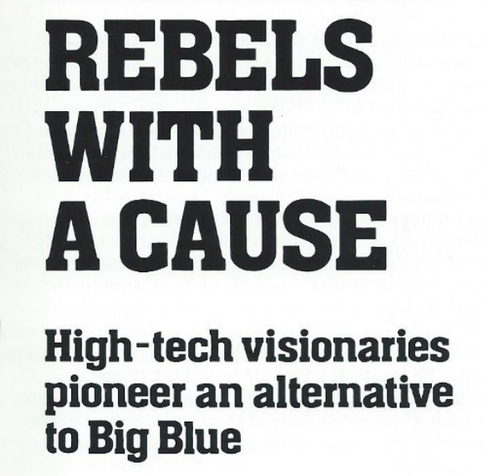

Amdahl Corp. launched its first product, the Amdahl 470/6, in 1975, competing directly against IBM's high-end machines in the then-current System/370 family, but with IBM's announcement of Dynamic Address Translation (DAT), Amdahl announced the 470V/6 and dropped the 470/5. (At IBM, Gene Amdahl had co-designed the groundbreaking 32-bit architecture, 24-bit addressing, System/360 line of computers. Applications written for the System/360 can still run, unmodified, on today's zSeries mainframes four decades later.) At the time of its introduction, the 470V/6 was less expensive but still faster than IBM's comparable offerings. The first two 470V/6 machines were delivered to NASA (Serial Number 00001) and the University of Michigan (Serial Number 00002).
Annual #introduction #ComputerHistory
I'm a retired (3rd time) techie with an incredibly lucky career and family.
I'm most famous as being employee number 8 of #SunMicrosystems, and I got to work with the Bell Labs #UNIX team for a summer during the birth of V7 #UNIX.
My Silicon Valley career started with #Amdahl in 1978, followed by Sun for 12 years. I've since founded 4 startups (see profile).
I toot about #ComputerHistory; I've been there for much of it.
 Anthony, of course
 éric 🚲 🇪🇺

 Tom Lyon ✅
 Kara Finance